
India’s semiconductor moment is bigger than outsourcing: UST COO Gilroy Mathew
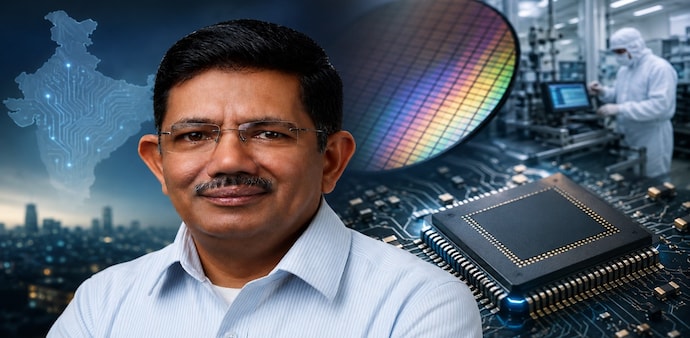
As countries race to secure semiconductor supply chains, UST's Gilroy Mathew says India's biggest opportunity lies in chip design, packaging and systems engineering, but warns against becoming trapped in another low-value services cycle.
- Jun 4, 2026,
- Updated Jun 4, 2026 11:52 AM IST
Artificial intelligence (AI) may be dominating boardroom discussions, investor presentations and government policy agendas, but the real battle for long-term control of the technology will ultimately be fought in semiconductors, according to Gilroy Mathew, chief operating officer of AI and technology solutions company UST.
As countries and technology companies race to secure semiconductor supply chains amid surging demand for AI infrastructure, advanced computing and connected devices, Mathew argues that chips, not AI applications, will determine who controls the economics, scalability and strategic power of the next technology era.
Must read: India eyes top-three global slot in advanced chip packaging under NITI Aayog's 2035 roadmap
“Control over silicon increasingly determines the efficiency, scalability, and economics of AI systems, making semiconductors a foundational strategic lever in the broader technology landscape,” Mathew told Business Today in an interview.
“Semiconductors and AI are not competing priorities but are deeply interdependent layers of the same stack,” he added.
Beyond another tech cycle
For India, Mathew believes the semiconductor opportunity is fundamentally different from previous technology waves such as outsourcing, cloud computing and digital transformation.
“The semiconductor opportunity is very different from outsourcing, cloud, or digital transformation because it is not only a services opportunity, it is a strategic manufacturing, design, and national capability opportunity,” he said.
UST's own semiconductor journey reflects that shift. The company entered the sector in 2009 with a small engineering team. In 2018, it strengthened its pre-silicon design capabilities through the acquisition of Bengaluru-based VLSI services firm SeviTech Systems. By 2023-24, UST was supporting 35 of the world's leading semiconductor companies across the entire silicon lifecycle, from chip design and validation to embedded software development.
Must read: ISM 1.0 gave India a seat at the chip table. ISM 2.0 will decide if it stays there
In late 2025, UST partnered with Kaynes Semicon to set up a Rs 3,330 crore Outsourced Semiconductor Assembly and Test (OSAT) facility at Sanand, Gujarat, marking one of its biggest bets on India's semiconductor ambitions.
Today, the company operates across the United States, Europe, Malaysia, Mexico, Puerto Rico and multiple Indian cities, including Bengaluru, Pune, Hyderabad and Noida.
According to Mathew, the next stage of growth for Indian engineering and IT services companies will require moving beyond providing talent and execution support toward taking ownership of larger semiconductor programmes.
“Today, most Indian IT and engineering services firms, including UST, are strong in providing skilled talent for specific functions such as verification, validation, embedded software, physical design support or testing,” he said.
“However, the global semiconductor industry is increasingly looking for partners who can take ownership of larger engineering programmes, manage cross-functional execution and deliver measurable silicon and system outcomes.”
India’s opening
While semiconductor fabrication remains a long-term ambition because of its capital-intensive nature, Mathew sees India's strongest near-term opportunities in chip design, advanced packaging and embedded systems.
“India is already home to nearly 20% of the world’s chip design engineers, which gives us a strong base in design and engineering talent,” he said.
Must read: Why chip fabs can’t afford to stop: The hidden cost of a single disruption
The country's packaging ambitions are also beginning to move from policy announcements to execution.
“The India Semiconductor Mission has approved multiple manufacturing and OSAT/ATMP projects, with government incentives and large private-sector investments already moving into execution,” Mathew said.
Yet he warned that India risks repeating a familiar pattern if companies focus only on cost competitiveness and scale.
“India does not need to own every part of the semiconductor value chain immediately. But we do need to avoid competing only on cost and scale,” he said.
“Long-term success will come from building trust, specialised expertise, reusable engineering assets and the ability to deliver critical programmes with global quality standards.”
A second chance at ownership
For decades, Indian IT services firms built global scale during major technology transitions, from enterprise software to cloud computing. However, much of the long-term intellectual property and platform value remained concentrated among global product companies.
Mathew believes semiconductors could offer India a chance to change that equation.
“During earlier platform shifts such as cloud, SaaS and enterprise software, Indian IT firms built enormous scale and became indispensable global partners. However, a large portion of the long-term platform value and core IP ownership remained with global product and technology companies,” he said.
The stakes are also much broader than technology alone.
“Semiconductors are not just another technology sector, they are foundational to economic growth, national security, defence systems, AI, automotive, telecom, healthcare, and global supply chain resilience,” Mathew said.
Must read: Why Japan's semiconductor consolidation is a wake-up call for India's chip ambitions
UST has also invested in Kaynes Semicon, which focuses on semiconductor packaging and advanced manufacturing in India. According to Mathew, such ecosystem investments will be essential if India wants to build lasting semiconductor depth.
Still, he cautioned that semiconductor leadership cannot be created quickly.
“Semiconductor leadership is not built overnight. It requires decades of technical excellence, ecosystem trust, process maturity and sustained investment,” he said.
AI's impact on IT services
While betting heavily on semiconductors, Mathew also expects AI-driven automation to reshape parts of the IT services industry over the next five years.
“The most vulnerable segments of IT services over the next five years are those that rely heavily on repetitive, effort-based execution, such as application maintenance, manual testing and basic support functions,” he said.
“As AI automates these layers, the industry will be pushed toward more complex, engineering-led work that cannot be easily commoditised.”
For India, however, the biggest long-term opportunity may lie in combining its strengths in software with emerging semiconductor capabilities.
“If there is one area where India can lead globally, it is in integrating semiconductors with software and systems to create end-to-end solutions,” Mathew said.
“The real opportunity is not just in designing chips, but in enabling intelligent systems where hardware, embedded software, and cloud-native capabilities come together seamlessly.”
For Unparalleled coverage of India's Businesses and Economy – Subscribe to Business Today Magazine
Artificial intelligence (AI) may be dominating boardroom discussions, investor presentations and government policy agendas, but the real battle for long-term control of the technology will ultimately be fought in semiconductors, according to Gilroy Mathew, chief operating officer of AI and technology solutions company UST.
As countries and technology companies race to secure semiconductor supply chains amid surging demand for AI infrastructure, advanced computing and connected devices, Mathew argues that chips, not AI applications, will determine who controls the economics, scalability and strategic power of the next technology era.
Must read: India eyes top-three global slot in advanced chip packaging under NITI Aayog's 2035 roadmap
“Control over silicon increasingly determines the efficiency, scalability, and economics of AI systems, making semiconductors a foundational strategic lever in the broader technology landscape,” Mathew told Business Today in an interview.
“Semiconductors and AI are not competing priorities but are deeply interdependent layers of the same stack,” he added.
Beyond another tech cycle
For India, Mathew believes the semiconductor opportunity is fundamentally different from previous technology waves such as outsourcing, cloud computing and digital transformation.
“The semiconductor opportunity is very different from outsourcing, cloud, or digital transformation because it is not only a services opportunity, it is a strategic manufacturing, design, and national capability opportunity,” he said.
UST's own semiconductor journey reflects that shift. The company entered the sector in 2009 with a small engineering team. In 2018, it strengthened its pre-silicon design capabilities through the acquisition of Bengaluru-based VLSI services firm SeviTech Systems. By 2023-24, UST was supporting 35 of the world's leading semiconductor companies across the entire silicon lifecycle, from chip design and validation to embedded software development.
Must read: ISM 1.0 gave India a seat at the chip table. ISM 2.0 will decide if it stays there
In late 2025, UST partnered with Kaynes Semicon to set up a Rs 3,330 crore Outsourced Semiconductor Assembly and Test (OSAT) facility at Sanand, Gujarat, marking one of its biggest bets on India's semiconductor ambitions.
Today, the company operates across the United States, Europe, Malaysia, Mexico, Puerto Rico and multiple Indian cities, including Bengaluru, Pune, Hyderabad and Noida.
According to Mathew, the next stage of growth for Indian engineering and IT services companies will require moving beyond providing talent and execution support toward taking ownership of larger semiconductor programmes.
“Today, most Indian IT and engineering services firms, including UST, are strong in providing skilled talent for specific functions such as verification, validation, embedded software, physical design support or testing,” he said.
“However, the global semiconductor industry is increasingly looking for partners who can take ownership of larger engineering programmes, manage cross-functional execution and deliver measurable silicon and system outcomes.”
India’s opening
While semiconductor fabrication remains a long-term ambition because of its capital-intensive nature, Mathew sees India's strongest near-term opportunities in chip design, advanced packaging and embedded systems.
“India is already home to nearly 20% of the world’s chip design engineers, which gives us a strong base in design and engineering talent,” he said.
Must read: Why chip fabs can’t afford to stop: The hidden cost of a single disruption
The country's packaging ambitions are also beginning to move from policy announcements to execution.
“The India Semiconductor Mission has approved multiple manufacturing and OSAT/ATMP projects, with government incentives and large private-sector investments already moving into execution,” Mathew said.
Yet he warned that India risks repeating a familiar pattern if companies focus only on cost competitiveness and scale.
“India does not need to own every part of the semiconductor value chain immediately. But we do need to avoid competing only on cost and scale,” he said.
“Long-term success will come from building trust, specialised expertise, reusable engineering assets and the ability to deliver critical programmes with global quality standards.”
A second chance at ownership
For decades, Indian IT services firms built global scale during major technology transitions, from enterprise software to cloud computing. However, much of the long-term intellectual property and platform value remained concentrated among global product companies.
Mathew believes semiconductors could offer India a chance to change that equation.
“During earlier platform shifts such as cloud, SaaS and enterprise software, Indian IT firms built enormous scale and became indispensable global partners. However, a large portion of the long-term platform value and core IP ownership remained with global product and technology companies,” he said.
The stakes are also much broader than technology alone.
“Semiconductors are not just another technology sector, they are foundational to economic growth, national security, defence systems, AI, automotive, telecom, healthcare, and global supply chain resilience,” Mathew said.
Must read: Why Japan's semiconductor consolidation is a wake-up call for India's chip ambitions
UST has also invested in Kaynes Semicon, which focuses on semiconductor packaging and advanced manufacturing in India. According to Mathew, such ecosystem investments will be essential if India wants to build lasting semiconductor depth.
Still, he cautioned that semiconductor leadership cannot be created quickly.
“Semiconductor leadership is not built overnight. It requires decades of technical excellence, ecosystem trust, process maturity and sustained investment,” he said.
AI's impact on IT services
While betting heavily on semiconductors, Mathew also expects AI-driven automation to reshape parts of the IT services industry over the next five years.
“The most vulnerable segments of IT services over the next five years are those that rely heavily on repetitive, effort-based execution, such as application maintenance, manual testing and basic support functions,” he said.
“As AI automates these layers, the industry will be pushed toward more complex, engineering-led work that cannot be easily commoditised.”
For India, however, the biggest long-term opportunity may lie in combining its strengths in software with emerging semiconductor capabilities.
“If there is one area where India can lead globally, it is in integrating semiconductors with software and systems to create end-to-end solutions,” Mathew said.
“The real opportunity is not just in designing chips, but in enabling intelligent systems where hardware, embedded software, and cloud-native capabilities come together seamlessly.”
For Unparalleled coverage of India's Businesses and Economy – Subscribe to Business Today Magazine