
Micron’s Sanand plant puts India on the chip map, now the hard part begins for the country
The $2.7 billion ATMP facility signals credibility for India’s semiconductor ambitions, however, attracting fabs will require deeper ecosystem growth.
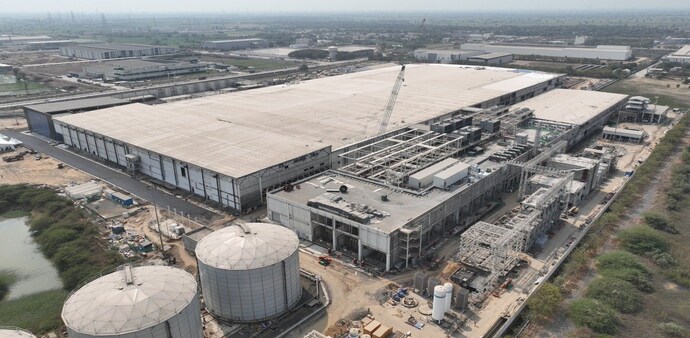
- Mar 5, 2026,
- Updated Mar 5, 2026 2:45 PM IST
India’s semiconductor ambitions have long been shaped as much by missed opportunities as by policy intent.
A fire at the Semiconductor Complex in Mohali in the 1980s set back India’s early ambitions. In the mid-2000s, the country failed to secure Intel’s proposed manufacturing investment. Even after the Modi government launched the India Semiconductor Mission in December 2021, scepticism lingered, especially after the collapse of the Vedanta–Foxconn joint venture.
Then came Micron Technology’s $2.7 billion announcement to build an Assembly, Testing, Marking and Packaging (ATMP) facility in Sanand, Gujarat.
The project was significant not only because it marked India’s first large-scale commercial semiconductor packaging plant, but also because it came from an established global semiconductor major. For policymakers and industry watchers, it represented a credibility breakthrough.
Yet in the semiconductor industry, announcements matter far less than execution.
Now, as Micron’s Sanand plant moves into commercial operations, the question shifts from symbolism to substance: where does this project place India in the global semiconductor ecosystem and can it catalyse further investments?
The test after Micron
Micron Technology is among the world’s leading memory semiconductor companies. Its Sanand facility operates at the backend stage of semiconductor manufacturing, where wafers produced at fabrication plants are assembled, tested and packaged before being shipped to customers.
Explaining the scale of what is India’s first high-volume memory assembly and test site, Manish Bhatia, Executive Vice President, Global Operations at Micron Technology, told Business Today: “The 500,000-square-foot cleanroom is the largest single raised-floor semiconductor assembly cleanroom globally, built to Class 1,000 standards in critical areas, reflecting the precision and complexity required in memory manufacturing.”
For the Sanand plant, wafers will be sourced from Micron’s global fabrication network before undergoing wafer thinning, assembly, testing and module build in India.
Describing it as a “wafer-in to finished-product-out” process, Bhatia added the site will produce DRAM and NAND products for PCs, smartphones, data centres and storage solutions.
These products will serve global customers across North America, Europe and Asia, while also strengthening domestic supply.
Once fully ramped up, the Sanand facility is expected to handle roughly 10% of Micron’s global packaging and test output.
For India, the plant demonstrates that advanced semiconductor assembly, testing, and packaging operations can be performed domestically while adhering to global quality and productivity standards.
The credibility signal
For analysts tracking India’s semiconductor push, Micron’s operational plant represents a crucial credibility signal.
“There has already been a cascading effect after the June 2023 announcement of Micron Technology. This is evident from the fact that seven more OSAT projects got approved after that, and many more would have applied,” says Arun Mampazhy, an independent semiconductor analyst.
However, he cautions that future investments will depend on how the India Semiconductor Mission 2.0 prioritises packaging and testing projects.
“As far as fabs are concerned, presence of packaging facility in a country does not necessarily automatically translate into desire for fabs to put up shop, the classic example being Vietnam,” he notes.
Still, the fact that Micron’s project has progressed to production has helped address long-standing doubts.
Mampazhy says the project has helped India challenge perceptions about whether the country can deliver the infrastructure and policy coordination required for a high-end semiconductor industry. A strategic impact, not yet a capacity one
Analysts say Micron’s biggest impact, at least initially, may be psychological rather than industrial.
“A global memory leader establishing operations in India forces boardrooms across Taiwan, Korea, Japan, and the US to reassess risk assumptions, reducing first-mover hesitation and testing India’s policy credibility in real time,” says Manish Rawat, semiconductor analyst at TechInsights.
However, signalling alone will not guarantee follow-on investments.
Rawat notes that semiconductor projects typically involve 15- to 20-year commitments, meaning companies need policy stability well beyond headline incentives.
Whether Micron becomes an anchor investment or remains a standalone outpost will depend on sustained policy continuity and ecosystem development.
The hard part of chip manufacturing
Even with Micron’s plant operational, semiconductor manufacturing depends on a far wider industrial ecosystem.
Reliable 24/7 power, water availability and logistics infrastructure are essential. Equally important is the presence of supporting suppliers, including substrate manufacturers, materials companies and equipment service providers, that can co-locate with semiconductor facilities.
A skilled workforce pipeline and a roadmap toward advanced packaging technologies, including heterogeneous integration, are also critical.
Analysts say Micron’s Sanand project validates parts of India’s semiconductor infrastructure readiness, but only partially.
That is because backend manufacturing, such as assembly and testing, has lower infrastructure complexity than wafer fabrication.
Mampazhy estimates the infrastructure and equipment complexity of an ATMP or OSAT facility may be only about 20–30% compared with a fab of similar scale.
Rawat adds that Micron’s project demonstrates that within a controlled industrial zone, India can deliver reliable power, water, land access and regulatory coordination aligned with semiconductor timelines.
This weakens earlier scepticism around infrastructure reliability.
Yet structural risks remain.
Replicating such conditions across multiple states, ensuring grid stability under rising industrial load, developing a supplier ecosystem and preparing for future fabrication plants will pose the next set of challenges.
Closing the gap with Asia’s chip hubs
Even as India takes its first steps in backend semiconductor manufacturing, it remains far behind Asia’s established semiconductor clusters.
Countries such as Malaysia, China and Japan have spent decades building integrated ecosystems spanning packaging firms, equipment manufacturers, chemical suppliers and specialised labour pools.
Those advantages cannot be replicated quickly.
“In Malaysia, government control and concerns of being a backdoor for China are strong, but it has the advantage of being an experienced player in hosting ATMP/OSAT facilities,” says Mampazhy.
“Japan is a technology leader, especially when it comes to the supply chain (equipment, chemicals/resists, etc.). They have had a gap in not catching up with the fab tech and they also have a talent crunch in terms of numbers, partly due to their ageing and declining population. China has technology, talent and money. However, the global lack of trust is a negative.”
Compared with these countries, India’s advantages are still emerging.
Talent is one area where progress is already visible. Of the nearly 1,300 employees at Micron’s Sanand facility, about 700 are new college graduates from Gujarat and neighbouring states.
“These graduates from electronics, mechanical, chemical, industrial and materials engineering, completed intensive 3–6 month training assignments at our advanced manufacturing facilities in Malaysia and Singapore before returning to support operations in India,” says Bhatia.
Building technology capabilities and supply chain depth, however, will take longer.
Analysts say developing a local ecosystem of materials suppliers, packaging substrates and specialised equipment service providers will be critical for India to scale semiconductor manufacturing over time.
The geopolitical window
India may also benefit from shifting global geopolitics.
Amid ongoing US–China technology realignments, multinational companies are increasingly exploring diversification strategies for semiconductor supply chains.
That gives India a potential opening.
However, Rawat cautions that India’s advantages today are still largely policy- and geopolitics-driven rather than ecosystem-led.
Micron’s Sanand plant has helped India cross an important credibility threshold.
The next challenge will be far more difficult: translating that credibility into a deeper semiconductor ecosystem of suppliers, talent and infrastructure.
For Unparalleled coverage of India's Businesses and Economy – Subscribe to Business Today Magazine
India’s semiconductor ambitions have long been shaped as much by missed opportunities as by policy intent.
A fire at the Semiconductor Complex in Mohali in the 1980s set back India’s early ambitions. In the mid-2000s, the country failed to secure Intel’s proposed manufacturing investment. Even after the Modi government launched the India Semiconductor Mission in December 2021, scepticism lingered, especially after the collapse of the Vedanta–Foxconn joint venture.
Then came Micron Technology’s $2.7 billion announcement to build an Assembly, Testing, Marking and Packaging (ATMP) facility in Sanand, Gujarat.
The project was significant not only because it marked India’s first large-scale commercial semiconductor packaging plant, but also because it came from an established global semiconductor major. For policymakers and industry watchers, it represented a credibility breakthrough.
Yet in the semiconductor industry, announcements matter far less than execution.
Now, as Micron’s Sanand plant moves into commercial operations, the question shifts from symbolism to substance: where does this project place India in the global semiconductor ecosystem and can it catalyse further investments?
The test after Micron
Micron Technology is among the world’s leading memory semiconductor companies. Its Sanand facility operates at the backend stage of semiconductor manufacturing, where wafers produced at fabrication plants are assembled, tested and packaged before being shipped to customers.
Explaining the scale of what is India’s first high-volume memory assembly and test site, Manish Bhatia, Executive Vice President, Global Operations at Micron Technology, told Business Today: “The 500,000-square-foot cleanroom is the largest single raised-floor semiconductor assembly cleanroom globally, built to Class 1,000 standards in critical areas, reflecting the precision and complexity required in memory manufacturing.”
For the Sanand plant, wafers will be sourced from Micron’s global fabrication network before undergoing wafer thinning, assembly, testing and module build in India.
Describing it as a “wafer-in to finished-product-out” process, Bhatia added the site will produce DRAM and NAND products for PCs, smartphones, data centres and storage solutions.
These products will serve global customers across North America, Europe and Asia, while also strengthening domestic supply.
Once fully ramped up, the Sanand facility is expected to handle roughly 10% of Micron’s global packaging and test output.
For India, the plant demonstrates that advanced semiconductor assembly, testing, and packaging operations can be performed domestically while adhering to global quality and productivity standards.
The credibility signal
For analysts tracking India’s semiconductor push, Micron’s operational plant represents a crucial credibility signal.
“There has already been a cascading effect after the June 2023 announcement of Micron Technology. This is evident from the fact that seven more OSAT projects got approved after that, and many more would have applied,” says Arun Mampazhy, an independent semiconductor analyst.
However, he cautions that future investments will depend on how the India Semiconductor Mission 2.0 prioritises packaging and testing projects.
“As far as fabs are concerned, presence of packaging facility in a country does not necessarily automatically translate into desire for fabs to put up shop, the classic example being Vietnam,” he notes.
Still, the fact that Micron’s project has progressed to production has helped address long-standing doubts.
Mampazhy says the project has helped India challenge perceptions about whether the country can deliver the infrastructure and policy coordination required for a high-end semiconductor industry. A strategic impact, not yet a capacity one
Analysts say Micron’s biggest impact, at least initially, may be psychological rather than industrial.
“A global memory leader establishing operations in India forces boardrooms across Taiwan, Korea, Japan, and the US to reassess risk assumptions, reducing first-mover hesitation and testing India’s policy credibility in real time,” says Manish Rawat, semiconductor analyst at TechInsights.
However, signalling alone will not guarantee follow-on investments.
Rawat notes that semiconductor projects typically involve 15- to 20-year commitments, meaning companies need policy stability well beyond headline incentives.
Whether Micron becomes an anchor investment or remains a standalone outpost will depend on sustained policy continuity and ecosystem development.
The hard part of chip manufacturing
Even with Micron’s plant operational, semiconductor manufacturing depends on a far wider industrial ecosystem.
Reliable 24/7 power, water availability and logistics infrastructure are essential. Equally important is the presence of supporting suppliers, including substrate manufacturers, materials companies and equipment service providers, that can co-locate with semiconductor facilities.
A skilled workforce pipeline and a roadmap toward advanced packaging technologies, including heterogeneous integration, are also critical.
Analysts say Micron’s Sanand project validates parts of India’s semiconductor infrastructure readiness, but only partially.
That is because backend manufacturing, such as assembly and testing, has lower infrastructure complexity than wafer fabrication.
Mampazhy estimates the infrastructure and equipment complexity of an ATMP or OSAT facility may be only about 20–30% compared with a fab of similar scale.
Rawat adds that Micron’s project demonstrates that within a controlled industrial zone, India can deliver reliable power, water, land access and regulatory coordination aligned with semiconductor timelines.
This weakens earlier scepticism around infrastructure reliability.
Yet structural risks remain.
Replicating such conditions across multiple states, ensuring grid stability under rising industrial load, developing a supplier ecosystem and preparing for future fabrication plants will pose the next set of challenges.
Closing the gap with Asia’s chip hubs
Even as India takes its first steps in backend semiconductor manufacturing, it remains far behind Asia’s established semiconductor clusters.
Countries such as Malaysia, China and Japan have spent decades building integrated ecosystems spanning packaging firms, equipment manufacturers, chemical suppliers and specialised labour pools.
Those advantages cannot be replicated quickly.
“In Malaysia, government control and concerns of being a backdoor for China are strong, but it has the advantage of being an experienced player in hosting ATMP/OSAT facilities,” says Mampazhy.
“Japan is a technology leader, especially when it comes to the supply chain (equipment, chemicals/resists, etc.). They have had a gap in not catching up with the fab tech and they also have a talent crunch in terms of numbers, partly due to their ageing and declining population. China has technology, talent and money. However, the global lack of trust is a negative.”
Compared with these countries, India’s advantages are still emerging.
Talent is one area where progress is already visible. Of the nearly 1,300 employees at Micron’s Sanand facility, about 700 are new college graduates from Gujarat and neighbouring states.
“These graduates from electronics, mechanical, chemical, industrial and materials engineering, completed intensive 3–6 month training assignments at our advanced manufacturing facilities in Malaysia and Singapore before returning to support operations in India,” says Bhatia.
Building technology capabilities and supply chain depth, however, will take longer.
Analysts say developing a local ecosystem of materials suppliers, packaging substrates and specialised equipment service providers will be critical for India to scale semiconductor manufacturing over time.
The geopolitical window
India may also benefit from shifting global geopolitics.
Amid ongoing US–China technology realignments, multinational companies are increasingly exploring diversification strategies for semiconductor supply chains.
That gives India a potential opening.
However, Rawat cautions that India’s advantages today are still largely policy- and geopolitics-driven rather than ecosystem-led.
Micron’s Sanand plant has helped India cross an important credibility threshold.
The next challenge will be far more difficult: translating that credibility into a deeper semiconductor ecosystem of suppliers, talent and infrastructure.
For Unparalleled coverage of India's Businesses and Economy – Subscribe to Business Today Magazine