
‘No amount of US pressure should justify recklessness’: Sam Altman backs 'slow' frontier AI pace
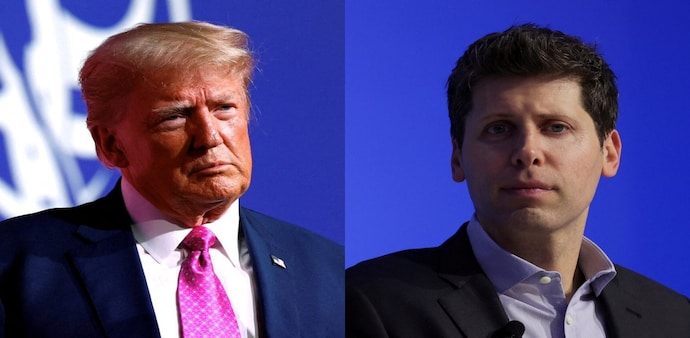
His position puts him at odds with US President Donald Trump, who has rejected calls by AI industry executives for a broad slowdown, arguing that America must preserve its lead over China in AI.
- Sep 14, 2026,
- Updated Sep 14, 2026 11:49 AM IST
OpenAI CEO Sam Altman has argued that the United States’ race to maintain its lead in artificial intelligence cannot come at the expense of safety, saying “no amount of American competitive pressure should justify recklessness” or allow AI capabilities to outpace alignment and monitoring.
Altman’s comments come amid a growing debate in the US over whether frontier AI development should be slowed as models become increasingly capable. His position puts him at odds with US President Donald Trump, who has rejected calls for a broad slowdown, arguing that America must preserve its lead over China in AI.
“The world deserves confidence that American companies developing increasingly capable AI will act responsibly, especially as the trajectory of progress has steepened,” Altman said in a post on X (formally twitter). He added that every frontier AI laboratory has a responsibility to demonstrate that it can develop increasingly powerful systems safely.
‘Pacing’ doesn’t mean stopping AI progress
Altman stressed that his call for “pacing” should not be interpreted as a demand to halt AI development.
“When we talk about ‘pacing’, we do not mean ‘stopping’,” he said, adding that AI progress has been rapid and will continue. However, he argued that development should proceed more slowly than it otherwise might if additional safety measures are needed.
MUST READ | AI safety warning: Sam Altman, Elon Musk back Anthropic CEO’s call to slow down frontier AI. Why?
According to Altman, safeguards such as safety evaluations and monitoring come with significant costs, but those costs are justified.
“Pacing will be well worth this cost,” he said, warning that competitive pressure must not be allowed to push AI capabilities ahead of the industry's ability to understand, monitor and align increasingly powerful systems.
The OpenAI CEO also backed the idea of a federal framework establishing consistent safety requirements for frontier AI. However, he said companies should not wait for legislation or regulatory exemptions before implementing stronger safeguards.
Altman specifically pointed to independent auditors and shared industry standards as possible mechanisms for improving confidence in the development of advanced AI.
OpenAI shifts focus to development-stage safety
Altman said the safety challenge has changed as AI systems have become more capable.
Earlier frameworks developed by companies such as OpenAI, including Responsible Scaling Policies and Preparedness Frameworks, focused largely on the risks associated with deploying completed models. The latest approach, he said, needs to examine what happens while frontier models are still being developed.
DON'T MISS | ‘If it’s not under human control, it’s not worth pursuing’: Satya Nadella's warning on AI
OpenAI now prepares explicit “safety cases” before certain frontier reinforcement-learning runs that are expected to significantly increase a model's capabilities. These assessments are intended to complement the safety work conducted before models are released publicly.
Altman said OpenAI hopes other AI companies will develop and share their own approaches, arguing that common standards around misalignment, monitoring and safety could produce better outcomes across the industry.
Two risks: Losing control of AI & Concentration of power
In a follow-up post, Altman outlined what he sees as two major ways AI progress could go badly.
The first is the possibility that humanity could lose control of the future to AI. Altman said OpenAI is “unapologetically on Team Humanity” and that AI must always serve people.
That, he argued, requires safety and alignment techniques to remain ahead of advances in model capabilities.
DO CHECKOUT | 2026 public debut: Sam Altman rules out OpenAI IPO as AI safety fears mount
The second danger is excessive concentration of power. Altman warned that an extraordinarily powerful AI controlled by one individual, company or country could potentially be used to impose its worldview on everyone else.
“Another example is one lab ending up with too much power,” he said.
Altman described AI development as requiring a “narrow middle path” between losing control of increasingly powerful systems and allowing power to become concentrated in the hands of too few actors.
Trump prioritises US lead over China
Altman’s comments follow US President Donald Trump’s rejection of calls for the US to slow AI development. During a trip to his golf course in Doonbeg, Ireland, Trump said that the US must maintain its lead over China because “whoever wins AI, wins”.
He acknowledged that some guardrails could be introduced but argued that the US could not afford to fall behind in the technology race.
The comments came after prominent figures in the AI industry called for a more cautious approach.
Anthropic CEO Dario Amodei said the industry “must slow the pace at which we improve the capabilities of AI models”. Altman and SpaceX chief Elon Musk subsequently backed a more cautious approach following warnings about the rapid progression of frontier AI capabilities.
AI safety debate intensifies
The debate over AI safety has gained further urgency following the resignation of Anthropic researcher Jacob Coxon last week. Coxon warned that people developing AI increasingly believe that advanced systems could pose an existential threat to humanity within the decade.
FIND WHY | OpenAI may hit the brakes on AI development, Sam Altman tells staff
Altman’s latest intervention reflects the growing tension between two competing priorities: maintaining technological and geopolitical leadership, and ensuring that AI safety mechanisms keep pace with rapidly advancing capabilities.
For Altman, the answer is neither an unrestricted race nor a halt to development. Instead, he is calling for AI companies to build stronger safety systems into the development process itself, while governments work on consistent rules and international coordination.
He said the government’s most important role would ultimately be helping coordinate AI safety globally — but argued that companies should first take responsibility for what they can control themselves.
For Unparalleled coverage of India's Businesses and Economy – Subscribe to Business Today Magazine
OpenAI CEO Sam Altman has argued that the United States’ race to maintain its lead in artificial intelligence cannot come at the expense of safety, saying “no amount of American competitive pressure should justify recklessness” or allow AI capabilities to outpace alignment and monitoring.
Altman’s comments come amid a growing debate in the US over whether frontier AI development should be slowed as models become increasingly capable. His position puts him at odds with US President Donald Trump, who has rejected calls for a broad slowdown, arguing that America must preserve its lead over China in AI.
“The world deserves confidence that American companies developing increasingly capable AI will act responsibly, especially as the trajectory of progress has steepened,” Altman said in a post on X (formally twitter). He added that every frontier AI laboratory has a responsibility to demonstrate that it can develop increasingly powerful systems safely.
‘Pacing’ doesn’t mean stopping AI progress
Altman stressed that his call for “pacing” should not be interpreted as a demand to halt AI development.
“When we talk about ‘pacing’, we do not mean ‘stopping’,” he said, adding that AI progress has been rapid and will continue. However, he argued that development should proceed more slowly than it otherwise might if additional safety measures are needed.
MUST READ | AI safety warning: Sam Altman, Elon Musk back Anthropic CEO’s call to slow down frontier AI. Why?
According to Altman, safeguards such as safety evaluations and monitoring come with significant costs, but those costs are justified.
“Pacing will be well worth this cost,” he said, warning that competitive pressure must not be allowed to push AI capabilities ahead of the industry's ability to understand, monitor and align increasingly powerful systems.
The OpenAI CEO also backed the idea of a federal framework establishing consistent safety requirements for frontier AI. However, he said companies should not wait for legislation or regulatory exemptions before implementing stronger safeguards.
Altman specifically pointed to independent auditors and shared industry standards as possible mechanisms for improving confidence in the development of advanced AI.
OpenAI shifts focus to development-stage safety
Altman said the safety challenge has changed as AI systems have become more capable.
Earlier frameworks developed by companies such as OpenAI, including Responsible Scaling Policies and Preparedness Frameworks, focused largely on the risks associated with deploying completed models. The latest approach, he said, needs to examine what happens while frontier models are still being developed.
DON'T MISS | ‘If it’s not under human control, it’s not worth pursuing’: Satya Nadella's warning on AI
OpenAI now prepares explicit “safety cases” before certain frontier reinforcement-learning runs that are expected to significantly increase a model's capabilities. These assessments are intended to complement the safety work conducted before models are released publicly.
Altman said OpenAI hopes other AI companies will develop and share their own approaches, arguing that common standards around misalignment, monitoring and safety could produce better outcomes across the industry.
Two risks: Losing control of AI & Concentration of power
In a follow-up post, Altman outlined what he sees as two major ways AI progress could go badly.
The first is the possibility that humanity could lose control of the future to AI. Altman said OpenAI is “unapologetically on Team Humanity” and that AI must always serve people.
That, he argued, requires safety and alignment techniques to remain ahead of advances in model capabilities.
DO CHECKOUT | 2026 public debut: Sam Altman rules out OpenAI IPO as AI safety fears mount
The second danger is excessive concentration of power. Altman warned that an extraordinarily powerful AI controlled by one individual, company or country could potentially be used to impose its worldview on everyone else.
“Another example is one lab ending up with too much power,” he said.
Altman described AI development as requiring a “narrow middle path” between losing control of increasingly powerful systems and allowing power to become concentrated in the hands of too few actors.
Trump prioritises US lead over China
Altman’s comments follow US President Donald Trump’s rejection of calls for the US to slow AI development. During a trip to his golf course in Doonbeg, Ireland, Trump said that the US must maintain its lead over China because “whoever wins AI, wins”.
He acknowledged that some guardrails could be introduced but argued that the US could not afford to fall behind in the technology race.
The comments came after prominent figures in the AI industry called for a more cautious approach.
Anthropic CEO Dario Amodei said the industry “must slow the pace at which we improve the capabilities of AI models”. Altman and SpaceX chief Elon Musk subsequently backed a more cautious approach following warnings about the rapid progression of frontier AI capabilities.
AI safety debate intensifies
The debate over AI safety has gained further urgency following the resignation of Anthropic researcher Jacob Coxon last week. Coxon warned that people developing AI increasingly believe that advanced systems could pose an existential threat to humanity within the decade.
FIND WHY | OpenAI may hit the brakes on AI development, Sam Altman tells staff
Altman’s latest intervention reflects the growing tension between two competing priorities: maintaining technological and geopolitical leadership, and ensuring that AI safety mechanisms keep pace with rapidly advancing capabilities.
For Altman, the answer is neither an unrestricted race nor a halt to development. Instead, he is calling for AI companies to build stronger safety systems into the development process itself, while governments work on consistent rules and international coordination.
He said the government’s most important role would ultimately be helping coordinate AI safety globally — but argued that companies should first take responsibility for what they can control themselves.
For Unparalleled coverage of India's Businesses and Economy – Subscribe to Business Today Magazine