
From brink of homelessness to ₹4,000-cr 'Ramayana' producer: A look at Namit Malhotra’s journey on film's release
Malhotra’s early operation reportedly began in a garage, with no venture-capital backing.
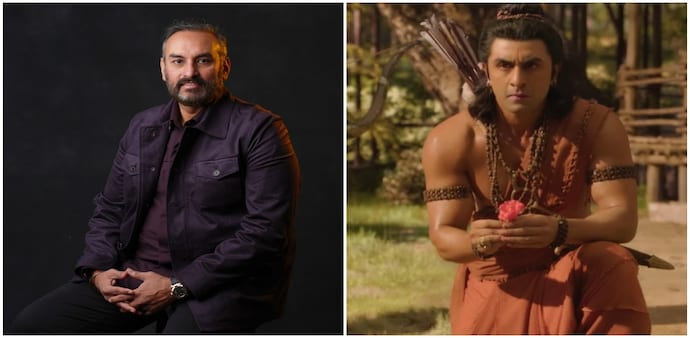
- Nov 5, 2026,
- Updated Nov 5, 2026 9:16 AM IST
As Ramayana releases in theatres today, the spotlight is on its reported Rs 4,000-crore scale, its global ambitions and the visual spectacle behind it. But for producer Namit Malhotra, the film’s launch marks the latest chapter in a far riskier story—one that began decades ago with ₹7 lakh, a family home placed on the line and a ₹2 crore bank loan.
Malhotra has revealed that his family mortgaged their house to fund the visual-effects business that would eventually become the foundation of Prime Focus and DNEG. Had the gamble failed, he said, “we would have become homeless.”
MUST READ: 'Lost 90% of my wealth in 2008': At Ramayana's LA premiere, Namit Malhotra recounts hard times
A ₹7 lakh beginning
Malhotra said he started the business at 19, alongside partners aged 21, with an initial investment of about ₹7 lakh. His father funded part of the amount, while the remainder came from a bank loan.
“None of us had any experience. I was 19, they were 21. We invested about ₹7 lakh. My father funded some of it, and the rest was a loan from the bank,” Malhotra said.
The venture began as a computer-based editing and post-production operation before evolving into a visual-effects company. It later grew into Prime Focus and acquired London-based Oscar-winning VFX studio Double Negative, now known as DNEG, in 2014.
‘We would have become homeless’
The biggest gamble came in 1997, when Malhotra’s family mortgaged their home to secure funding for the business. At the time, the company’s turnover was ₹75 lakh, while the loan taken was ₹2 crore.
“In 1997, I knew there was no bigger risk than this. My company’s turnover was ₹75 lakh, and the loan we had taken was ₹2 crore,” Malhotra recalled.
He added that the stakes were personal as well as financial. “I knew that if the business failed, our story would have been completely finished. After all, it was a new technology. We would have become homeless, as we had invested everything in it,” he said.
DO CHECKOUT: Inside Ramayana’s VFX universe: How DNEG is building a mythological world for global cinema
From garage to global VFX
Malhotra’s early operation reportedly began in a garage, with no venture-capital backing. The expansion was financed through debt, personal guarantees and a bank loan arranged with his father’s help.
The company eventually listed on the Indian stock market in 2006, before Prime Focus acquired Double Negative in 2014. DNEG has since worked on major Hollywood productions, including Avatar, and has won eight Oscars.
The Ramayana bet
Decades after that early risk, Malhotra is backing Ramayana through Prime Focus Studios. The film’s reported budget places it among India’s most expensive productions, with its global rollout expected to be extensive.