
Budget 2026: FM Nirmala Sitharaman announces wide-ranging reforms to boost ease of doing business and living
A key announcement was the government’s plan to double the individual investment limit for overseas residents to 10%, as part of a broader effort to align foreign investment rules with India’s evolving economic needs and deepen domestic capital markets.
- Feb 1, 2026,
- Updated Feb 1, 2026 1:13 PM IST
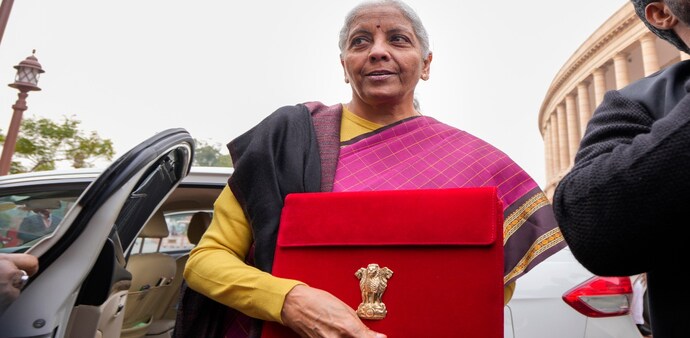
Finance Minister Nirmala Sitharaman on Sunday unveiled a sweeping set of proposals in the Union Budget 2026 aimed at improving Ease of Doing Business and Ease of Living, with measures spanning foreign investment rules, direct taxes, compliance simplification, customs reforms and dispute resolution.
A key announcement was the government’s plan to double the individual investment limit for overseas residents to 10%, as part of a broader effort to align foreign investment rules with India’s evolving economic needs and deepen domestic capital markets. Presenting the Budget, Sitharaman said the government will review regulations governing non-debt foreign investments under foreign exchange laws to make them more modern, user-friendly and aligned with changing economic priorities. The move is expected to offer greater clarity and flexibility to foreign investors seeking exposure to Indian equities beyond traditional debt instruments.
Under the proposed changes to the Portfolio Investment Scheme (PIS), individual persons resident outside India will be allowed to raise their equity holding in a listed Indian company from 5% to 10%, while the aggregate cap for all such overseas individual investors will increase from 10% to 24%.
Tanvi Kanchan, Associate Director & Head – NRI Business at Anand Rathi Share and Stock Brokers, said the higher limits would enable overseas individuals to build more meaningful positions in Indian companies. “This could enhance market efficiency, broaden the shareholder base and foster stronger long-term participation in Indian capital markets,” she said.
Sonam Srivastava, Founder and Fund Manager at Wright Research PMS, described the expansion of PIS as a structural reform rather than a short-term flow driver. “PROI investors tend to be long-term and sticky, often with personal or economic links to India. Expanding both individual and aggregate limits improves liquidity, eases ownership constraints in mid- and large-cap stocks, and supports better price discovery over time,” she said. Adil Ladha, Partner at Saraf and Partners, added that higher limits would also improve India’s competitiveness versus other emerging markets amid volatile foreign portfolio flows.
On the taxation front, the Budget proposed several measures to reduce friction and improve compliance. Interest awarded by motor accident claims tribunals to individuals will be fully exempt from income tax, with no TDS. TCS on overseas tour packages has been slashed to 2% from 5% and 20%, with no minimum threshold, while TCS under the Liberalised Remittance Scheme for education and medical purposes has also been reduced to 2%.
To simplify withholding taxes, TDS on the supply of manpower services will be capped at 1% or 2%, and small taxpayers will be able to obtain lower or nil deduction certificates through an automated, rule-based process. Depositories will be allowed to accept Form 15G and 15H from taxpayers holding securities across multiple companies.
Tax filing
The government also announced key filing and compliance relief. The time limit to revise income tax returns has been extended from December 31 to March 31, subject to a nominal fee. Filing deadlines for ITR-1 and ITR-2 will remain July 31, while non-audit business cases and trusts will get time till August 31. TDS on property purchases from non-residents will now be deducted and deposited using the buyer’s PAN instead of a TAN, easing one-time compliance burdens.
Foreign asset disclosure
A one-time six-month foreign asset disclosure window will be introduced for small taxpayers, alongside immunity from prosecution for past non-disclosure of non-immovable foreign assets valued below ₹20 lakh. The framework for immunity from penalty and prosecution has been expanded, and several procedural defaults, including non-production of books and certain TDS lapses, have been decriminalised.
Corporate taxation
On corporate taxation, buybacks will again be taxed as capital gains for all shareholders, though promoters will face an additional levy. MAT is proposed to be made a final tax, with partial set-off of MAT credit allowed under the new regime.
The Budget also announced customs and trade facilitation reforms, including exemption of basic customs duty on 17 cancer drugs, a single digital window for cargo clearance approvals, rollout of the Customs Integrated System within two years, and a dispute-settlement framework allowing honest taxpayers to close cases by paying an additional amount in lieu of penalties.
Finance Minister Nirmala Sitharaman on Sunday unveiled a sweeping set of proposals in the Union Budget 2026 aimed at improving Ease of Doing Business and Ease of Living, with measures spanning foreign investment rules, direct taxes, compliance simplification, customs reforms and dispute resolution.
A key announcement was the government’s plan to double the individual investment limit for overseas residents to 10%, as part of a broader effort to align foreign investment rules with India’s evolving economic needs and deepen domestic capital markets. Presenting the Budget, Sitharaman said the government will review regulations governing non-debt foreign investments under foreign exchange laws to make them more modern, user-friendly and aligned with changing economic priorities. The move is expected to offer greater clarity and flexibility to foreign investors seeking exposure to Indian equities beyond traditional debt instruments.
Under the proposed changes to the Portfolio Investment Scheme (PIS), individual persons resident outside India will be allowed to raise their equity holding in a listed Indian company from 5% to 10%, while the aggregate cap for all such overseas individual investors will increase from 10% to 24%.
Tanvi Kanchan, Associate Director & Head – NRI Business at Anand Rathi Share and Stock Brokers, said the higher limits would enable overseas individuals to build more meaningful positions in Indian companies. “This could enhance market efficiency, broaden the shareholder base and foster stronger long-term participation in Indian capital markets,” she said.
Sonam Srivastava, Founder and Fund Manager at Wright Research PMS, described the expansion of PIS as a structural reform rather than a short-term flow driver. “PROI investors tend to be long-term and sticky, often with personal or economic links to India. Expanding both individual and aggregate limits improves liquidity, eases ownership constraints in mid- and large-cap stocks, and supports better price discovery over time,” she said. Adil Ladha, Partner at Saraf and Partners, added that higher limits would also improve India’s competitiveness versus other emerging markets amid volatile foreign portfolio flows.
On the taxation front, the Budget proposed several measures to reduce friction and improve compliance. Interest awarded by motor accident claims tribunals to individuals will be fully exempt from income tax, with no TDS. TCS on overseas tour packages has been slashed to 2% from 5% and 20%, with no minimum threshold, while TCS under the Liberalised Remittance Scheme for education and medical purposes has also been reduced to 2%.
To simplify withholding taxes, TDS on the supply of manpower services will be capped at 1% or 2%, and small taxpayers will be able to obtain lower or nil deduction certificates through an automated, rule-based process. Depositories will be allowed to accept Form 15G and 15H from taxpayers holding securities across multiple companies.
Tax filing
The government also announced key filing and compliance relief. The time limit to revise income tax returns has been extended from December 31 to March 31, subject to a nominal fee. Filing deadlines for ITR-1 and ITR-2 will remain July 31, while non-audit business cases and trusts will get time till August 31. TDS on property purchases from non-residents will now be deducted and deposited using the buyer’s PAN instead of a TAN, easing one-time compliance burdens.
Foreign asset disclosure
A one-time six-month foreign asset disclosure window will be introduced for small taxpayers, alongside immunity from prosecution for past non-disclosure of non-immovable foreign assets valued below ₹20 lakh. The framework for immunity from penalty and prosecution has been expanded, and several procedural defaults, including non-production of books and certain TDS lapses, have been decriminalised.
Corporate taxation
On corporate taxation, buybacks will again be taxed as capital gains for all shareholders, though promoters will face an additional levy. MAT is proposed to be made a final tax, with partial set-off of MAT credit allowed under the new regime.
The Budget also announced customs and trade facilitation reforms, including exemption of basic customs duty on 17 cancer drugs, a single digital window for cargo clearance approvals, rollout of the Customs Integrated System within two years, and a dispute-settlement framework allowing honest taxpayers to close cases by paying an additional amount in lieu of penalties.