
Economic Survey 2025-26: With outpatient care expanding, dependence on private sector is rising
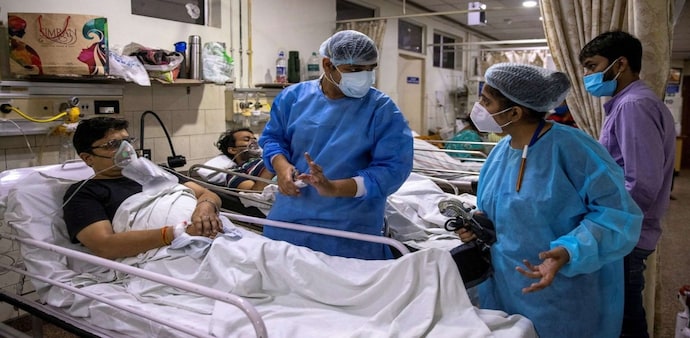
Healthcare load is increasingly driven by chronic conditions that require repeat visits rather than one-time hospitalisation, the Economic Survey pointed out.
- Jan 29, 2026,
- Updated Jan 29, 2026 2:20 PM IST
Outpatient care has overtaken hospital treatment as the main channel of healthcare delivery in India, with patient volumes in primary care, screenings and digital consultations running several times higher than inpatient admissions, according to the Economic Survey 2025-26 tabled in Parliament by Finance Minister Nirmala Sitharaman on January 29.
While hospital admissions under Ayushman Bharat Pradhan Mantri Jan Arogya Yojana stand at 10.98 crore, outpatient interactions are far higher, led by 42.66 crore teleconsultations and 506 crore visits at Ayushman Arogya Mandirs as of December 2025.
The Survey stated that this scale cannot be handled by public systems alone. “The state alone cannot pull the chariot of economic and social progress,” it said, highlighting “the roles of the private sector and citizens in managing obesity, non-communicable diseases, and digital addiction”.
Follow our detailed coverage on Union Budget 2026 here
The healthcare load is increasingly driven by chronic conditions that require repeat visits rather than one-time hospitalisation. Under the National Programme for Prevention and Control of Non-Communicable Diseases, India has conducted 40.13 crore hypertension screenings and 39.86 crore diabetes screenings, the Survey showed.
This expansion is playing out against tight workforce availability. The Survey recorded that nearly 3.78 lakh health human resources have been provided to states, including 18,922 general duty medical officers, 4,964 specialists and 77,874 staff nurses, along with allied health workers and public health staff.
Even with these additions, the scale of outpatient and chronic care is stretching available manpower. India’s health workforce density remains below global benchmarks used by the World Health Organisation, which recommend 4.45 doctors, nurses and midwives per 1,000 population to deliver essential health services, highlighting why delivery increasingly spills beyond public facilities into private clinics, hospitals and diagnostic centres.
At the same time, government spending on health has risen alongside this growth in utilisation. General government health expenditure grew at a compound annual growth rate of 8 per cent between FY22 and FY26 (Budget Estimates), according to the Survey.
The current phase also marks a departure from the earlier focus on survival outcomes. The Survey noted that maternal mortality has declined by 86 per cent since 1990, under-five mortality by 78 per cent, and infant mortality by over 37 per cent between 2013 and 2023.
Digital platforms are absorbing a growing share of outpatient demand. Initiatives such as the Ayushman Bharat Digital Mission and e-Sanjeevani have “enhanced citizen access to digital health services, created digital employment opportunities, along with enabling evidence-based policymaking and improved hospital management,” the Survey noted.
The Survey also recorded the expansion of public primary care infrastructure, with 1.82 lakh Ayushman Arogya Mandirs operational across the country. Even so, the volume of consultations, screenings and follow-up care indicates continued reliance on private providers to manage patient load beyond public facilities.
Outpatient care has overtaken hospital treatment as the main channel of healthcare delivery in India, with patient volumes in primary care, screenings and digital consultations running several times higher than inpatient admissions, according to the Economic Survey 2025-26 tabled in Parliament by Finance Minister Nirmala Sitharaman on January 29.
While hospital admissions under Ayushman Bharat Pradhan Mantri Jan Arogya Yojana stand at 10.98 crore, outpatient interactions are far higher, led by 42.66 crore teleconsultations and 506 crore visits at Ayushman Arogya Mandirs as of December 2025.
The Survey stated that this scale cannot be handled by public systems alone. “The state alone cannot pull the chariot of economic and social progress,” it said, highlighting “the roles of the private sector and citizens in managing obesity, non-communicable diseases, and digital addiction”.
Follow our detailed coverage on Union Budget 2026 here
The healthcare load is increasingly driven by chronic conditions that require repeat visits rather than one-time hospitalisation. Under the National Programme for Prevention and Control of Non-Communicable Diseases, India has conducted 40.13 crore hypertension screenings and 39.86 crore diabetes screenings, the Survey showed.
This expansion is playing out against tight workforce availability. The Survey recorded that nearly 3.78 lakh health human resources have been provided to states, including 18,922 general duty medical officers, 4,964 specialists and 77,874 staff nurses, along with allied health workers and public health staff.
Even with these additions, the scale of outpatient and chronic care is stretching available manpower. India’s health workforce density remains below global benchmarks used by the World Health Organisation, which recommend 4.45 doctors, nurses and midwives per 1,000 population to deliver essential health services, highlighting why delivery increasingly spills beyond public facilities into private clinics, hospitals and diagnostic centres.
At the same time, government spending on health has risen alongside this growth in utilisation. General government health expenditure grew at a compound annual growth rate of 8 per cent between FY22 and FY26 (Budget Estimates), according to the Survey.
The current phase also marks a departure from the earlier focus on survival outcomes. The Survey noted that maternal mortality has declined by 86 per cent since 1990, under-five mortality by 78 per cent, and infant mortality by over 37 per cent between 2013 and 2023.
Digital platforms are absorbing a growing share of outpatient demand. Initiatives such as the Ayushman Bharat Digital Mission and e-Sanjeevani have “enhanced citizen access to digital health services, created digital employment opportunities, along with enabling evidence-based policymaking and improved hospital management,” the Survey noted.
The Survey also recorded the expansion of public primary care infrastructure, with 1.82 lakh Ayushman Arogya Mandirs operational across the country. Even so, the volume of consultations, screenings and follow-up care indicates continued reliance on private providers to manage patient load beyond public facilities.