
‘Tehran will not bow’: Iran President threatens expanded strikes on US targets
“When we are attacked, we have no choice but to respond. The more pressure they impose on us, the stronger our response will naturally be,” he said. “Our Iran, our country, will not bow easily in the face of bullying, oppression or aggression — and it never has.”
- Mar 8, 2026,
- Updated Mar 8, 2026 2:17 PM IST
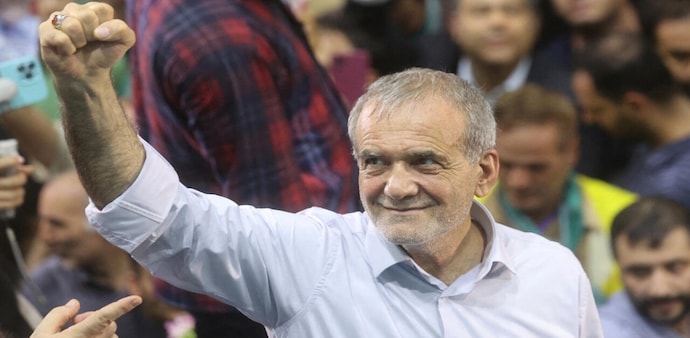
Iran’s President Masoud Pezeshkian has warned that Tehran could intensify attacks on American targets across the Middle East as the United States and Israel continue their air campaign against Iranian assets.
Catch live coverage on West Asia conflict here
In video remarks on March 8, Pezeshkian said Iran would respond forcefully to any military pressure.
“When we are attacked, we have no choice but to respond. The more pressure they impose on us, the stronger our response will naturally be,” he said. “Our Iran, our country, will not bow easily in the face of bullying, oppression or aggression — and it never has.”
The comments signal a tougher tone from the Iranian leader as tensions escalate between Iran, the United States, and Israel, with both Washington and Tel Aviv continuing airstrikes against Iranian targets.
Pezeshkian’s remarks appeared to walk back conciliatory statements he made a day earlier toward Iran’s Gulf neighbors. On Saturday, he had suggested regret over Iranian attacks that struck targets on their soil. Those remarks quickly drew criticism from hard-line figures inside Iran, forcing a swift recalibration of his tone.
Despite his warning to Washington, Pezeshkian stressed that Tehran is not seeking confrontation with neighboring Arab states — several of which host American military bases.
“They are our brothers,” he said, accusing the United States of attempting to sow division among countries in the region.
However, Iranian strikes during the conflict have not been limited to U.S. military installations. Several attacks have also hit energy infrastructure, hotels and urban areas across the Gulf, raising concerns about the widening impact of the war on regional security and economic stability.
IRGC says Iran can sustain ‘intense war’ for six months
Meanwhile, a senior official from the Islamic Revolutionary Guard Corps (IRGC) said Iran has the capacity to sustain a high-intensity conflict for at least six more months, pushing back against recent claims by Donald Trump that Tehran’s military capabilities have been severely weakened.
In comments carried by the semi-official Fars News Agency, which is closely linked to the IRGC, Guards spokesperson Ali Mohammad Naini said Iran’s armed forces are prepared to maintain the current level of military operations for an extended period.
“The Armed Forces of the Islamic Republic of Iran are capable of continuing at least a six-month intense war at the current pace of operations,” Naini said, according to AFP.
The Guards — Iran’s elite military force — also claimed responsibility for striking more than 200 locations connected to American and Israeli bases and facilities across the region since the conflict escalated.
Iran’s President Masoud Pezeshkian has warned that Tehran could intensify attacks on American targets across the Middle East as the United States and Israel continue their air campaign against Iranian assets.
Catch live coverage on West Asia conflict here
In video remarks on March 8, Pezeshkian said Iran would respond forcefully to any military pressure.
“When we are attacked, we have no choice but to respond. The more pressure they impose on us, the stronger our response will naturally be,” he said. “Our Iran, our country, will not bow easily in the face of bullying, oppression or aggression — and it never has.”
The comments signal a tougher tone from the Iranian leader as tensions escalate between Iran, the United States, and Israel, with both Washington and Tel Aviv continuing airstrikes against Iranian targets.
Pezeshkian’s remarks appeared to walk back conciliatory statements he made a day earlier toward Iran’s Gulf neighbors. On Saturday, he had suggested regret over Iranian attacks that struck targets on their soil. Those remarks quickly drew criticism from hard-line figures inside Iran, forcing a swift recalibration of his tone.
Despite his warning to Washington, Pezeshkian stressed that Tehran is not seeking confrontation with neighboring Arab states — several of which host American military bases.
“They are our brothers,” he said, accusing the United States of attempting to sow division among countries in the region.
However, Iranian strikes during the conflict have not been limited to U.S. military installations. Several attacks have also hit energy infrastructure, hotels and urban areas across the Gulf, raising concerns about the widening impact of the war on regional security and economic stability.
IRGC says Iran can sustain ‘intense war’ for six months
Meanwhile, a senior official from the Islamic Revolutionary Guard Corps (IRGC) said Iran has the capacity to sustain a high-intensity conflict for at least six more months, pushing back against recent claims by Donald Trump that Tehran’s military capabilities have been severely weakened.
In comments carried by the semi-official Fars News Agency, which is closely linked to the IRGC, Guards spokesperson Ali Mohammad Naini said Iran’s armed forces are prepared to maintain the current level of military operations for an extended period.
“The Armed Forces of the Islamic Republic of Iran are capable of continuing at least a six-month intense war at the current pace of operations,” Naini said, according to AFP.
The Guards — Iran’s elite military force — also claimed responsibility for striking more than 200 locations connected to American and Israeli bases and facilities across the region since the conflict escalated.