
Awami League’s ‘exclusion fundamentally reshaped the competitive field’: Brahma Chellaney on Bangladesh elections
Bangladesh elections: Brahma Chellaney said that the Bangladesh election was ‘unusual’ because the Awami League – the country’s largest traditional political force – was not on the ballot.
- Feb 13, 2026,
- Updated Feb 13, 2026 1:14 PM IST
The Awami League’s absence has left a large vacuum in Bangladesh’s general elections. It is evident in the abysmally-low voter turnout, as well as the result. The absence of Sheikh Hasina’s party is conspicuous in the result as well, with just Bangladesh Nationalist Party (BNP) and Jamaat-e-Islami – both of whom were allies – fighting it out.
According to geostrategist Brahma Chellaney, the Bangladesh election was ‘unusual’ because the Awami League – the country’s largest traditional political force – was not on the ballot. “The party had been outlawed, with thousands of its members imprisoned, leaving a vast segment of the electorate effectively unrepresented,” said Chellaney, adding that the turnout was a depressing 48 per cent, far lower that the 80-87 per cent participation in 2008 and 2018.
Awami League’s “exclusion fundamentally reshaped the competitive field”, he said.
With the removal of Hasina’s party, the second-largest traditional force became the clear frontrunner, as well as made space for the expansion of Jamaat-e-Islami. It became a principal challenger to its former ally, BNP, narrowing the competition.
“The near-48% turnout reflects more than apathy: it indicates the withdrawal of a substantial portion of the Awami League’s traditional support base — historically between 30 per cent and 40 per cent of the electorate — which chose to abstain rather than back either of the blocs on offer,” said Chellaney. Participation was especially low in minority-heavy constituencies.
“Here is the striking irony: For years, Jamaat-e-Islami and the BNP functioned as inseparable allies, often aligning electorally to counter the Awami League’s dominance, with Jamaat’s street mobilization reinforcing BNP campaigns. But now Jamaat is accusing the BNP of using the state apparatus to rig the latest election and, in rejecting the results, is recasting itself as the “true” representative of the 2024 uprising — arguing that the BNP has merely substituted one form of autocracy for another,” he said, adding that BNP will now be tested.
BANGLADESH ELECTION RESULTS
The BNP secured an overwhelming two-thirds majority in Friday's general elections, marking one of its most significant parliamentary victories. The party, which last governed two decades ago, won more than 200 seats, surpassing its 2001 tally. Election authorities and domestic broadcasters reported that BNP and its allies had won at least 212 out of 299 seats, while the Islamist Jamaat-e-Islami and its coalition partners gained 70 seats.
Official results are expected later, but the outcome is seen as a return to power for BNP after a long absence.
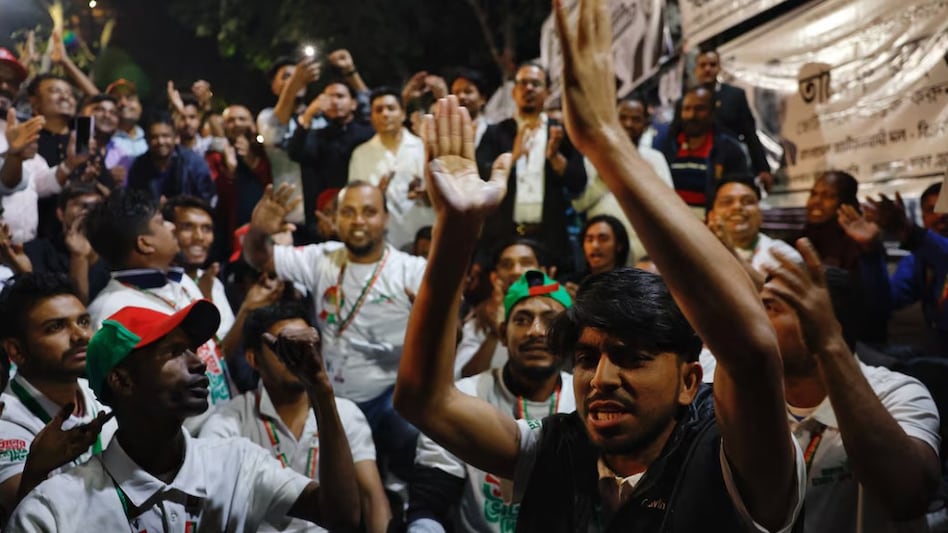
BNP supporters gathered at the party headquarters in Dhaka to celebrate the landslide win. However, the party issued a statement saying, "Despite winning by a large margin of votes, no celebratory procession or rally shall be organised," reflecting a cautious approach amid political sensitivities.
BNP leader Tarique Rahman, who recently returned to Dhaka after 18 years abroad, is widely expected to be sworn in as prime minister. Rahman, son of party founder and former president Ziaur Rahman, became a central figure following his return in December.
The BNP's campaign manifesto focused on job creation, support for low-income and marginal households, and policies to ensure fair prices for farmers. The National Citizen Party (NCP), part of the Jamaat-led alliance, won just five seats out of 30 contested.
Jamaat-e-Islami conceded defeat late on Thursday but expressed dissatisfaction with the electoral process, stating it was "not satisfied" and advising followers to remain patient.
The Awami League’s absence has left a large vacuum in Bangladesh’s general elections. It is evident in the abysmally-low voter turnout, as well as the result. The absence of Sheikh Hasina’s party is conspicuous in the result as well, with just Bangladesh Nationalist Party (BNP) and Jamaat-e-Islami – both of whom were allies – fighting it out.
According to geostrategist Brahma Chellaney, the Bangladesh election was ‘unusual’ because the Awami League – the country’s largest traditional political force – was not on the ballot. “The party had been outlawed, with thousands of its members imprisoned, leaving a vast segment of the electorate effectively unrepresented,” said Chellaney, adding that the turnout was a depressing 48 per cent, far lower that the 80-87 per cent participation in 2008 and 2018.
Awami League’s “exclusion fundamentally reshaped the competitive field”, he said.
With the removal of Hasina’s party, the second-largest traditional force became the clear frontrunner, as well as made space for the expansion of Jamaat-e-Islami. It became a principal challenger to its former ally, BNP, narrowing the competition.
“The near-48% turnout reflects more than apathy: it indicates the withdrawal of a substantial portion of the Awami League’s traditional support base — historically between 30 per cent and 40 per cent of the electorate — which chose to abstain rather than back either of the blocs on offer,” said Chellaney. Participation was especially low in minority-heavy constituencies.
“Here is the striking irony: For years, Jamaat-e-Islami and the BNP functioned as inseparable allies, often aligning electorally to counter the Awami League’s dominance, with Jamaat’s street mobilization reinforcing BNP campaigns. But now Jamaat is accusing the BNP of using the state apparatus to rig the latest election and, in rejecting the results, is recasting itself as the “true” representative of the 2024 uprising — arguing that the BNP has merely substituted one form of autocracy for another,” he said, adding that BNP will now be tested.
BANGLADESH ELECTION RESULTS
The BNP secured an overwhelming two-thirds majority in Friday's general elections, marking one of its most significant parliamentary victories. The party, which last governed two decades ago, won more than 200 seats, surpassing its 2001 tally. Election authorities and domestic broadcasters reported that BNP and its allies had won at least 212 out of 299 seats, while the Islamist Jamaat-e-Islami and its coalition partners gained 70 seats.
Official results are expected later, but the outcome is seen as a return to power for BNP after a long absence.
BNP supporters gathered at the party headquarters in Dhaka to celebrate the landslide win. However, the party issued a statement saying, "Despite winning by a large margin of votes, no celebratory procession or rally shall be organised," reflecting a cautious approach amid political sensitivities.
BNP leader Tarique Rahman, who recently returned to Dhaka after 18 years abroad, is widely expected to be sworn in as prime minister. Rahman, son of party founder and former president Ziaur Rahman, became a central figure following his return in December.
The BNP's campaign manifesto focused on job creation, support for low-income and marginal households, and policies to ensure fair prices for farmers. The National Citizen Party (NCP), part of the Jamaat-led alliance, won just five seats out of 30 contested.
Jamaat-e-Islami conceded defeat late on Thursday but expressed dissatisfaction with the electoral process, stating it was "not satisfied" and advising followers to remain patient.