
Gulf states want US to neutralise Iran amid Hormuz disruption, energy crisis: Report
Iran's retaliation has only reinforced fears across the region that Iran should not be left with any offensive weaponry or arms manufacturing capacity to hold the region’s energy lifeline to ransom.
- Mar 17, 2026,
- Updated Mar 17, 2026 8:52 AM IST
Gulf states have reportedly asked the US to not stop short in the war against Iran for it to be able to threaten Gulf’s oil lifeline and the economies that depend on it. Meanwhile, Washington wants Gulf states to join the war too.
According to a report in Reuters that quoted sources, Trump wants to show regional backing for his campaign against Iran, which would bolster his international legitimacy and increase support at home.
Abdulaziz Sager, chairman of the Saudi-based Gulf Research Center said that there is a feeling across the Gulf that Iran has crossed every red line with every Gulf country. “At first we defended them and opposed the war,” he said. “But once they began directing strikes at us, they became an enemy. There is no other way to classify them.”
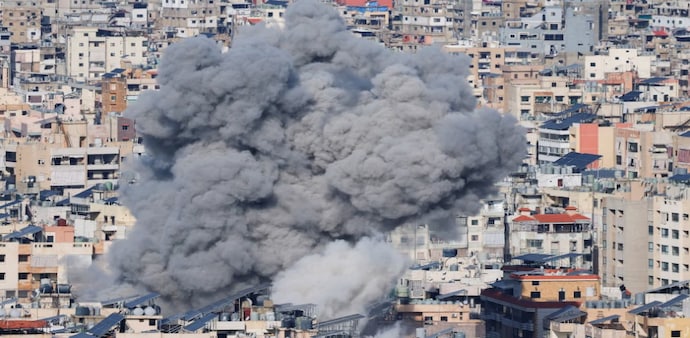
Iran has attacked airports, ports, oil facilities and commercial hubs of the six Gulf states – Bahrain, Kuwait, Qatar, Saudi Arabia, Oman and the UAE – as well as disrupted shipping through the Strait of Hormuz. This retaliation has only reinforced fears across the region that Iran should not be left with any offensive weaponry or arms manufacturing capacity to hold the region’s energy lifeline to ransom.
The report quoted a source saying that the prevailing mood in the region was that Trump should comprehensively degrade Iran's military capacity. Unless Iran was severely weakened, the region would continue to live in fear and constant threat.
Iran, which has a predominantly Shi'ite Muslim population, has often viewed its neighbours in the Gulf, predominantly Sunni Muslims, as well as close allies of the US with deep suspicion. Iran has in the past been accused of targeting the Gulf energy installations.
Moreover, the report added that sources in the region say that unilateral military action by any Gulf state is off the table. Only collective intervention would avoid exposing individual countries to retaliation, it added. Gulf leaders are apparently “deeply fearful” of triggering a broader, uncontrollable crisis, the report stated.
Gulf states have reportedly asked the US to not stop short in the war against Iran for it to be able to threaten Gulf’s oil lifeline and the economies that depend on it. Meanwhile, Washington wants Gulf states to join the war too.
According to a report in Reuters that quoted sources, Trump wants to show regional backing for his campaign against Iran, which would bolster his international legitimacy and increase support at home.
Abdulaziz Sager, chairman of the Saudi-based Gulf Research Center said that there is a feeling across the Gulf that Iran has crossed every red line with every Gulf country. “At first we defended them and opposed the war,” he said. “But once they began directing strikes at us, they became an enemy. There is no other way to classify them.”
Iran has attacked airports, ports, oil facilities and commercial hubs of the six Gulf states – Bahrain, Kuwait, Qatar, Saudi Arabia, Oman and the UAE – as well as disrupted shipping through the Strait of Hormuz. This retaliation has only reinforced fears across the region that Iran should not be left with any offensive weaponry or arms manufacturing capacity to hold the region’s energy lifeline to ransom.
The report quoted a source saying that the prevailing mood in the region was that Trump should comprehensively degrade Iran's military capacity. Unless Iran was severely weakened, the region would continue to live in fear and constant threat.
Iran, which has a predominantly Shi'ite Muslim population, has often viewed its neighbours in the Gulf, predominantly Sunni Muslims, as well as close allies of the US with deep suspicion. Iran has in the past been accused of targeting the Gulf energy installations.
Moreover, the report added that sources in the region say that unilateral military action by any Gulf state is off the table. Only collective intervention would avoid exposing individual countries to retaliation, it added. Gulf leaders are apparently “deeply fearful” of triggering a broader, uncontrollable crisis, the report stated.