
Iran war: Indian ships allowed to cross Strait of Hormuz
Iran war: Tehran had earlier warned that it would strike any ship that attempted the pass through the Strait of Hormuz.
- Mar 12, 2026,
- Updated Mar 12, 2026 10:46 AM IST
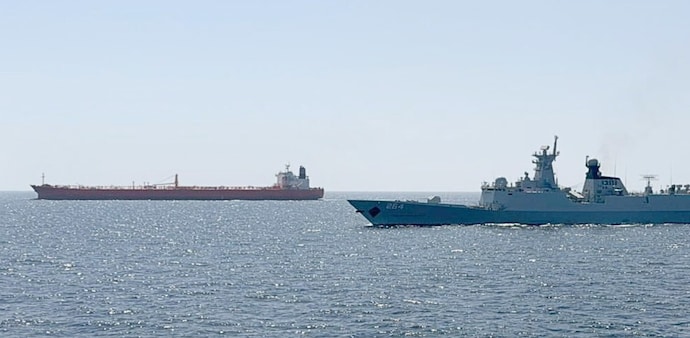
Iran war: Following talks between External Affairs Minister S Jaishankar and his Iranian counterpart Abbas Araghchi, Iran has allowed Indian oil tankers to pass through the strategic Strait of Hormuz. This comes after Iran had warned that it would strike any vessel trying to pass through the strait.
Sources said the objective of the diplomatic engagement was to keep the sea route open for Indian vessels so that shipments of crude oil and liquefied natural gas (LPG) continue without major disruption.
India's dependency on energy imports underscores the importance of uninterrupted access to Gulf shipping lanes. Any hindrance in the Strait could pose serious challenges to the nation's energy security, given its reliance on foreign crude oil and LPG supplies.
Meanwhile, shipping linked to the United States, Europe and Israel has encountered restrictions.
According to sources, Jaishankar also held consultations with other key international counterparts on the issue. The External Affairs Minister spoke with Sergey Lavrov of Russia and Jean-Nol Barrot of France, addressing the necessity of maintaining stability and safe passage in the Gulf’s vital shipping lanes.
Earlier this month, the Islamic Revolutionary Guard Corps (IRGC) announced that the Strait of Hormuz had been effectively closed to shipping and warned that any vessel attempting to pass through the strategic waterway could be targeted, according to Iranian state media. This statement marked a significant escalation in the ongoing tensions involving Iran, Israel and the United States, further complicating transit through the strait.
Iran war: Following talks between External Affairs Minister S Jaishankar and his Iranian counterpart Abbas Araghchi, Iran has allowed Indian oil tankers to pass through the strategic Strait of Hormuz. This comes after Iran had warned that it would strike any vessel trying to pass through the strait.
Sources said the objective of the diplomatic engagement was to keep the sea route open for Indian vessels so that shipments of crude oil and liquefied natural gas (LPG) continue without major disruption.
India's dependency on energy imports underscores the importance of uninterrupted access to Gulf shipping lanes. Any hindrance in the Strait could pose serious challenges to the nation's energy security, given its reliance on foreign crude oil and LPG supplies.
Meanwhile, shipping linked to the United States, Europe and Israel has encountered restrictions.
According to sources, Jaishankar also held consultations with other key international counterparts on the issue. The External Affairs Minister spoke with Sergey Lavrov of Russia and Jean-Nol Barrot of France, addressing the necessity of maintaining stability and safe passage in the Gulf’s vital shipping lanes.
Earlier this month, the Islamic Revolutionary Guard Corps (IRGC) announced that the Strait of Hormuz had been effectively closed to shipping and warned that any vessel attempting to pass through the strategic waterway could be targeted, according to Iranian state media. This statement marked a significant escalation in the ongoing tensions involving Iran, Israel and the United States, further complicating transit through the strait.