
Now, Trump is talking of Hormuz tolls if US-Iran deal collapses. What's his proposal?
Now, Trump is talking of Hormuz tolls if US-Iran deal collapses. What's his proposal?
Iran has closed the Strait of Hormuz in response to what Tehran described as Israeli violations of the Lebanon ceasefire
Business Today Desk
- Jun 21, 2026,
- Updated Jun 21, 2026 7:46 AM IST
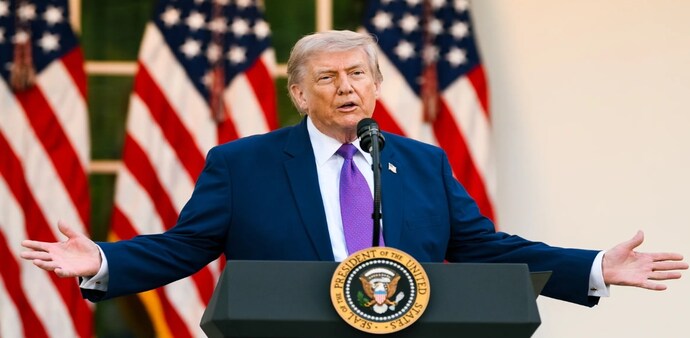
US President Donald Trump said no tolls would be charged on ships transiting the Strait of Hormuz during the 60-day ceasefire period between Washington and Tehran, while leaving open the possibility of future US-imposed charges if a broader peace deal fails to materialise.
In a post on Truth Social, Trump said the strategic waterway would remain toll-free during the ceasefire and beyond unless the United States decided otherwise.
Advertisement
"There will be NO TOLLS in the Hormuz Strait for 60 days during the Cease Fire Period, and there will be NO TOLLS after the 60 day period has expired, unless they are imposed by and for the United States of America, should the deal not be completed, for services rendered as the Guardian Angel to the countries of the Middle East for purposes of both past, present, and future reimbursement of costs," Trump wrote.
Don't Miss: Hormuz closed again: Iran cites ceasefire violations. Will crude price spike?
Iran has closed the Strait of Hormuz in response to what Tehran described as Israeli violations of the Lebanon ceasefire. Trump, however, has not reacted to this development.
Must Watch: 3 Indian-flagged tankers safely cross Strait of Hormuz, bring home 8.6 lakh tonnes of crude
Advertisement
Despite a 60-day ceasefire agreed by Washington and Tehran to facilitate negotiations, Iran's Islamic Revolutionary Guard Corps (IRGC) on Saturday declared the Strait of Hormuz closed, escalating tensions days after an interim agreement brokered by Trump and Iranian President Masoud Pezeshkian.
The IRGC warned vessels to stay away from the waterway, citing Israeli actions in Lebanon and what it called a US failure to uphold ceasefire commitments. It said ships entering the strait would do so at their own risk.
The announcement renewed concerns over global energy supplies given the strait's role as a key route for oil and gas exports.
US Central Command, however, said 55 merchant vessels transited the passage on Saturday carrying more than 17 million barrels of oil and other cargo, and pledged to ensure the continued flow of commercial shipping.
Advertisement
Mohammad Mokhber, an adviser to Iranian Supreme Leader Ayatollah Mojtaba Khamenei, accused Washington of failing to implement the first clause of the 14-point interim agreement, which required a ceasefire on all fronts, including Lebanon.
Writing on X, Mokhber warned that Middle East energy supplies would remain halted until the agreement was implemented in practice. His remarks came amid renewed clashes between Israeli forces and Hezbollah, raising fresh doubts over the durability of the Lebanon truce.
Lebanon ceasefire comes under pressure
A cessation of hostilities in Lebanon was one of the key conditions for launching 60 days of US-Iran talks on Tehran's nuclear programme and other issues. But hours after the truce took effect, Lebanon's Civil Defence said Israeli strikes killed 20 people across the country on Saturday.
Israel said its military actions were a response to attacks by Hezbollah, while the Iran-backed group said it would not grant Israel "freedom of movement" in Lebanon.
Lebanon's state-run National News Agency reported that Israeli warplanes and drones carried out strikes across southern Lebanon and the Bekaa Valley, areas considered Hezbollah strongholds.
An Israeli military official said Hezbollah launched more than 50 projectiles at Israeli forces operating in southern Lebanon overnight, prompting retaliatory strikes on what Israel described as Hezbollah targets.
Advertisement
The Israeli military said it remained committed to the ceasefire but would continue responding to any threat against Israel or its forces.
According to Lebanon's health ministry, Israeli attacks since March 2 have killed 4,057 people, including women, children and medical personnel, though the ministry does not distinguish between civilians and combatants. Israeli authorities say at least 32 soldiers and four civilians have been killed in hostilities involving Hezbollah.
Swiss talks gather momentum
Amid tensions, a senior Iranian delegation departed for Switzerland on Saturday to hold talks with the United States, according to Iranian state media. US Vice President JD Vance was also travelling to Switzerland for negotiations scheduled to begin on Sunday.
The Iranian delegation is being led by chief negotiator Mohammad Baqer Qalibaf. It includes Foreign Minister Abbas Araqchi as well as senior officials from the country's security establishment, central bank and oil sector.
Iranian Foreign Ministry spokesperson Esmaeil Baghaei said Tehran would use the talks to press for implementation of commitments under the agreement, citing what he described as a history of the other side failing to honour its obligations.
Before departing, Vance said he hoped the negotiations would deliver progress on both "the nuclear issue" and "the Lebanon ceasefire issue."
Advertisement
The US vice president said the situation in Lebanon was showing signs of improvement despite recent tensions.
"Despite the headlines, things are actually getting better there (in Lebanon), and things are slowing down a little bit," Vance said. "It's going to be something we're just going to have to continuously manage to ensure that Israel and Lebanon are both safe and secure."
Vance earlier told Fox News he remained confident that the ceasefire outlined in Washington's 14-point agreement with Tehran would hold and said he had seen no indication that the Strait of Hormuz had actually been closed.
He added that US negotiators Jared Kushner and Steve Witkoff had already arrived in Switzerland and were working on the technical aspects of the negotiations.
"Things are going well," Vance said, citing conversations with the two negotiators earlier in the day.
The talks in Switzerland are expected to test whether the fragile ceasefire can hold as tensions persist in both the Strait of Hormuz and Lebanon.
US President Donald Trump said no tolls would be charged on ships transiting the Strait of Hormuz during the 60-day ceasefire period between Washington and Tehran, while leaving open the possibility of future US-imposed charges if a broader peace deal fails to materialise.
In a post on Truth Social, Trump said the strategic waterway would remain toll-free during the ceasefire and beyond unless the United States decided otherwise.
Advertisement
"There will be NO TOLLS in the Hormuz Strait for 60 days during the Cease Fire Period, and there will be NO TOLLS after the 60 day period has expired, unless they are imposed by and for the United States of America, should the deal not be completed, for services rendered as the Guardian Angel to the countries of the Middle East for purposes of both past, present, and future reimbursement of costs," Trump wrote.
Don't Miss: Hormuz closed again: Iran cites ceasefire violations. Will crude price spike?
Iran has closed the Strait of Hormuz in response to what Tehran described as Israeli violations of the Lebanon ceasefire. Trump, however, has not reacted to this development.
Must Watch: 3 Indian-flagged tankers safely cross Strait of Hormuz, bring home 8.6 lakh tonnes of crude
Advertisement
Despite a 60-day ceasefire agreed by Washington and Tehran to facilitate negotiations, Iran's Islamic Revolutionary Guard Corps (IRGC) on Saturday declared the Strait of Hormuz closed, escalating tensions days after an interim agreement brokered by Trump and Iranian President Masoud Pezeshkian.
The IRGC warned vessels to stay away from the waterway, citing Israeli actions in Lebanon and what it called a US failure to uphold ceasefire commitments. It said ships entering the strait would do so at their own risk.
The announcement renewed concerns over global energy supplies given the strait's role as a key route for oil and gas exports.
US Central Command, however, said 55 merchant vessels transited the passage on Saturday carrying more than 17 million barrels of oil and other cargo, and pledged to ensure the continued flow of commercial shipping.
Advertisement
Mohammad Mokhber, an adviser to Iranian Supreme Leader Ayatollah Mojtaba Khamenei, accused Washington of failing to implement the first clause of the 14-point interim agreement, which required a ceasefire on all fronts, including Lebanon.
Writing on X, Mokhber warned that Middle East energy supplies would remain halted until the agreement was implemented in practice. His remarks came amid renewed clashes between Israeli forces and Hezbollah, raising fresh doubts over the durability of the Lebanon truce.
Lebanon ceasefire comes under pressure
A cessation of hostilities in Lebanon was one of the key conditions for launching 60 days of US-Iran talks on Tehran's nuclear programme and other issues. But hours after the truce took effect, Lebanon's Civil Defence said Israeli strikes killed 20 people across the country on Saturday.
Israel said its military actions were a response to attacks by Hezbollah, while the Iran-backed group said it would not grant Israel "freedom of movement" in Lebanon.
Lebanon's state-run National News Agency reported that Israeli warplanes and drones carried out strikes across southern Lebanon and the Bekaa Valley, areas considered Hezbollah strongholds.
An Israeli military official said Hezbollah launched more than 50 projectiles at Israeli forces operating in southern Lebanon overnight, prompting retaliatory strikes on what Israel described as Hezbollah targets.
Advertisement
The Israeli military said it remained committed to the ceasefire but would continue responding to any threat against Israel or its forces.
According to Lebanon's health ministry, Israeli attacks since March 2 have killed 4,057 people, including women, children and medical personnel, though the ministry does not distinguish between civilians and combatants. Israeli authorities say at least 32 soldiers and four civilians have been killed in hostilities involving Hezbollah.
Swiss talks gather momentum
Amid tensions, a senior Iranian delegation departed for Switzerland on Saturday to hold talks with the United States, according to Iranian state media. US Vice President JD Vance was also travelling to Switzerland for negotiations scheduled to begin on Sunday.
The Iranian delegation is being led by chief negotiator Mohammad Baqer Qalibaf. It includes Foreign Minister Abbas Araqchi as well as senior officials from the country's security establishment, central bank and oil sector.
Iranian Foreign Ministry spokesperson Esmaeil Baghaei said Tehran would use the talks to press for implementation of commitments under the agreement, citing what he described as a history of the other side failing to honour its obligations.
Before departing, Vance said he hoped the negotiations would deliver progress on both "the nuclear issue" and "the Lebanon ceasefire issue."
Advertisement
The US vice president said the situation in Lebanon was showing signs of improvement despite recent tensions.
"Despite the headlines, things are actually getting better there (in Lebanon), and things are slowing down a little bit," Vance said. "It's going to be something we're just going to have to continuously manage to ensure that Israel and Lebanon are both safe and secure."
Vance earlier told Fox News he remained confident that the ceasefire outlined in Washington's 14-point agreement with Tehran would hold and said he had seen no indication that the Strait of Hormuz had actually been closed.
He added that US negotiators Jared Kushner and Steve Witkoff had already arrived in Switzerland and were working on the technical aspects of the negotiations.
"Things are going well," Vance said, citing conversations with the two negotiators earlier in the day.
The talks in Switzerland are expected to test whether the fragile ceasefire can hold as tensions persist in both the Strait of Hormuz and Lebanon.
Read more!