
Oil prices soar, Hormuz shipping risk raised to severe as US strikes Iran
US-Iran peace deal: The US military said the strikes were carried out in response to Iranian attacks on three commercial vessels transiting the Strait of Hormuz.
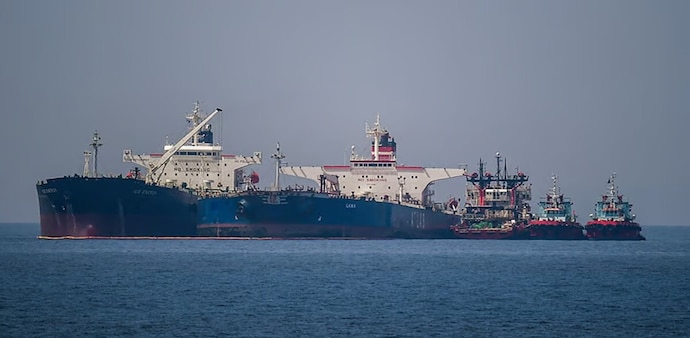
- Jul 8, 2026,
- Updated Jul 8, 2026 8:00 AM IST
Oil prices soared and shipping risks through the Strait of Hormuz were raised to their highest level – severe – after the United States launched airstrikes against Iran and reinstated sanctions on Iranian crude sales, fuelling concerns that the fragile truce between Washington and Tehran is beginning to unravel and that Middle East energy supplies could once again face disruption.
The US military said the strikes were carried out in response to Iranian attacks on three commercial vessels transiting the Strait of Hormuz, a vital route for global oil shipments. The incidents included damage to a Saudi crude tanker and an attack on a Qatari liquefied natural gas tanker that was reportedly at risk of exploding after a fire broke out in its engine room. The crew of the LNG vessel was reported safe and was being evacuated.
The escalation pushed Brent crude close to $76 a barrel. By 0128 GMT on Wednesday, Brent crude futures were up $1.38, or 1.9%, at $75.54 a barrel, while U.S. West Texas Intermediate crude gained $1.37, or 1.9%, to $71.81 a barrel. Both benchmarks had already climbed about 3% on Tuesday, while post-market activity showed oil prices jumping nearly 6%.
The latest developments have disrupted the uneasy detente reached in late June, when Washington and Tehran agreed to reopen the Strait of Hormuz after a three-month war that had severely constrained global energy supplies. On Tuesday, the White House revoked the general licence it had granted Iran to sell oil under that agreement, calling Iran's actions in the waterway "wholly unacceptable" and warning of consequences.
The US Navy-led Joint Maritime Information Center (JMIC) raised the transit threat level for the Strait of Hormuz to "severe" from "substantial" following the attacks, marking the first such designation since June 15. JMIC warned that deliberate hostile action was now likely and advised mariners to exercise extreme vigilance, citing continued naval deployments, congestion along transit routes and increased hailing by Iran's Islamic Revolutionary Guard Corps.
Although shipping through the strait has recovered somewhat over the past week, traffic remains at only one-third to one-fifth of pre-war levels. Before the conflict began in February, the waterway carried roughly one-fifth of the world's oil and gas supplies.
MUST READ | Iran attacks ships in Strait of Hormuz; two vessels hit by missiles, says US
Oil prices soared and shipping risks through the Strait of Hormuz were raised to their highest level – severe – after the United States launched airstrikes against Iran and reinstated sanctions on Iranian crude sales, fuelling concerns that the fragile truce between Washington and Tehran is beginning to unravel and that Middle East energy supplies could once again face disruption.
The US military said the strikes were carried out in response to Iranian attacks on three commercial vessels transiting the Strait of Hormuz, a vital route for global oil shipments. The incidents included damage to a Saudi crude tanker and an attack on a Qatari liquefied natural gas tanker that was reportedly at risk of exploding after a fire broke out in its engine room. The crew of the LNG vessel was reported safe and was being evacuated.
The escalation pushed Brent crude close to $76 a barrel. By 0128 GMT on Wednesday, Brent crude futures were up $1.38, or 1.9%, at $75.54 a barrel, while U.S. West Texas Intermediate crude gained $1.37, or 1.9%, to $71.81 a barrel. Both benchmarks had already climbed about 3% on Tuesday, while post-market activity showed oil prices jumping nearly 6%.
The latest developments have disrupted the uneasy detente reached in late June, when Washington and Tehran agreed to reopen the Strait of Hormuz after a three-month war that had severely constrained global energy supplies. On Tuesday, the White House revoked the general licence it had granted Iran to sell oil under that agreement, calling Iran's actions in the waterway "wholly unacceptable" and warning of consequences.
The US Navy-led Joint Maritime Information Center (JMIC) raised the transit threat level for the Strait of Hormuz to "severe" from "substantial" following the attacks, marking the first such designation since June 15. JMIC warned that deliberate hostile action was now likely and advised mariners to exercise extreme vigilance, citing continued naval deployments, congestion along transit routes and increased hailing by Iran's Islamic Revolutionary Guard Corps.
Although shipping through the strait has recovered somewhat over the past week, traffic remains at only one-third to one-fifth of pre-war levels. Before the conflict began in February, the waterway carried roughly one-fifth of the world's oil and gas supplies.
MUST READ | Iran attacks ships in Strait of Hormuz; two vessels hit by missiles, says US