


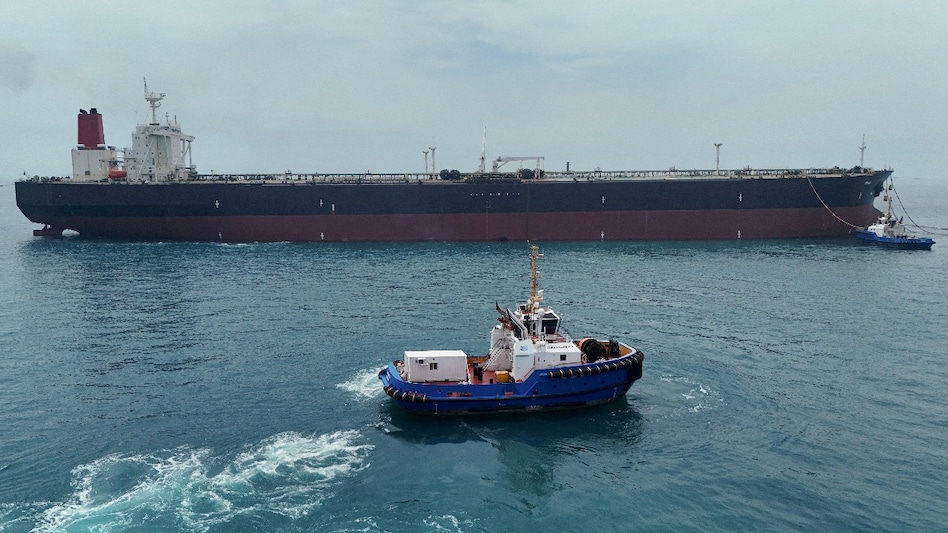
 The US Treasury Department announced that it had revoked the general licence that authorised Iranian oil sales. (Photo: Reuters)
Three commercial ships were hit in the Strait of Hormuz on Tuesday, setting off a rapid escalation in the Gulf. Within hours, the United States carried out military strikes on Iran, withdrew a sanctions waiver linked to Iranian oil and accused Tehran of violating the ceasefire.
US Central Command confirmed the action in a post on X, saying its forces had "begun launching a series of powerful strikes against Iran."

 HDFC Bank fast-tracks CEO search: Who could succeed Jagdishan as more names crop up?
 ‘We do not need lower standards but wider lenses’: Gautam Adani calls for new credit framework
 'Thank you for being a constant source of inspiration': Tim Cook bids farewell to Apple as CEO
 ‘I have nothing left to give’: Lionel Messi bids emotional farewell to Argentina after 20 years
 BT Explainer: What are EREVs? Why JSW MG Motor may bring this tech to India next
 Indian Markets Outlook: Is Bear Phase Ending? Maneesh Dangi Sees Better Next 6-12 Months
 This ₹5 Lakh AI Gym Wants To Replace Your Gym
 Nepal Flood Horror: Sadhguru, Manisha Koirala Stand In Solidarity As Rescue Efforts Continue
 Nepal Flood Horror: Children Found Alive After Days Under Debris, Hope Emerges From Devastation
 India’s 6% Growth Trap: Why Manufacturing Still Struggles To Beat China
 Priority Jewels IPO subscribed 21.23 times on Day 2; check latest GMP, other key details
 Ola Electric shares jump 5%; still down 34% in a year; what's ahead?
 Sensex falls 307 points, Nifty settles below 24,100; what happened today
 Market veteran Ajay Bagga on top sectoral picks; impact of oil prices, monsoon on economy
  Nifty Bank jumps over 600 points in last five minutes; CAS in focus
 When is the next lunar eclipse? Check date, timing, visibility across India and the world
 Eli Lilly’s diabetes drug Mounjaro approved to reduce cardiovascular risks
 NCLT sends Subhash Chandra insolvency plan back to chairperson as benches fail to reach majority
 iPhone 17 Pro gets cheaper before iPhone 18 Pro launch — check the new price
 Indian Navy gets underwater boost as INS Nipun enters service at Mumbai dockyard












