
Schools shut, govt spending cut, WFH for govt staff: Pakistan announces measures to cut energy as oil prices soar
Iran war: Only half of government staff, except those in essential services, will work from offices, and the government working week will be reduced to four days, said Pakistan PM Shehbaz Sharif.
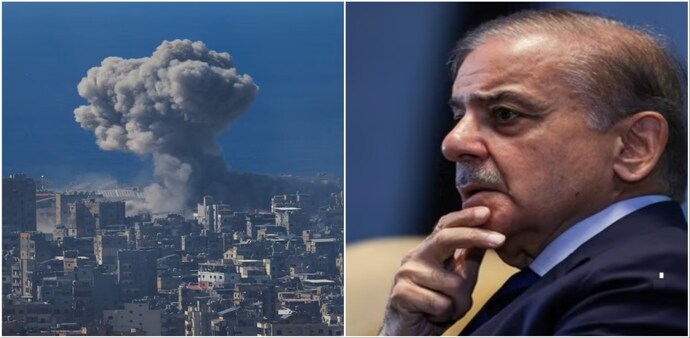
- Mar 10, 2026,
- Updated Mar 10, 2026 8:38 AM IST
The Pakistani government has introduced austerity measures to reduce fuel consumption and government spending amid rising fuel prices caused by conflict in neighbouring regions. Prime Minister Shehbaz Sharif said these steps aim to stabilise the economy during uncertain fuel supply and cost conditions.
Government departments will face a 50 per cent cut in fuel allowances for two months. Additionally, 60 per cent of official vehicles, excluding buses and ambulances, will be taken off the roads, he said.
Only half of government staff, except those in essential services, will work from offices, and the government working week will be reduced to four days.
Sharif said in a televised address, "To stabilise the economy we have taken difficult decisions," and noted the government is trying to ease the burden on citizens despite limited control over global fuel prices.
Departmental spending will be cut by 20 per cent. The government has banned the purchase of new vehicles, air conditioners, and furniture. Most foreign travel by ministers and officials is also restricted until further notice to save state resources.
Schools will close for two weeks from next week and universities will move to online learning to reduce commuting and fuel use. These decisions followed a key meeting led by Sharif and senior officials over the weekend.
Last week, Pakistan raised petrol and diesel prices by 55 rupees per litre, the largest single increase on record. High-speed diesel prices rose by 20 per cent, from PKR 280.86 to PKR 335.86 per litre for the coming week.
Petroleum Minister Ali Pervaiz Malik said in a late-night press conference, "The fire that started in a neighbouring country has spread across the entire region. We do not know how long this crisis will continue, and there is no clear timeline for its end."
The central bank noted that global energy price increases linked to the Middle East escalation have added uncertainty to the inflation outlook. It kept the policy rate at 10.5 per cent, citing ongoing international market volatility and its effects on Pakistan's import-dependent economy.
The Pakistani government has introduced austerity measures to reduce fuel consumption and government spending amid rising fuel prices caused by conflict in neighbouring regions. Prime Minister Shehbaz Sharif said these steps aim to stabilise the economy during uncertain fuel supply and cost conditions.
Government departments will face a 50 per cent cut in fuel allowances for two months. Additionally, 60 per cent of official vehicles, excluding buses and ambulances, will be taken off the roads, he said.
Only half of government staff, except those in essential services, will work from offices, and the government working week will be reduced to four days.
Sharif said in a televised address, "To stabilise the economy we have taken difficult decisions," and noted the government is trying to ease the burden on citizens despite limited control over global fuel prices.
Departmental spending will be cut by 20 per cent. The government has banned the purchase of new vehicles, air conditioners, and furniture. Most foreign travel by ministers and officials is also restricted until further notice to save state resources.
Schools will close for two weeks from next week and universities will move to online learning to reduce commuting and fuel use. These decisions followed a key meeting led by Sharif and senior officials over the weekend.
Last week, Pakistan raised petrol and diesel prices by 55 rupees per litre, the largest single increase on record. High-speed diesel prices rose by 20 per cent, from PKR 280.86 to PKR 335.86 per litre for the coming week.
Petroleum Minister Ali Pervaiz Malik said in a late-night press conference, "The fire that started in a neighbouring country has spread across the entire region. We do not know how long this crisis will continue, and there is no clear timeline for its end."
The central bank noted that global energy price increases linked to the Middle East escalation have added uncertainty to the inflation outlook. It kept the policy rate at 10.5 per cent, citing ongoing international market volatility and its effects on Pakistan's import-dependent economy.