
‘Spillover already a reality’: Ursula von der Leyen says Europe caught in crossfire of West Asia conflict
Her remarks come as oil markets remain volatile amid fears that disruptions in the Gulf could tighten global supply and push prices even higher, raising concerns about inflation and energy costs across Europe.
- Mar 9, 2026,
- Updated Mar 9, 2026 6:57 PM IST
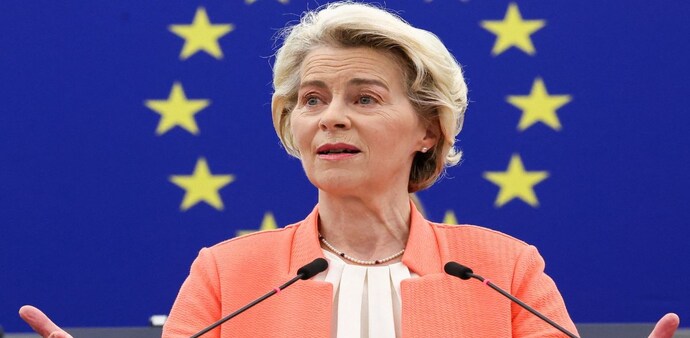
Ursula von der Leyen, president of the European Commission, has warned that Europe is already feeling the economic and geopolitical ripple effects of the escalating conflict in West Asia, as energy markets react to mounting instability and crude prices climb past $100 a barrel.
Catch live coverage of West Asia conflict here
Speaking during a meeting with European Union ambassadors on Monday, von der Leyen said the conflict was no longer confined to the battlefield and was beginning to produce broader regional and global consequences.
“We are now seeing a regional conflict with unintended consequences. And the spillover is already a reality today,” she said, cautioning that European citizens were increasingly being “caught in the crossfire” of the escalating crisis.
Her remarks come as oil markets remain volatile amid fears that disruptions in the Gulf could tighten global supply and push prices even higher, raising concerns about inflation and energy costs across Europe.
Earlier, Keir Starmer had also warned that the economic impact of the conflict could deepen if hostilities persist, suggesting that prolonged instability could place additional strain on energy markets and global trade.
Despite the rising tensions, von der Leyen emphasised the EU’s support for the Iranian people, saying that “the people of Iran deserve freedom, dignity, and the right to decide their own future.”
Her comments highlight growing concern among Western leaders that the conflict’s economic fallout — from energy prices to supply chain disruptions — could increasingly affect economies far beyond the immediate region.
Meanwhile, Sweden's government announced it will amass stockpiles of essentials like fuel, food and power generators in case of crises or war, allocating $150m to local communities for preparedness, as per a Bloomberg report.
Demand for removing of Russian oil and gas has gained ground. Péter Szijjártó, Minister of Foreign Affairs and Trade of Hungary, in a social media post wrote, "The EU should immediately lift its ban on Russian oil and gas imports. With the war in the Middle East escalating and the Strait of Hormuz closed, a major share of global energy supply is now at risk."
"Europe is especially exposed because the EU had already banned Russian energy imports. Now the conflict in the Middle East is cutting global supply as well. When supply shrinks, prices rise. Europe is therefore facing the risk of dramatic price increases," he added.
Ursula von der Leyen, president of the European Commission, has warned that Europe is already feeling the economic and geopolitical ripple effects of the escalating conflict in West Asia, as energy markets react to mounting instability and crude prices climb past $100 a barrel.
Catch live coverage of West Asia conflict here
Speaking during a meeting with European Union ambassadors on Monday, von der Leyen said the conflict was no longer confined to the battlefield and was beginning to produce broader regional and global consequences.
“We are now seeing a regional conflict with unintended consequences. And the spillover is already a reality today,” she said, cautioning that European citizens were increasingly being “caught in the crossfire” of the escalating crisis.
Her remarks come as oil markets remain volatile amid fears that disruptions in the Gulf could tighten global supply and push prices even higher, raising concerns about inflation and energy costs across Europe.
Earlier, Keir Starmer had also warned that the economic impact of the conflict could deepen if hostilities persist, suggesting that prolonged instability could place additional strain on energy markets and global trade.
Despite the rising tensions, von der Leyen emphasised the EU’s support for the Iranian people, saying that “the people of Iran deserve freedom, dignity, and the right to decide their own future.”
Her comments highlight growing concern among Western leaders that the conflict’s economic fallout — from energy prices to supply chain disruptions — could increasingly affect economies far beyond the immediate region.
Meanwhile, Sweden's government announced it will amass stockpiles of essentials like fuel, food and power generators in case of crises or war, allocating $150m to local communities for preparedness, as per a Bloomberg report.
Demand for removing of Russian oil and gas has gained ground. Péter Szijjártó, Minister of Foreign Affairs and Trade of Hungary, in a social media post wrote, "The EU should immediately lift its ban on Russian oil and gas imports. With the war in the Middle East escalating and the Strait of Hormuz closed, a major share of global energy supply is now at risk."
"Europe is especially exposed because the EU had already banned Russian energy imports. Now the conflict in the Middle East is cutting global supply as well. When supply shrinks, prices rise. Europe is therefore facing the risk of dramatic price increases," he added.