
China’s EV slowdown could trigger the industry’s biggest global reset
Subsidy cuts, shrinking margins and slowing demand are reshaping the world’s largest EV market as automakers pivot toward ultra-fast charging, exports and hybrid technologies.
- May 18, 2026,
- Updated May 18, 2026 12:52 PM IST
China’s electric vehicle industry is entering a tougher phase after years of explosive growth driven by subsidies, aggressive pricing and rapid consumer adoption. According to analysis released by energy research and consultancy firm Wood Mackenzie during the 2026 Beijing Auto Show, the market is now transitioning toward slower structural growth marked by shrinking margins, intense competition and rising pressure on automakers to survive through technology differentiation and overseas expansion.
The report says China’s domestic EV market has slowed to levels comparable to 2024 as the gradual rollback of subsidies, weaker consumer sentiment and higher cost pressures begin reshaping the sector.
“China’s EV market is entering a more structurally competitive phase where volume growth alone is no longer sufficient to sustain profitability,” said Alasia Zhang, research analyst, electric vehicle and battery supply chain at Wood Mackenzie. “The industry is now being reshaped by charging performance, integration depth, and the ability to control cost across the full value chain.”
MUST READ | Car buyers flock to EVs, driving record 6% penetration in April
China’s EV boom loses steam
For years, China’s EV industry expanded rapidly on the back of government incentives, easy financing and intense price competition. But many of those growth drivers are now weakening.
Wood Mackenzie noted that the reduction of trade-in subsidies has softened affordability in the mass market, while tighter financing conditions and selective price increases have weakened consumer demand further. Several automakers have also withdrawn zero-interest financing schemes, effectively increasing purchase costs for buyers.
At the same time, product differentiation across Chinese EV brands is narrowing rapidly. Most automakers now offer similar vehicle designs, large digital displays and connected-car features, making it increasingly difficult to stand out in a saturated market.
The report said a meaningful recovery in domestic EV demand during 2026 appears unlikely, particularly for mid-sized automakers facing rising input costs and limited pricing power.
DON'T MISS | Are EVs getting an edge in draft CAFE-III norms? What car buyers must know
Charging speed becomes the new battleground
The competitive landscape is also shifting away from traditional metrics such as driving range and digital features toward charging performance.
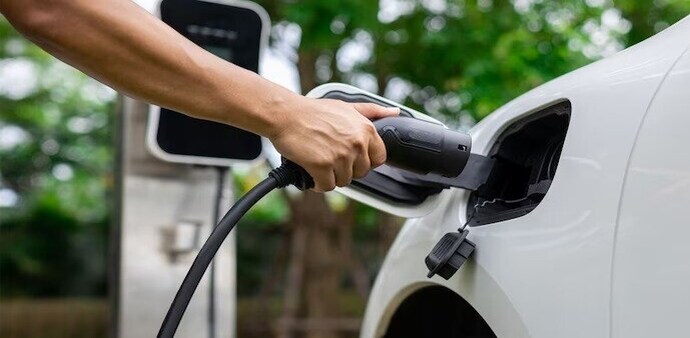
“Ultra-fast charging is rapidly becoming the industry’s defining performance benchmark rather than a standalone feature,” Zhang said. “Now OEMs are targeting charging times from 10% to near-full state of charge in under ten minutes, including in low-temperature conditions.”
The race toward ultra-fast charging reflects one of the biggest remaining barriers to EV adoption — charging convenience. Faster charging is increasingly being positioned as critical to converting internal combustion engine buyers who remain concerned about long charging times and long-distance usability.
Among the companies leading this transition is BYD, which Wood Mackenzie said has built an early advantage through a vertically integrated charging ecosystem spanning batteries, vehicles and charging infrastructure. This integration allows the company to optimise systems more tightly and deploy charging technologies faster.
Meanwhile, CATL is pursuing a broader strategy that combines fast charging and battery swapping across multiple automaker partnerships. While this expands market reach, execution depends more heavily on external infrastructure and integration timelines.
MUST READ | 'EVs are fastest route to cut oil imports': ICCT CEO flags limits of ethanol for India
Profit pressure widens the gap between winners and losers
The report highlights a widening competitive gap between dominant players and smaller EV manufacturers.
Battery raw material inflation is increasingly being absorbed by automakers rather than consumers, reflecting weak pricing flexibility in the market. For mid-sized OEMs without scale advantages or deep vertical integration, maintaining profitability is becoming significantly harder.
Leading battery companies are also expanding beyond traditional manufacturing. CATL, according to Wood Mackenzie, is accelerating upstream ambitions through its Resources Group, signalling a broader push into materials, storage systems and energy infrastructure.
The findings suggest the Chinese EV industry could move toward greater consolidation as weaker players struggle to survive in an environment of slowing demand and rising costs.
DON'T MISS | EVs may lose edge as govt weighs parity with flex-fuel cars
Chinese automakers look overseas for growth
Slowing domestic demand is also forcing Chinese automakers to rely increasingly on overseas markets.
Wood Mackenzie said companies including BYD, Geely and Chery have raised export targets for 2026 as international expansion shifts from strategic diversification to operational necessity.
Europe remains one of the most competitive export destinations, while higher global oil prices are improving the economics of EV adoption in several overseas markets.
Battery manufacturers are following a similar path. The report noted that Chinese battery makers are accelerating overseas production and expanding global footprints as domestic competition intensifies.
The broader implication is that China’s internal EV pressures are increasingly translating into aggressive international expansion by both automakers and battery suppliers, strengthening the country’s influence over the global EV supply chain.
MUST READ | Tata Motors to launch flex-fuel car by 2027
Hybrids and energy storage gain momentum
Interestingly, the report points to stronger momentum for hybrid vehicles even as EV adoption continues.
Traditional Chinese automakers including Geely, Changan Automobile and Chery are accelerating deployment of next-generation hybrid platforms featuring significantly larger battery capacities than older systems.
Geely aims to become the second major Chinese automaker to fully transition away from pure internal combustion engine sales in 2026, supported by a broader hybridisation strategy.
The shift is being reinforced by tighter fuel-efficiency regulations and charging infrastructure limitations in several export markets, creating continued demand for hybrid vehicles globally.
At the same time, energy storage demand remains strong across major battery suppliers. Companies are considering further capacity expansion, although delays between battery cell production and system-level commissioning continue to slow deployment.
CATL is expanding deeper into system integration to accelerate project execution and capture more value across the energy storage chain.
Wood Mackenzie also noted that China’s April carbon assessment framework, which increases provincial accountability for renewable deployment targets, could provide additional support for grid-scale energy storage installations.
China’s electric vehicle industry is entering a tougher phase after years of explosive growth driven by subsidies, aggressive pricing and rapid consumer adoption. According to analysis released by energy research and consultancy firm Wood Mackenzie during the 2026 Beijing Auto Show, the market is now transitioning toward slower structural growth marked by shrinking margins, intense competition and rising pressure on automakers to survive through technology differentiation and overseas expansion.
The report says China’s domestic EV market has slowed to levels comparable to 2024 as the gradual rollback of subsidies, weaker consumer sentiment and higher cost pressures begin reshaping the sector.
“China’s EV market is entering a more structurally competitive phase where volume growth alone is no longer sufficient to sustain profitability,” said Alasia Zhang, research analyst, electric vehicle and battery supply chain at Wood Mackenzie. “The industry is now being reshaped by charging performance, integration depth, and the ability to control cost across the full value chain.”
MUST READ | Car buyers flock to EVs, driving record 6% penetration in April
China’s EV boom loses steam
For years, China’s EV industry expanded rapidly on the back of government incentives, easy financing and intense price competition. But many of those growth drivers are now weakening.
Wood Mackenzie noted that the reduction of trade-in subsidies has softened affordability in the mass market, while tighter financing conditions and selective price increases have weakened consumer demand further. Several automakers have also withdrawn zero-interest financing schemes, effectively increasing purchase costs for buyers.
At the same time, product differentiation across Chinese EV brands is narrowing rapidly. Most automakers now offer similar vehicle designs, large digital displays and connected-car features, making it increasingly difficult to stand out in a saturated market.
The report said a meaningful recovery in domestic EV demand during 2026 appears unlikely, particularly for mid-sized automakers facing rising input costs and limited pricing power.
DON'T MISS | Are EVs getting an edge in draft CAFE-III norms? What car buyers must know
Charging speed becomes the new battleground
The competitive landscape is also shifting away from traditional metrics such as driving range and digital features toward charging performance.
“Ultra-fast charging is rapidly becoming the industry’s defining performance benchmark rather than a standalone feature,” Zhang said. “Now OEMs are targeting charging times from 10% to near-full state of charge in under ten minutes, including in low-temperature conditions.”
The race toward ultra-fast charging reflects one of the biggest remaining barriers to EV adoption — charging convenience. Faster charging is increasingly being positioned as critical to converting internal combustion engine buyers who remain concerned about long charging times and long-distance usability.
Among the companies leading this transition is BYD, which Wood Mackenzie said has built an early advantage through a vertically integrated charging ecosystem spanning batteries, vehicles and charging infrastructure. This integration allows the company to optimise systems more tightly and deploy charging technologies faster.
Meanwhile, CATL is pursuing a broader strategy that combines fast charging and battery swapping across multiple automaker partnerships. While this expands market reach, execution depends more heavily on external infrastructure and integration timelines.
MUST READ | 'EVs are fastest route to cut oil imports': ICCT CEO flags limits of ethanol for India
Profit pressure widens the gap between winners and losers
The report highlights a widening competitive gap between dominant players and smaller EV manufacturers.
Battery raw material inflation is increasingly being absorbed by automakers rather than consumers, reflecting weak pricing flexibility in the market. For mid-sized OEMs without scale advantages or deep vertical integration, maintaining profitability is becoming significantly harder.
Leading battery companies are also expanding beyond traditional manufacturing. CATL, according to Wood Mackenzie, is accelerating upstream ambitions through its Resources Group, signalling a broader push into materials, storage systems and energy infrastructure.
The findings suggest the Chinese EV industry could move toward greater consolidation as weaker players struggle to survive in an environment of slowing demand and rising costs.
DON'T MISS | EVs may lose edge as govt weighs parity with flex-fuel cars
Chinese automakers look overseas for growth
Slowing domestic demand is also forcing Chinese automakers to rely increasingly on overseas markets.
Wood Mackenzie said companies including BYD, Geely and Chery have raised export targets for 2026 as international expansion shifts from strategic diversification to operational necessity.
Europe remains one of the most competitive export destinations, while higher global oil prices are improving the economics of EV adoption in several overseas markets.
Battery manufacturers are following a similar path. The report noted that Chinese battery makers are accelerating overseas production and expanding global footprints as domestic competition intensifies.
The broader implication is that China’s internal EV pressures are increasingly translating into aggressive international expansion by both automakers and battery suppliers, strengthening the country’s influence over the global EV supply chain.
MUST READ | Tata Motors to launch flex-fuel car by 2027
Hybrids and energy storage gain momentum
Interestingly, the report points to stronger momentum for hybrid vehicles even as EV adoption continues.
Traditional Chinese automakers including Geely, Changan Automobile and Chery are accelerating deployment of next-generation hybrid platforms featuring significantly larger battery capacities than older systems.
Geely aims to become the second major Chinese automaker to fully transition away from pure internal combustion engine sales in 2026, supported by a broader hybridisation strategy.
The shift is being reinforced by tighter fuel-efficiency regulations and charging infrastructure limitations in several export markets, creating continued demand for hybrid vehicles globally.
At the same time, energy storage demand remains strong across major battery suppliers. Companies are considering further capacity expansion, although delays between battery cell production and system-level commissioning continue to slow deployment.
CATL is expanding deeper into system integration to accelerate project execution and capture more value across the energy storage chain.
Wood Mackenzie also noted that China’s April carbon assessment framework, which increases provincial accountability for renewable deployment targets, could provide additional support for grid-scale energy storage installations.