
Is India heading towards 100% ethanol for motor vehicles?
Flex-fuel vehicles compatible with E100 will cost much more than E20 vehicles on sale currently
- Apr 30, 2026,
- Updated Apr 30, 2026 4:14 PM IST
As the Ministry of Road Transport and Highways proposes the inclusion of E100 in testing and certification standards, the question on everyone’s mind is this: will India have vehicles that run on 100% ethanol?
Well, the answer is a little complicated. No automobile manufacturer in India has flexible fuel (flex-fuel) vehicles on sale even for E85, a fuel blend comprising 85% ethanol and 15% petrol. E100 is still a long shot, even as the government has cleared the way for production of such vehicles.
The proposed changes to India’s Central Motor Vehicles Rules (CMVR) comes days after Union minister of road transport and highways Nitin Gadkari warned that there is no future for petrol and diesel vehicles, nudging automakers to adopt alternatives such as biofuels and cleaner technologies.
How different is E100 from E20?
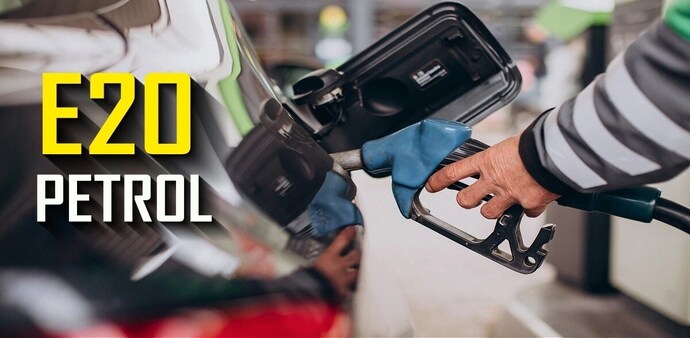
India reached its 20% ethanol blending (E20) target in petrol by July 2025, achieving a key milestone five years ahead of its original 2030 timeline. E20 is already on sale in India and all motor vehicles manufactured in the country from April 2023 are compliant with E20.
To make vehicles compatible with E20 fuel, automakers had to make some tweaks so that vehicle parts withstand highly corrosive ethanol. However, E100 will require a major overhaul of internal-combustion (ICE) engines and auto parts.
While most original equipment manufacturers (OEMs) are working on flex-fuel vehicles, the rollout of such vehicles could take a long time as parts may not be ready.
“There are parts like pistons, piston rings, hoses, brake pipes, fuel pumps, which you may have to change. You have to make them ethanol compatible so that there is no corrosion. While the vehicles may be ready, parts suppliers may not be ready,” says Puneet Gupta, Director, India & ASEAN Automotive Market, S&P Global Mobility.
MUST READ: Are EVs getting an edge in draft CAFE-III norms? What car buyers must know
Challenges galore
While India is almost “self-reliant” in ethanol today, the country may not have enough ethanol if most new vehicle sales move to E100. “The problem today is that India doesn’t have so much ethanol to really go for E100, The government may do this in steps: by bringing ethanol blending from E20 to E25 for the entire fleet,” says Gupta. “To deal with high crude oil prices, the government may first bring in E25.” Aside from India, Brazil is the only country where a higher ethanol blend of petrol E27 is mainstream.
E100 may take time as the rollout of flex-fuel vehicles will not be easy, Gupta says. “Petrol pumps will need separate dispensing stations with ethanol-compatible hoses and pipes. It will be a longer process. Throughout India, it may not be possible on an immediate basis,” he adds.
However, E25, even though a very high blend of ethanol, is easier to do as every petrol pump will have that. “Beyond that the auto industry needs to work on flex-fuel vehicles,” Gupta says.
Also, E100 vehicles are expected to cost roughly Rs 50,000 more than regular E20 vehicles as corrosion-resistant parts are expensive. Lack of separate dispensing stations at petrol pumps could also hinder the E100 rollout. There are no dispensing stations for E100 currently.
Fuel efficiency hit
When E20 became prevalent, there were apprehensions whether ethanol blended fuel reduces fuel efficiency in vehicles. In August 2025, the Ministry of Petroleum and Natural Gas clarified that E20 causes a marginal 3–6% decrease in fuel efficiency in older non-compliant vehicles which can be minimised through improved engine tuning.
E100, too, is also expected to reduce fuel efficiency in vehicles as ethanol has a lower calorific value or energy density than petrol. “Fuel efficiency will reduce because calorific value of ethanol is 35% less than petrol,” says Gupta.
MUST READ: BT Explainer: Why Centre wants auto industry to introduce flex fuel vehicles that use E85
Confusion abound
Auto manufacturers are undergoing a once-in-a-lifetime transition to battery electric vehicles. Some are even working on technologies such as hydrogen. In an industry, which is already divided on incentives for strong hybrid vehicles, incentivizing a newer technology like flex-fuel vehicles could come in the way of the transition to zero-emission EVs. Besides, allocating capex for a new fuel type could hit automakers’ capex plans on cleaner technologies such as EVs, leaving both manufacturers and car buyers confused.
The ministry of petroleum and natural gas recently urged the automobile industry to be ready with flex-fuel engines. But the industry is still awaiting the details.
“The government has yet to announce what exactly they want to do. We have the technology (to make flex-fuel vehicles). We can develop cars and put them in the market if required. But then, it has to be something that has to be done by the industry and not only by us,” Maruti Suzuki chairman R.C. Bhargava told reporters after the company announced its earnings.
Ethanol lobby bats for E100
India's ethanol push is likely to add more stress to the country's water crisis as sugarcane production requires a lot of water. Nevertheless, ethanol manufacturers are upbeat about the government’s E100 push as higher blend of ethanol in petrol will lead to higher offtake of farm products like sugarcane and corn among others.
“For the grain-based ethanol industry, this development opens up significant opportunities to scale production, drive investments, and contribute more meaningfully to India’s energy security and decarbonisation goals,” said C.K. Jain, president of Grain Ethanol Manufacturers Association (GEMA). Higher ethanol blends such as E85 and E100 will significantly enhance demand for surplus grains, thereby strengthening farm incomes and creating a more resilient agri-value chain, Jain adds.
MUST READ: EVs may lose edge as govt weighs parity with flex-fuel cars
As the Ministry of Road Transport and Highways proposes the inclusion of E100 in testing and certification standards, the question on everyone’s mind is this: will India have vehicles that run on 100% ethanol?
Well, the answer is a little complicated. No automobile manufacturer in India has flexible fuel (flex-fuel) vehicles on sale even for E85, a fuel blend comprising 85% ethanol and 15% petrol. E100 is still a long shot, even as the government has cleared the way for production of such vehicles.
The proposed changes to India’s Central Motor Vehicles Rules (CMVR) comes days after Union minister of road transport and highways Nitin Gadkari warned that there is no future for petrol and diesel vehicles, nudging automakers to adopt alternatives such as biofuels and cleaner technologies.
How different is E100 from E20?
India reached its 20% ethanol blending (E20) target in petrol by July 2025, achieving a key milestone five years ahead of its original 2030 timeline. E20 is already on sale in India and all motor vehicles manufactured in the country from April 2023 are compliant with E20.
To make vehicles compatible with E20 fuel, automakers had to make some tweaks so that vehicle parts withstand highly corrosive ethanol. However, E100 will require a major overhaul of internal-combustion (ICE) engines and auto parts.
While most original equipment manufacturers (OEMs) are working on flex-fuel vehicles, the rollout of such vehicles could take a long time as parts may not be ready.
“There are parts like pistons, piston rings, hoses, brake pipes, fuel pumps, which you may have to change. You have to make them ethanol compatible so that there is no corrosion. While the vehicles may be ready, parts suppliers may not be ready,” says Puneet Gupta, Director, India & ASEAN Automotive Market, S&P Global Mobility.
MUST READ: Are EVs getting an edge in draft CAFE-III norms? What car buyers must know
Challenges galore
While India is almost “self-reliant” in ethanol today, the country may not have enough ethanol if most new vehicle sales move to E100. “The problem today is that India doesn’t have so much ethanol to really go for E100, The government may do this in steps: by bringing ethanol blending from E20 to E25 for the entire fleet,” says Gupta. “To deal with high crude oil prices, the government may first bring in E25.” Aside from India, Brazil is the only country where a higher ethanol blend of petrol E27 is mainstream.
E100 may take time as the rollout of flex-fuel vehicles will not be easy, Gupta says. “Petrol pumps will need separate dispensing stations with ethanol-compatible hoses and pipes. It will be a longer process. Throughout India, it may not be possible on an immediate basis,” he adds.
However, E25, even though a very high blend of ethanol, is easier to do as every petrol pump will have that. “Beyond that the auto industry needs to work on flex-fuel vehicles,” Gupta says.
Also, E100 vehicles are expected to cost roughly Rs 50,000 more than regular E20 vehicles as corrosion-resistant parts are expensive. Lack of separate dispensing stations at petrol pumps could also hinder the E100 rollout. There are no dispensing stations for E100 currently.
Fuel efficiency hit
When E20 became prevalent, there were apprehensions whether ethanol blended fuel reduces fuel efficiency in vehicles. In August 2025, the Ministry of Petroleum and Natural Gas clarified that E20 causes a marginal 3–6% decrease in fuel efficiency in older non-compliant vehicles which can be minimised through improved engine tuning.
E100, too, is also expected to reduce fuel efficiency in vehicles as ethanol has a lower calorific value or energy density than petrol. “Fuel efficiency will reduce because calorific value of ethanol is 35% less than petrol,” says Gupta.
MUST READ: BT Explainer: Why Centre wants auto industry to introduce flex fuel vehicles that use E85
Confusion abound
Auto manufacturers are undergoing a once-in-a-lifetime transition to battery electric vehicles. Some are even working on technologies such as hydrogen. In an industry, which is already divided on incentives for strong hybrid vehicles, incentivizing a newer technology like flex-fuel vehicles could come in the way of the transition to zero-emission EVs. Besides, allocating capex for a new fuel type could hit automakers’ capex plans on cleaner technologies such as EVs, leaving both manufacturers and car buyers confused.
The ministry of petroleum and natural gas recently urged the automobile industry to be ready with flex-fuel engines. But the industry is still awaiting the details.
“The government has yet to announce what exactly they want to do. We have the technology (to make flex-fuel vehicles). We can develop cars and put them in the market if required. But then, it has to be something that has to be done by the industry and not only by us,” Maruti Suzuki chairman R.C. Bhargava told reporters after the company announced its earnings.
Ethanol lobby bats for E100
India's ethanol push is likely to add more stress to the country's water crisis as sugarcane production requires a lot of water. Nevertheless, ethanol manufacturers are upbeat about the government’s E100 push as higher blend of ethanol in petrol will lead to higher offtake of farm products like sugarcane and corn among others.
“For the grain-based ethanol industry, this development opens up significant opportunities to scale production, drive investments, and contribute more meaningfully to India’s energy security and decarbonisation goals,” said C.K. Jain, president of Grain Ethanol Manufacturers Association (GEMA). Higher ethanol blends such as E85 and E100 will significantly enhance demand for surplus grains, thereby strengthening farm incomes and creating a more resilient agri-value chain, Jain adds.
MUST READ: EVs may lose edge as govt weighs parity with flex-fuel cars