
West Bengal Election Results | Lakshmir Bhandar to Matrishakti Bharosa Card: How will it affect the state coffers?
West Bengal Results 2026: Trinamool’s Lakshmir Bhandar scheme had an allocation of Rs 26,700 crore in FY26. The state’s finances have remained strained, and its revenue expenditure and revenue deficit have increased every year.
- May 4, 2026,
- Updated May 4, 2026 6:50 PM IST
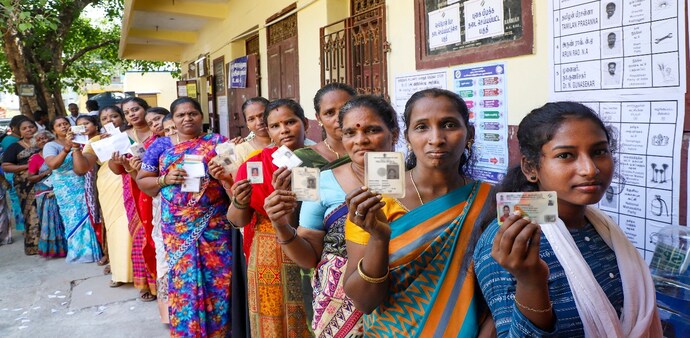
West Bengal Election Results 2026: The Bharatiya Janata Party’s (BJP) election promise to provide a direct cash transfer of Rs 3,000 to women and youth could through the Matrishakti Bharosa Card, in effect, double the benefit under Trinamool Congress’s Lakshmir Bhandar Scheme in West Bengal.
While it is still early days and the exact contours of the announcement would be known only in coming weeks, the higher cash payout could potentially put further pressure on the state’s strained finances.
Started in 2021-22, the Lakshmir Bhandar scheme provides cash transfers to women in the age group of 25 to 60 years. Right ahead of the state elections, the Mamata Banerjee government had enhanced benefits under the scheme to a uniform Rs 1,500 for one woman per household, subject to certain conditions.
Must read | From cash to DA: What Bengal is set to gain from BJP's historic win
Analysts have noted that the cash transfer scheme has had a huge impact on West Bengal’s finances even though they have proven beneficial to women to some extent. In FY26, the scheme had an allocation of Rs 26,700 crore in the state’s Budget. As an earlier PRS Legislative Research report had noted that between 2021-22 and 2025-26, the expenditure under the scheme is estimated to increase at an annual rate of 47%.
“In 2021-22, the state had spent 3% of its revenue receipts on cash transfers under Lakshmir Bhandar which is estimated to increase to 10% as per the Budget Estimates of 2025-26,” said the report by PRS Legislative Research on the West Bengal Budget 2025-26.
Don't miss | Election Results 2026: Bengal victory seals BJP’s Anga-Banga-Kalinga vision. What is it?
The state’s finances have also remained strained, and its revenue expenditure and revenue deficit have increased every year. The revenue deficit rose to 2.4% of the GSDP in FY25 from 1.6% in FY24 and was estimated to come down to 1.7% in FY26. Its revenue expenditure for FY26 was proposed to rise by 11% to Rs 3,01,375 crore, an increase of 11% from the revised estimate of Rs 2,70,852 crore in FY25.
In the Interim Budget, the state’s revenue deficit was seen at 2.07% in FY26 and 1.01% in FY27 and the revenue expenditure is projected to rise to Rs 3.09 lakh crore in FY27.
The pressure on state finances due to higher social sector spending was also highlighted in a recent study by CareEdge Ratings that analysed the finances of the top 15 states, which account for 89% of India’s Gross State Domestic Product (GSDP) for the financial year ending 31 March 2025 (FY25).
Don't miss | Election Results 2026: Here's constituency-wise results in West Bengal
“Mirroring the 9MFY26 trend, revenue expenditure is estimated to increase by 8% in FY26 (P) and 11% in FY27 (P). A significant portion of this growth is attributable to social sector expenditure, which is projected to grow at around 11% annually,” it said.
The rise in social spending is mainly driven by welfare programmes and policy-driven initiatives across states. Over the past three years, several states have expanded social protection programmes — including cash transfers, subsidies, and other welfare efforts — leading to nearly a doubling of social security and welfare expenditure from FY22 to FY25, the study pointed out.
West Bengal Election Results 2026: The Bharatiya Janata Party’s (BJP) election promise to provide a direct cash transfer of Rs 3,000 to women and youth could through the Matrishakti Bharosa Card, in effect, double the benefit under Trinamool Congress’s Lakshmir Bhandar Scheme in West Bengal.
While it is still early days and the exact contours of the announcement would be known only in coming weeks, the higher cash payout could potentially put further pressure on the state’s strained finances.
Started in 2021-22, the Lakshmir Bhandar scheme provides cash transfers to women in the age group of 25 to 60 years. Right ahead of the state elections, the Mamata Banerjee government had enhanced benefits under the scheme to a uniform Rs 1,500 for one woman per household, subject to certain conditions.
Must read | From cash to DA: What Bengal is set to gain from BJP's historic win
Analysts have noted that the cash transfer scheme has had a huge impact on West Bengal’s finances even though they have proven beneficial to women to some extent. In FY26, the scheme had an allocation of Rs 26,700 crore in the state’s Budget. As an earlier PRS Legislative Research report had noted that between 2021-22 and 2025-26, the expenditure under the scheme is estimated to increase at an annual rate of 47%.
“In 2021-22, the state had spent 3% of its revenue receipts on cash transfers under Lakshmir Bhandar which is estimated to increase to 10% as per the Budget Estimates of 2025-26,” said the report by PRS Legislative Research on the West Bengal Budget 2025-26.
Don't miss | Election Results 2026: Bengal victory seals BJP’s Anga-Banga-Kalinga vision. What is it?
The state’s finances have also remained strained, and its revenue expenditure and revenue deficit have increased every year. The revenue deficit rose to 2.4% of the GSDP in FY25 from 1.6% in FY24 and was estimated to come down to 1.7% in FY26. Its revenue expenditure for FY26 was proposed to rise by 11% to Rs 3,01,375 crore, an increase of 11% from the revised estimate of Rs 2,70,852 crore in FY25.
In the Interim Budget, the state’s revenue deficit was seen at 2.07% in FY26 and 1.01% in FY27 and the revenue expenditure is projected to rise to Rs 3.09 lakh crore in FY27.
The pressure on state finances due to higher social sector spending was also highlighted in a recent study by CareEdge Ratings that analysed the finances of the top 15 states, which account for 89% of India’s Gross State Domestic Product (GSDP) for the financial year ending 31 March 2025 (FY25).
Don't miss | Election Results 2026: Here's constituency-wise results in West Bengal
“Mirroring the 9MFY26 trend, revenue expenditure is estimated to increase by 8% in FY26 (P) and 11% in FY27 (P). A significant portion of this growth is attributable to social sector expenditure, which is projected to grow at around 11% annually,” it said.
The rise in social spending is mainly driven by welfare programmes and policy-driven initiatives across states. Over the past three years, several states have expanded social protection programmes — including cash transfers, subsidies, and other welfare efforts — leading to nearly a doubling of social security and welfare expenditure from FY22 to FY25, the study pointed out.