
7.8% GDP row: ‘Need to compare apples to apples, not apples to oranges,’ says MoSPI Secretary
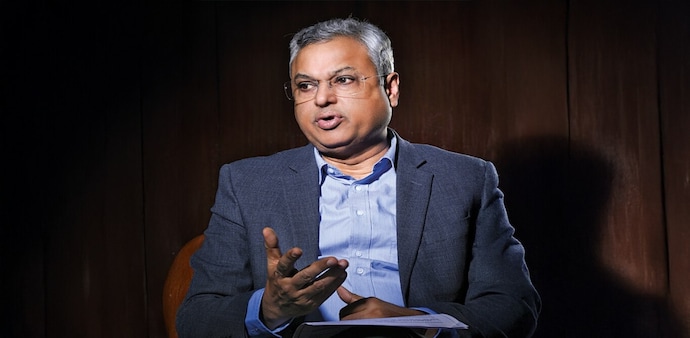
MoSPI Secretary Saurabh Garg said the mistake was to compare a Q1 figure from the old GDP series with a number from the new series, even though revised historical numbers had been released months earlier.
- Sep 4, 2026,
- Updated Sep 4, 2026 1:16 PM IST
India’s latest GDP growth estimate of 7.8% is backed by real-economy indicators and allegations that official data were manipulated to present a stronger picture of growth are unfounded, Ministry of Statistics and Programme Implementation (MoSPI) Secretary Saurabh Garg has said.
In an exclusive conversation with Business Today, Garg rejected questions over the robustness of the Q1 FY27 growth estimate and said critics were comparing GDP numbers calculated on different bases.
“I would say that the 7.8% that has come out as a growth figure for Q1 is only corroborated by a number of real economy figures,” Garg said when asked whether India was overstating its economic performance.
MUST READ | Why 7% GDP growth may not be enough: Former RBI governor’s reality check on India’s growth story
He pointed to expansionary manufacturing and services PMI readings, along with 9% growth in electricity and 8% in cement and steel. Several services segments, including hotels, tourism and retail and wholesale trade, were growing in the 15-20% range, while private consumption expenditure was nearly 8%, he said.
“So, I'm surprised that the 7.8% figures, which are corroborated by the real economy data, are being questioned. And I can also say that the data sources that we use for calculating the 7.8% quarter growth rates, they are all in the public domain,” Garg said.
‘Need to compare apples to apples’
Garg said changing the base year is neither new nor unique to India and is necessary to capture changes in the structure of the economy, statistical methodology and availability of new data sources.
He added that India has periodically changed its GDP base year over the decades, with the latest revision moving it from 2011-12 to 2022-23. Garg said newer sources, including GST and other digital data, have allowed statisticians to better capture economic activity.
DON'T MISS | ‘Ill-educated, egregiously wrong…’: Neelkanth Mishra says ‘2.6% GDP growth’ claim is obviously incorrect
“And when you change the base year, obviously, the level of the uh items and the level of the GDP numbers change. So, whenever if a comparison has to be done, you need to compare apples to apples rather than apples to oranges,” he said.
Garg said the mistake was to compare a Q1 figure from the old GDP series with a number from the new series, even though revised historical numbers had been released months earlier.
₹6 lakh crore revision made months before latest GDP data
A key allegation surrounding the latest numbers is that the previous year’s Q1 GDP was revised down from about ₹86 lakh crore to ₹80 lakh crore, thereby making the latest growth figure appear stronger.
Garg rejected the contention, pointing out that the ₹80 lakh crore number was released in February 2026, when the latest quarter’s ₹88 lakh crore estimate did not even exist.
“So, let I just wanted to put it on mention, but let me just mention why this ₹86 lakh crore became ₹80 lakh crore. As I mentioned, we had revised the base year from 2011-12 to 2022-23, and we had better data sources that were available, especially for the informal uh, sector,” he said.
DO CHECKOUT | At Davos 2026, Gita Gopinath was asked about India's GDP data methodology. Her response
Under the revised series, Garg said Q1 GDP for FY25 stood at about ₹74 lakh crore, followed by ₹80 lakh crore in Q1 FY26 and ₹88 lakh crore in Q1 FY27.
“So, that's the comparison that I'm saying that you have to compare apples to apples. ₹74 lakh crore Q1 24-25, ₹80 lakh crore Q1 25-26, ₹88 lakh crore Q1 of 26-27,” he said.
Why real and nominal GDP growth can diverge
Garg also addressed questions around the GDP deflator and the difference between nominal and real growth. GDP estimates are prepared at current as well as constant prices, with the latter stripping out the impact of price changes to capture the actual change in economic output.
Rather than relying on a single headline inflation number, the statistical system uses a combination of consumer, wholesale and producer price indices and other unit value indices across different components of the economy.
Garg said more than 300 different values are used while assessing the price impact across agriculture, industry and services.
FIND OUT WHY | 'Methodology is very robust': Former statisticians back GDP base year revision
He also explained why real manufacturing growth could exceed nominal growth. Input costs for manufacturers, including steel, petroleum-based products, plastics and composites, had risen sharply, while companies had not been able to pass the entire increase on to consumers.
This affected manufacturing value addition at current prices and resulted in a negative deflator, he said.
Only ‘10 20 30 basis points’ changes
On whether India could see more significant revisions to GDP data, the MoSPI Secretary said quarterly estimates rely on indicators and are updated as more corporate results and government data become available.
“Normally these changes are not significantly different. They could be 10 20 30 basis points up or down and that is what we normally expect,” he said.
The major structural changes associated with the base-year revision, including changes in the structure of the economy, rebasing and the use of PPI, had largely been incorporated, according to Garg. Further revisions would primarily reflect new data becoming available.
‘Absolutely not’ a credibility crisis
Garg strongly rejected the broader charge that India faces a credibility problem over its official macroeconomic statistics. “The short answer is absolutely not,” he said.
Garg said methodological changes introduced with the new series followed extensive consultations with experts, economists and forecasters. Consultation papers were issued and discussions were also held with the IMF, United Nations and the international community to ensure the methodology was appropriate for India while adhering to international best practices.
He pointed to India’s extensive digital data ecosystem, including GST, UPI, e-Vahan and the Public Financial Management System, saying the country has access to exhaustive and increasingly real-time information.
Garg also highlighted the government’s statistical field force of about 10,000 people, who collect data from households and enterprises across the country.
“And therefore to cast doubts on the methodology, on the data sources, on the technical ability of the high-quality statisticians that are available in the country and available with the government, it's extremely painful to hear of these kind of baseless allegations being made of data jugglery,” Garg said.
What about jobs and the missing ‘feel-good’ factor?
On questions about employment not appearing to keep pace with robust headline economic growth, Garg pointed to the Periodic Labour Force Survey and said unemployment, depending on the measure used, was between 3% and 5% and had remained broadly stable over the past year or more.
The quality of jobs, however, was a wider question involving individual aspirations, skills, industry requirements and other factors, he said.
Garg also acknowledged increased uncertainty arising from geopolitical developments, climate change and technology.
On why strong headline growth may not always translate into a similar “feel-good” sentiment on the ground, he pointed again to the broader global environment.
“If at all there is a feel-good issue that you are mentioning, as I mentioned, that probably relates to the uncertainty that exists globally, and that is getting reflected,” he said.
“So, that's not really a issue of how the economy is doing. That's a much larger question that you are asking, and perhaps that would need another mechanism and another set of experts to look at what can be done to reduce the uncertainty, which might be impacting the feel-good sector,” Garg added.
Watch the full conversation here:
India’s latest GDP growth estimate of 7.8% is backed by real-economy indicators and allegations that official data were manipulated to present a stronger picture of growth are unfounded, Ministry of Statistics and Programme Implementation (MoSPI) Secretary Saurabh Garg has said.
In an exclusive conversation with Business Today, Garg rejected questions over the robustness of the Q1 FY27 growth estimate and said critics were comparing GDP numbers calculated on different bases.
“I would say that the 7.8% that has come out as a growth figure for Q1 is only corroborated by a number of real economy figures,” Garg said when asked whether India was overstating its economic performance.
MUST READ | Why 7% GDP growth may not be enough: Former RBI governor’s reality check on India’s growth story
He pointed to expansionary manufacturing and services PMI readings, along with 9% growth in electricity and 8% in cement and steel. Several services segments, including hotels, tourism and retail and wholesale trade, were growing in the 15-20% range, while private consumption expenditure was nearly 8%, he said.
“So, I'm surprised that the 7.8% figures, which are corroborated by the real economy data, are being questioned. And I can also say that the data sources that we use for calculating the 7.8% quarter growth rates, they are all in the public domain,” Garg said.
‘Need to compare apples to apples’
Garg said changing the base year is neither new nor unique to India and is necessary to capture changes in the structure of the economy, statistical methodology and availability of new data sources.
He added that India has periodically changed its GDP base year over the decades, with the latest revision moving it from 2011-12 to 2022-23. Garg said newer sources, including GST and other digital data, have allowed statisticians to better capture economic activity.
DON'T MISS | ‘Ill-educated, egregiously wrong…’: Neelkanth Mishra says ‘2.6% GDP growth’ claim is obviously incorrect
“And when you change the base year, obviously, the level of the uh items and the level of the GDP numbers change. So, whenever if a comparison has to be done, you need to compare apples to apples rather than apples to oranges,” he said.
Garg said the mistake was to compare a Q1 figure from the old GDP series with a number from the new series, even though revised historical numbers had been released months earlier.
₹6 lakh crore revision made months before latest GDP data
A key allegation surrounding the latest numbers is that the previous year’s Q1 GDP was revised down from about ₹86 lakh crore to ₹80 lakh crore, thereby making the latest growth figure appear stronger.
Garg rejected the contention, pointing out that the ₹80 lakh crore number was released in February 2026, when the latest quarter’s ₹88 lakh crore estimate did not even exist.
“So, let I just wanted to put it on mention, but let me just mention why this ₹86 lakh crore became ₹80 lakh crore. As I mentioned, we had revised the base year from 2011-12 to 2022-23, and we had better data sources that were available, especially for the informal uh, sector,” he said.
DO CHECKOUT | At Davos 2026, Gita Gopinath was asked about India's GDP data methodology. Her response
Under the revised series, Garg said Q1 GDP for FY25 stood at about ₹74 lakh crore, followed by ₹80 lakh crore in Q1 FY26 and ₹88 lakh crore in Q1 FY27.
“So, that's the comparison that I'm saying that you have to compare apples to apples. ₹74 lakh crore Q1 24-25, ₹80 lakh crore Q1 25-26, ₹88 lakh crore Q1 of 26-27,” he said.
Why real and nominal GDP growth can diverge
Garg also addressed questions around the GDP deflator and the difference between nominal and real growth. GDP estimates are prepared at current as well as constant prices, with the latter stripping out the impact of price changes to capture the actual change in economic output.
Rather than relying on a single headline inflation number, the statistical system uses a combination of consumer, wholesale and producer price indices and other unit value indices across different components of the economy.
Garg said more than 300 different values are used while assessing the price impact across agriculture, industry and services.
FIND OUT WHY | 'Methodology is very robust': Former statisticians back GDP base year revision
He also explained why real manufacturing growth could exceed nominal growth. Input costs for manufacturers, including steel, petroleum-based products, plastics and composites, had risen sharply, while companies had not been able to pass the entire increase on to consumers.
This affected manufacturing value addition at current prices and resulted in a negative deflator, he said.
Only ‘10 20 30 basis points’ changes
On whether India could see more significant revisions to GDP data, the MoSPI Secretary said quarterly estimates rely on indicators and are updated as more corporate results and government data become available.
“Normally these changes are not significantly different. They could be 10 20 30 basis points up or down and that is what we normally expect,” he said.
The major structural changes associated with the base-year revision, including changes in the structure of the economy, rebasing and the use of PPI, had largely been incorporated, according to Garg. Further revisions would primarily reflect new data becoming available.
‘Absolutely not’ a credibility crisis
Garg strongly rejected the broader charge that India faces a credibility problem over its official macroeconomic statistics. “The short answer is absolutely not,” he said.
Garg said methodological changes introduced with the new series followed extensive consultations with experts, economists and forecasters. Consultation papers were issued and discussions were also held with the IMF, United Nations and the international community to ensure the methodology was appropriate for India while adhering to international best practices.
He pointed to India’s extensive digital data ecosystem, including GST, UPI, e-Vahan and the Public Financial Management System, saying the country has access to exhaustive and increasingly real-time information.
Garg also highlighted the government’s statistical field force of about 10,000 people, who collect data from households and enterprises across the country.
“And therefore to cast doubts on the methodology, on the data sources, on the technical ability of the high-quality statisticians that are available in the country and available with the government, it's extremely painful to hear of these kind of baseless allegations being made of data jugglery,” Garg said.
What about jobs and the missing ‘feel-good’ factor?
On questions about employment not appearing to keep pace with robust headline economic growth, Garg pointed to the Periodic Labour Force Survey and said unemployment, depending on the measure used, was between 3% and 5% and had remained broadly stable over the past year or more.
The quality of jobs, however, was a wider question involving individual aspirations, skills, industry requirements and other factors, he said.
Garg also acknowledged increased uncertainty arising from geopolitical developments, climate change and technology.
On why strong headline growth may not always translate into a similar “feel-good” sentiment on the ground, he pointed again to the broader global environment.
“If at all there is a feel-good issue that you are mentioning, as I mentioned, that probably relates to the uncertainty that exists globally, and that is getting reflected,” he said.
“So, that's not really a issue of how the economy is doing. That's a much larger question that you are asking, and perhaps that would need another mechanism and another set of experts to look at what can be done to reduce the uncertainty, which might be impacting the feel-good sector,” Garg added.
Watch the full conversation here: