
Explained: Why is India keeping a close watch on Bangladesh elections, what changed under Yunus, and more
Bangladesh election 2026: This is the first election in more than 30 years when both Khaleda Zia and Sheikh Hasina are not in the fray.
- Feb 12, 2026,
- Updated Feb 12, 2026 9:49 AM IST
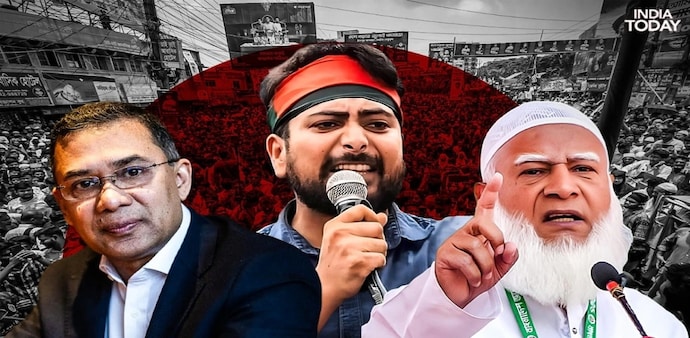
Voting is currently underway in Bangladesh amid the turbulent regime of the interim government chief Muhammad Yunus. This is the first election in more than 30 years when both Khaleda Zia and Sheikh Hasina are not in the fray. While Hasina is in India after her ouster in 2024, Zia passed away in December 2025, following which her son Tarique Rahman is leading the Bangladesh Nationalist Party (BNP).
Why is India watching the Bangladesh elections closely?
New Delhi is closely watching the polls in Bangladesh because five northeastern states, including the poll-bound Assam, share their borders with Bangladesh. Sheikh Hasina's tenure from 2009-24 marked an era of cooperation as the Awami League government cracked down heavily against anti-India elements in Bangladesh.
The 2015 Land Boundary Agreement, hailed as a breakthrough after almost 5 decades, facilitated the transfer of 111 enclaves (17,160.63 acres) from India to Bangladesh and 51 enclaves (7,110.02 acres) from Bangladesh to India.
During the Bangladesh Nationalist Party's rule from 2001-06, relations with India went downhill amid growing border instability. Jamaat-e-Islami, which occasionally allied with the BNP, has been viewed with suspicion in Delhi circles due to its alleged pro-Pakistan slant and Islamist views.
It has also served as a strategic counter-balancing force against China and Pakistan, both of which Yunus has courted while perpetuating and fomenting the anti-India rhetoric in the country.
Yunus's courting of China and Pakistan
The Nobel Laureate-turned interim government's chief advisor made Beijing his first port of call in 2025. He went so far as to allude to India's northeastern region as "landlocked" and called on Beijing to expand its control in the region, which irked India.
China is involved in various high-profile projects in Bangladesh, including the revival of the Lalmonirhat airbase in Rangpur, located close to India's 'Chicken's Neck'. Apart from this, China is also helping to modernise Bangladesh's second-largest seaport — Mongla Port — and a water management project along the Teesta river.
The two countries have also signed a key defence deal for a drone plant at a northern airbase near India. Not only this, but Bangladesh has also warmed up to Pakistan, the very country it sought independence from with the help of the Indian Armed Forces.
The countries resumed direct flights after 14 years and established direct sea links between Karachi and Chittagong. They are also looking at defence cooperation, as reports suggested that Bangladesh was mulling procuring the JF-17 fighter jet, jointly produced by China and Pakistan.
How did India-Bangladesh ties get strained under Yunus?
Yunus' anti-India rhetoric seems to have cost Dhaka dearly, as India is Bangladesh's largest trading partner in Asia.
Due to this, there have been huge restrictions on trade with each other, leading to a decline of 5 per cent in India's exports to Bangladesh.
Dhaka banned Indian yarn and other goods via land routes, whereas Delhi suspended key transshipment access, which allowed Bangladeshi exports to go via Indian ports. India has also put a pause on imports of readymade garments from Bangladesh via land borders.
These measures have dented Bangladeshi exports to India by nearly 42 per cent.
Besides this, there has been palpable tension on the diplomatic front too. India has put on hold most normal visa services for Bangladesh. In a tit-for-tat move, Dhaka also suspended visa services across its missions in New Delhi, Agartala, and Siliguri.
More recently, Bangladesh boycotted the T20 World Cup after the Shah Rukh Khan-owned IPL franchise, Kolkata Knight Riders, released Bangladeshi player Mustafizur Rahman from its squad following protests from BJP and the general public.
Voting is currently underway in Bangladesh amid the turbulent regime of the interim government chief Muhammad Yunus. This is the first election in more than 30 years when both Khaleda Zia and Sheikh Hasina are not in the fray. While Hasina is in India after her ouster in 2024, Zia passed away in December 2025, following which her son Tarique Rahman is leading the Bangladesh Nationalist Party (BNP).
Why is India watching the Bangladesh elections closely?
New Delhi is closely watching the polls in Bangladesh because five northeastern states, including the poll-bound Assam, share their borders with Bangladesh. Sheikh Hasina's tenure from 2009-24 marked an era of cooperation as the Awami League government cracked down heavily against anti-India elements in Bangladesh.
The 2015 Land Boundary Agreement, hailed as a breakthrough after almost 5 decades, facilitated the transfer of 111 enclaves (17,160.63 acres) from India to Bangladesh and 51 enclaves (7,110.02 acres) from Bangladesh to India.
During the Bangladesh Nationalist Party's rule from 2001-06, relations with India went downhill amid growing border instability. Jamaat-e-Islami, which occasionally allied with the BNP, has been viewed with suspicion in Delhi circles due to its alleged pro-Pakistan slant and Islamist views.
It has also served as a strategic counter-balancing force against China and Pakistan, both of which Yunus has courted while perpetuating and fomenting the anti-India rhetoric in the country.
Yunus's courting of China and Pakistan
The Nobel Laureate-turned interim government's chief advisor made Beijing his first port of call in 2025. He went so far as to allude to India's northeastern region as "landlocked" and called on Beijing to expand its control in the region, which irked India.
China is involved in various high-profile projects in Bangladesh, including the revival of the Lalmonirhat airbase in Rangpur, located close to India's 'Chicken's Neck'. Apart from this, China is also helping to modernise Bangladesh's second-largest seaport — Mongla Port — and a water management project along the Teesta river.
The two countries have also signed a key defence deal for a drone plant at a northern airbase near India. Not only this, but Bangladesh has also warmed up to Pakistan, the very country it sought independence from with the help of the Indian Armed Forces.
The countries resumed direct flights after 14 years and established direct sea links between Karachi and Chittagong. They are also looking at defence cooperation, as reports suggested that Bangladesh was mulling procuring the JF-17 fighter jet, jointly produced by China and Pakistan.
How did India-Bangladesh ties get strained under Yunus?
Yunus' anti-India rhetoric seems to have cost Dhaka dearly, as India is Bangladesh's largest trading partner in Asia.
Due to this, there have been huge restrictions on trade with each other, leading to a decline of 5 per cent in India's exports to Bangladesh.
Dhaka banned Indian yarn and other goods via land routes, whereas Delhi suspended key transshipment access, which allowed Bangladeshi exports to go via Indian ports. India has also put a pause on imports of readymade garments from Bangladesh via land borders.
These measures have dented Bangladeshi exports to India by nearly 42 per cent.
Besides this, there has been palpable tension on the diplomatic front too. India has put on hold most normal visa services for Bangladesh. In a tit-for-tat move, Dhaka also suspended visa services across its missions in New Delhi, Agartala, and Siliguri.
More recently, Bangladesh boycotted the T20 World Cup after the Shah Rukh Khan-owned IPL franchise, Kolkata Knight Riders, released Bangladeshi player Mustafizur Rahman from its squad following protests from BJP and the general public.