
Gold a 'silent drain': PM Modi's remarks on gold-buying brings back 2024 report on forex risks
Calling gold a “silent drain” on government revenues, the report highlighted the impact of customs duty losses, smuggling and high import dependence.
- May 11, 2026,
- Updated May 11, 2026 12:57 PM IST
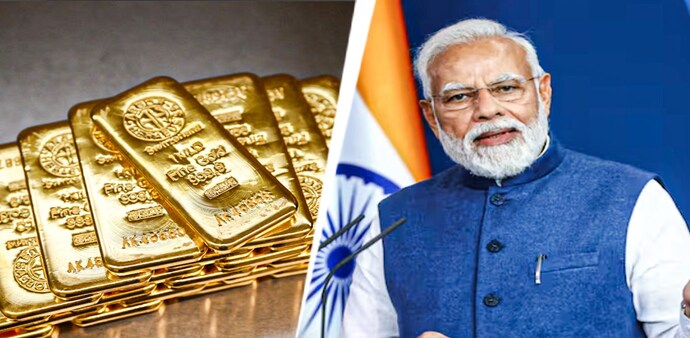
Prime Minister Narendra Modi’s appeal to citizens to avoid unnecessary gold purchases to conserve foreign exchange has brought renewed attention to a 2024 report submitted by the India Bullion and Jewellers Association (IBJA) to the government.
Speaking in Hyderabad on Sunday amid rising global energy prices and pressure on India’s import bill, PM Modi urged people to reduce fuel consumption, postpone foreign travel and avoid non-essential gold purchases in order to save foreign exchange reserves.
The remarks closely mirror concerns raised in IBJA’s 2024 report, prepared with BDO India, which had warned that India’s excessive dependence on imported gold could worsen current account deficit (CAD) pressures, increase forex outflows and expose the economy to global volatility.
The report noted that India imports nearly 85% of its gold requirement, with annual imports ranging between 715 and 815 tonnes in recent years.
Calling gold a 'silent drain' on government revenues, the report highlighted the impact of customs duty losses, smuggling and high import dependence. It estimated that unpaid taxes linked to illicit gold smuggling caused revenue losses of nearly $1.6 billion in 2023 alone.
The report had also flagged that household gold holdings in India estimated at nearly 35,000 tonnes remain largely idle and outside the formal economy despite being comparable in scale to India’s entire equity market.
IBJA argued that mobilising idle household gold through recycling and financialisation could reduce import dependence and ease pressure on India’s external balances. The report claimed that every tonne of gold recycled domestically could potentially save nearly $95 million in imports.
To address the issue, the industry body proposed the creation of an NPCI-like quasi-government gold regulatory framework, Electronic Gold Receipts (EGRs), and a formal gold lending and borrowing ecosystem aimed at increasing recycling and reducing reliance on imported bullion.
Prime Minister Narendra Modi’s appeal to citizens to avoid unnecessary gold purchases to conserve foreign exchange has brought renewed attention to a 2024 report submitted by the India Bullion and Jewellers Association (IBJA) to the government.
Speaking in Hyderabad on Sunday amid rising global energy prices and pressure on India’s import bill, PM Modi urged people to reduce fuel consumption, postpone foreign travel and avoid non-essential gold purchases in order to save foreign exchange reserves.
The remarks closely mirror concerns raised in IBJA’s 2024 report, prepared with BDO India, which had warned that India’s excessive dependence on imported gold could worsen current account deficit (CAD) pressures, increase forex outflows and expose the economy to global volatility.
The report noted that India imports nearly 85% of its gold requirement, with annual imports ranging between 715 and 815 tonnes in recent years.
Calling gold a 'silent drain' on government revenues, the report highlighted the impact of customs duty losses, smuggling and high import dependence. It estimated that unpaid taxes linked to illicit gold smuggling caused revenue losses of nearly $1.6 billion in 2023 alone.
The report had also flagged that household gold holdings in India estimated at nearly 35,000 tonnes remain largely idle and outside the formal economy despite being comparable in scale to India’s entire equity market.
IBJA argued that mobilising idle household gold through recycling and financialisation could reduce import dependence and ease pressure on India’s external balances. The report claimed that every tonne of gold recycled domestically could potentially save nearly $95 million in imports.
To address the issue, the industry body proposed the creation of an NPCI-like quasi-government gold regulatory framework, Electronic Gold Receipts (EGRs), and a formal gold lending and borrowing ecosystem aimed at increasing recycling and reducing reliance on imported bullion.