
Why Indians buy gold on Akshaya Tritiya: Belief, tradition and investment logic
While it may seem like a seasonal shopping trend, the practice is deeply rooted in cultural belief, financial behaviour and long-standing tradition.
- Apr 11, 2026,
- Updated Apr 11, 2026 9:00 AM IST
Every year on Akshaya Tritiya, gold buying sees a sharp rise across India, with jewellery stores reporting high footfall and online platforms launching special collections. While it may seem like a seasonal shopping trend, the practice is deeply rooted in cultural belief, financial behaviour and long-standing tradition.
At the core of this tradition lies the meaning of the word "Akshaya," which translates to "never diminishing." It is widely believed that anything purchased or started on this day continues to grow and bring lasting prosperity.
This belief naturally extends to gold, which is already viewed as a stable and appreciating asset. For many households, buying gold on Akshaya Tritiya symbolises the beginning of sustained wealth and financial security.
Gold as a symbol of wealth and security
In India, gold is more than just a commodity. It represents wealth, purity and long-term security. Families often treat gold as a financial backup that can be used during emergencies or passed on to future generations.
This dual role emotional and financial makes gold a preferred purchase on auspicious occasions like Akshaya Tritiya.
Connection with Goddess Lakshmi
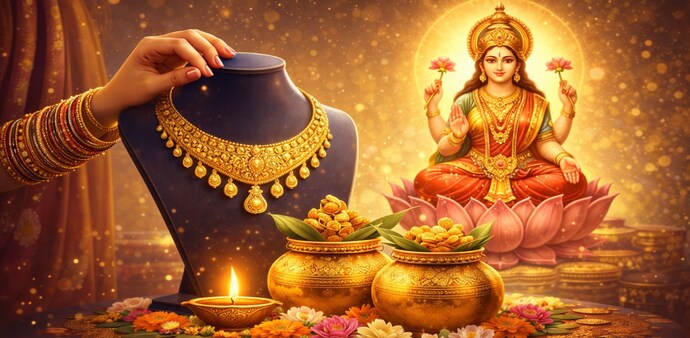
Gold is closely associated with Goddess Lakshmi, the deity of wealth and prosperity. Buying gold on Akshaya Tritiya is seen as a way of inviting her blessings into the household.
For many, the act carries symbolic value, representing hope for abundance and stability rather than just a financial decision.
Unlike many other festivals or rituals that require precise timing, Akshaya Tritiya is considered an Abujh Muhurat. This means the entire day is regarded as auspicious, allowing people to make purchases or start new ventures at any time.
This ease further encourages participation, making gold buying accessible to a wider population.
A mix of tradition and investment
Beyond belief, practicality also plays a role. Gold has historically been seen as a safe investment, especially during uncertain economic conditions. Many families use Akshaya Tritiya as an opportunity to invest in gold in the form of jewellery, coins or even financial instruments linked to gold. It becomes a way to align cultural practices with financial planning.
Over time, the tradition has also evolved into a significant retail moment. Along with Diwali and the wedding season, Akshaya Tritiya is now one of the biggest periods for gold sales in India.
Jewellers introduce new designs, promotional offers and flexible purchase schemes, further boosting demand.
Every year on Akshaya Tritiya, gold buying sees a sharp rise across India, with jewellery stores reporting high footfall and online platforms launching special collections. While it may seem like a seasonal shopping trend, the practice is deeply rooted in cultural belief, financial behaviour and long-standing tradition.
At the core of this tradition lies the meaning of the word "Akshaya," which translates to "never diminishing." It is widely believed that anything purchased or started on this day continues to grow and bring lasting prosperity.
This belief naturally extends to gold, which is already viewed as a stable and appreciating asset. For many households, buying gold on Akshaya Tritiya symbolises the beginning of sustained wealth and financial security.
Gold as a symbol of wealth and security
In India, gold is more than just a commodity. It represents wealth, purity and long-term security. Families often treat gold as a financial backup that can be used during emergencies or passed on to future generations.
This dual role emotional and financial makes gold a preferred purchase on auspicious occasions like Akshaya Tritiya.
Connection with Goddess Lakshmi
Gold is closely associated with Goddess Lakshmi, the deity of wealth and prosperity. Buying gold on Akshaya Tritiya is seen as a way of inviting her blessings into the household.
For many, the act carries symbolic value, representing hope for abundance and stability rather than just a financial decision.
Unlike many other festivals or rituals that require precise timing, Akshaya Tritiya is considered an Abujh Muhurat. This means the entire day is regarded as auspicious, allowing people to make purchases or start new ventures at any time.
This ease further encourages participation, making gold buying accessible to a wider population.
A mix of tradition and investment
Beyond belief, practicality also plays a role. Gold has historically been seen as a safe investment, especially during uncertain economic conditions. Many families use Akshaya Tritiya as an opportunity to invest in gold in the form of jewellery, coins or even financial instruments linked to gold. It becomes a way to align cultural practices with financial planning.
Over time, the tradition has also evolved into a significant retail moment. Along with Diwali and the wedding season, Akshaya Tritiya is now one of the biggest periods for gold sales in India.
Jewellers introduce new designs, promotional offers and flexible purchase schemes, further boosting demand.