
Before his Tata exit, N Chandrasekaran shared 6 lessons on AI, ambition, change and leadership
N Chandrasekaran said Tata Group's future will be driven by AI, energy transition, supply chain shifts and talent development. He also set out how the conglomerate plans to balance bold bets with discipline, training and operational fixes.
- Aug 13, 2026,
- Updated Aug 13, 2026 4:05 PM IST
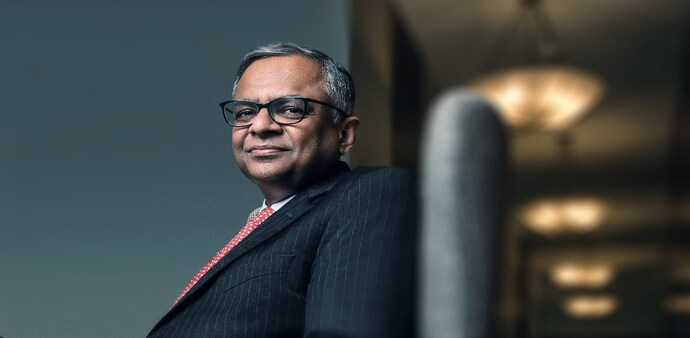
As Natarajan Chandrasekaran stepped down as the Chairman of Tata Sons on Wednesday, corporate India is watching the ensuing succession drama at the salt-to-software conglomerate. Fondly known as Chandra, he took the reins of the conglomerate at a particularly fractious time marked by the dramatic exit of Cyrus Mistry following a clash with the late industrialist Ratan Tata over corporate control and governance.
At BT Mindrush 2023, the outgoing Tata Group chairman said that the conglomerate’s next phase will be shaped by artificial intelligence, energy transition, supply chain changes and talent development. His comments also offer six clear business and leadership rules on building institutions, managing change and staying disciplined in growth.
DON'T MISS | Noel Tata’s Tata Group power play: How the trusts, family & next generation shape its future
Build on long-term institutional strengths, but keep renewing talent
Chandrasekaran said one of Tata Group’s biggest strengths is its people who have stayed with the organisation for many years. At the same time, he said the group was "predominantly an inbred company" and needed to inject talent and train people in new technologies as AI begins to reshape business.
He said existing talent must be reskilled and brought together with capable people across the group, while training remained a core competence for Tata.
Prepare early for disruption and treat AI as a real business shift
Chandrasekaran said AI was real and would change productivity "by an order of magnitude". He said the technology would have implications for jobs, future skills and regulation, and added that governments had already started reacting differently to it.
From Tata Group’s point of view, he said all businesses had to undergo massive transformation on four dimensions: AI, energy transition, supply chain transition and talent transition, whether in B2B or B2C operations.
DO CHECKOUT | The journey of N Chandrasekaran - From humble beginnings to Ratan Tata's most trusted lieutenant
Back transformation at scale, even when economics are still evolving
Chandrasekaran said the transition was visible across sectors, including steel and automobiles. He said the group had pivoted to electric vehicles, electric commercial vehicles, electric buses and hydrogen buses, and had already produced the first set of hydrogen buses, though the economics of some of these technologies still had to work out.
In power, he said Tata had made a major shift towards renewables and expected renewable capacity to be higher than coal capacity by 2025 and to be about double coal capacity by 2027-28, taking renewables to about 65-70 per cent.
MUST READ | 'Respect Chandrasekaran's decision': Tata Trusts begin process to pick new Tata Sons chairman
Accept problems directly and use feedback to improve execution
On Air India, Chandrasekaran said the group became comfortable once the bid process started, it became clear that the government would divest 100 per cent, and the balance sheet would be restructured. He said the group knew there would be challenges and that ‘we have to fix a lot of things’.
He said he receives multiple messages every day about the airline, including complaints about poor interiors, faulty seats and unclean areas. "There is a mail every day. Why one mail? There are multiple mails every day," he said, while adding that he could still see improvement in on-time arrival and customer service.
He also said the aim was to deliver "a product which every Indian is proud of" and "a service which I don't want a second one, which is better than anything else that exists".
Strengthen the core first, simplify next, then use synergies
Looking at the wider group, Chandrasekaran said Tata’s strengths included its brand, longevity, value system, processes and people. But he also said that when a group runs for so long and becomes so diverse, complexity sets in, and that this had led to issues in some companies, including leverage and balance sheet problems.
He said his priority had been to work in three phases, starting with "strengthening the core" so that the group and its companies became fit on the balance sheet. The next step, he said, was simplification: simplifying structures, the businesses a company was involved in, the markets they focused on, the number of subsidiaries and the levels of management. After that, the focus was on using synergies across the group’s many businesses.
Stay bold, but combine ambition with discipline and patience
Chandrasekaran said there were tremendous opportunities in Indian and global business, whether in AI, energy transition, supply chains, materials, food, or at the intersection of technology and biology. He said people should continue to be bold, but added that they also needed discipline and patience because "it does take time to build a good business".
He described the approach as "inspiration with rigour", saying aspiration and inspiration had to be matched by discipline. On Air India, he added that "1 billion people want India to succeed" and "everyone in this country is rooting for Air India. You can't have a better tailwind than that."
As Natarajan Chandrasekaran stepped down as the Chairman of Tata Sons on Wednesday, corporate India is watching the ensuing succession drama at the salt-to-software conglomerate. Fondly known as Chandra, he took the reins of the conglomerate at a particularly fractious time marked by the dramatic exit of Cyrus Mistry following a clash with the late industrialist Ratan Tata over corporate control and governance.
At BT Mindrush 2023, the outgoing Tata Group chairman said that the conglomerate’s next phase will be shaped by artificial intelligence, energy transition, supply chain changes and talent development. His comments also offer six clear business and leadership rules on building institutions, managing change and staying disciplined in growth.
DON'T MISS | Noel Tata’s Tata Group power play: How the trusts, family & next generation shape its future
Build on long-term institutional strengths, but keep renewing talent
Chandrasekaran said one of Tata Group’s biggest strengths is its people who have stayed with the organisation for many years. At the same time, he said the group was "predominantly an inbred company" and needed to inject talent and train people in new technologies as AI begins to reshape business.
He said existing talent must be reskilled and brought together with capable people across the group, while training remained a core competence for Tata.
Prepare early for disruption and treat AI as a real business shift
Chandrasekaran said AI was real and would change productivity "by an order of magnitude". He said the technology would have implications for jobs, future skills and regulation, and added that governments had already started reacting differently to it.
From Tata Group’s point of view, he said all businesses had to undergo massive transformation on four dimensions: AI, energy transition, supply chain transition and talent transition, whether in B2B or B2C operations.
DO CHECKOUT | The journey of N Chandrasekaran - From humble beginnings to Ratan Tata's most trusted lieutenant
Back transformation at scale, even when economics are still evolving
Chandrasekaran said the transition was visible across sectors, including steel and automobiles. He said the group had pivoted to electric vehicles, electric commercial vehicles, electric buses and hydrogen buses, and had already produced the first set of hydrogen buses, though the economics of some of these technologies still had to work out.
In power, he said Tata had made a major shift towards renewables and expected renewable capacity to be higher than coal capacity by 2025 and to be about double coal capacity by 2027-28, taking renewables to about 65-70 per cent.
MUST READ | 'Respect Chandrasekaran's decision': Tata Trusts begin process to pick new Tata Sons chairman
Accept problems directly and use feedback to improve execution
On Air India, Chandrasekaran said the group became comfortable once the bid process started, it became clear that the government would divest 100 per cent, and the balance sheet would be restructured. He said the group knew there would be challenges and that ‘we have to fix a lot of things’.
He said he receives multiple messages every day about the airline, including complaints about poor interiors, faulty seats and unclean areas. "There is a mail every day. Why one mail? There are multiple mails every day," he said, while adding that he could still see improvement in on-time arrival and customer service.
He also said the aim was to deliver "a product which every Indian is proud of" and "a service which I don't want a second one, which is better than anything else that exists".
Strengthen the core first, simplify next, then use synergies
Looking at the wider group, Chandrasekaran said Tata’s strengths included its brand, longevity, value system, processes and people. But he also said that when a group runs for so long and becomes so diverse, complexity sets in, and that this had led to issues in some companies, including leverage and balance sheet problems.
He said his priority had been to work in three phases, starting with "strengthening the core" so that the group and its companies became fit on the balance sheet. The next step, he said, was simplification: simplifying structures, the businesses a company was involved in, the markets they focused on, the number of subsidiaries and the levels of management. After that, the focus was on using synergies across the group’s many businesses.
Stay bold, but combine ambition with discipline and patience
Chandrasekaran said there were tremendous opportunities in Indian and global business, whether in AI, energy transition, supply chains, materials, food, or at the intersection of technology and biology. He said people should continue to be bold, but added that they also needed discipline and patience because "it does take time to build a good business".
He described the approach as "inspiration with rigour", saying aspiration and inspiration had to be matched by discipline. On Air India, he added that "1 billion people want India to succeed" and "everyone in this country is rooting for Air India. You can't have a better tailwind than that."