Who is Noel Tata?
Noel Naval Tata has spent more than four decades in the Tata Group, building his career largely away from the spotlight.
He graduated from the University of Sussex and completed the International Executive Programme at INSEAD. His major executive roles included managing director of Trent, where he helped oversee the expansion of the group's retail business, and managing director of Tata International from 2010 to 2021.
Under Noel's leadership, Tata International's turnover grew from about $500 million to more than $3 billion, according to Tata. At Trent, he oversaw the company's evolution from a relatively small retail operation into a much larger portfolio spanning brands such as Westside and Zudio.
MUST READ | 'Respect Chandrasekaran's decision': Tata Trusts begin process to pick new Tata Sons chairman
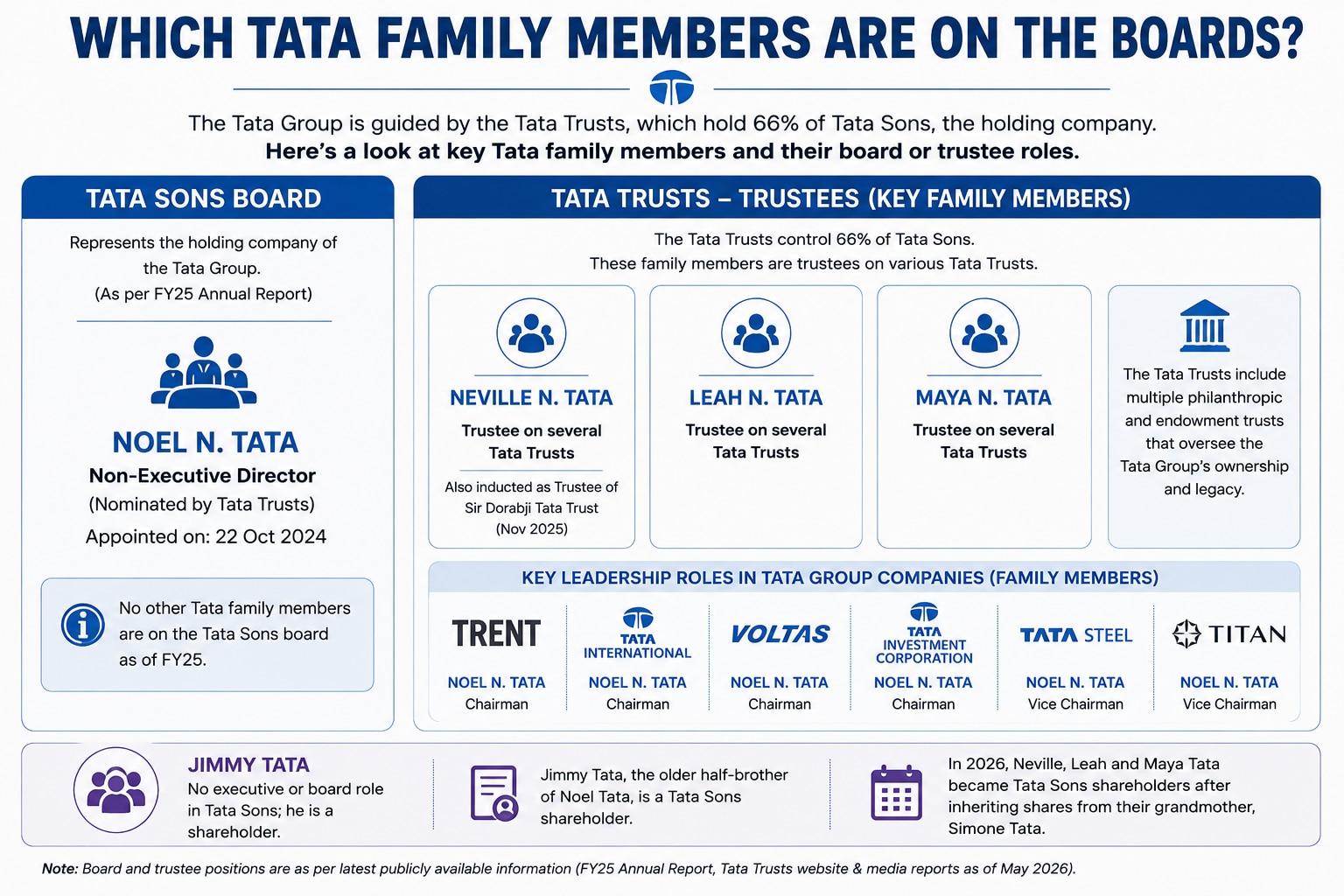
Today, Noel remains chairman of Trent, Tata International, Voltas and Tata Investment Corporation, and vice-chairman of Tata Steel and Titan. But his most important position came after Ratan Tata's death in October 2024.
Tata Trusts: where Noel's real power lies
On October 11, 2024, the trustees unanimously appointed Noel Tata chairman of all the trusts that constitute Tata Trusts. That matters because Tata Sons is not controlled in the conventional manner of a family-owned conglomerate.
The Tata Trusts collectively hold about 66% of Tata Sons, the principal holding company of the Tata Group. This gives the trusts enormous influence over the company that sits at the top of the Tata corporate structure.
Noel was subsequently nominated by Tata Trusts to the Tata Sons board and became a non-executive director effective October 22, 2024. The Tata Sons annual report confirms that his nomination came under the company's Articles of Association.
DON'T MISS | Tata Group market cap under Ratan Tata, Cyrus Mistry and N Chandrasekaran: A comparison
This gives Noel a unique position: he is simultaneously chairman of the trusts that control Tata Sons and a director on the board of Tata Sons itself.
That is not the same as being chairman of Tata Sons. The chairman remains Chandrasekaran until his term ends in February 2027. But the distinction between ownership influence and executive control is crucial to understanding Noel's position.
What exactly does Noel control?
It would be inaccurate to say that Noel Tata personally "controls" every Tata company. The Tata Group consists of numerous independently governed companies, many of which have their own boards, management teams and shareholders.
Noel's influence operates primarily through three channels:
- Tata Trusts: He chairs the trusts that collectively own 66% of Tata Sons.
- Tata Sons: He sits on the board as the Tata Trusts' nominee.
- Major operating companies: He holds leadership positions at several Tata companies, including Trent, Tata International, Voltas, Tata Investment Corporation, Tata Steel and Titan.
His influence has become more visible in the debate over Tata Sons' future, particularly around capital allocation, the group's loss-making newer businesses and whether Tata Sons should remain private.
The conflict with Chandrasekaran became particularly significant in 2026. The Tata Sons board deferred consideration of Chandrasekaran's third term after Noel raised concerns over losses, capital deployment and the holding company's future. Chandrasekaran subsequently announced that he would not seek reappointment beyond February 2027.
Is Noel Tata the new head of Tata Group?
Not formally. That distinction is important. Noel Tata is Chairman of Tata Trusts, not chairman of Tata Sons. Chandrasekaran remains chairman of Tata Sons until February 2027.
However, the departure of Chandrasekaran has substantially increased the importance of Noel's role in determining who comes next.
DO CHECKOUT | N Chandrasekaran exit: Tata stocks extend decline after Rs 47,412 crore single-day hit!
The next chairman of Tata Sons will therefore have to work with the trusts and, crucially, maintain their confidence.
Next generation of Tatas
The bigger story may be what happens after Noel. Noel's three children — Leah Tata, Maya Tata and Neville Tata — have increasingly appeared within the Tata ecosystem.
The Tata Trusts' own records list all three among trustees of various trusts. Neville was also inducted as a trustee of the Sir Dorabji Tata Trust in November 2025, alongside former Titan chief Bhaskar Bhat.
Neville's position has attracted particular attention. Reports said attempts to induct him into the Sir Ratan Tata Trust encountered delays, highlighting that his elevation is not simply a matter of family succession.
The three siblings also became direct Tata Sons shareholders in 2026 after inheriting shares from their grandmother Simone Tata. Each received two shares, according to Tata Sons documents reported by The Times of India.
That is a tiny economic stake compared with the trusts' holdings, but symbolically it places the next generation directly inside the ownership structure.
The key point is that Noel is the principal Tata family figure on the Tata Sons board. Neville, Leah and Maya have roles within the wider Tata Trust structure, but they should not be described as members of the Tata Sons board unless their appointment to that specific board is formally announced. Tata Trusts' current trustee records list Noel, Neville, Leah and Maya across different trusts.
Why Noel's rise matters
Ratan Tata's influence came from occupying the two most important leadership positions in the ecosystem: he had led Tata Sons and later chaired the Tata Trusts.
Noel's position is different. He inherited the ownership and philanthropic side of that structure, while professional management remained with Chandrasekaran at Tata Sons. That separation is now being tested.
With Chandrasekaran preparing to leave, Noel and the Tata Trusts will have a major say in choosing the next chairman of Tata Sons. At the same time, the group faces huge strategic commitments, including the expansion of Air India, an $11 billion semiconductor project and the transformation of Tata Consultancy Services for an AI-driven technology market.
















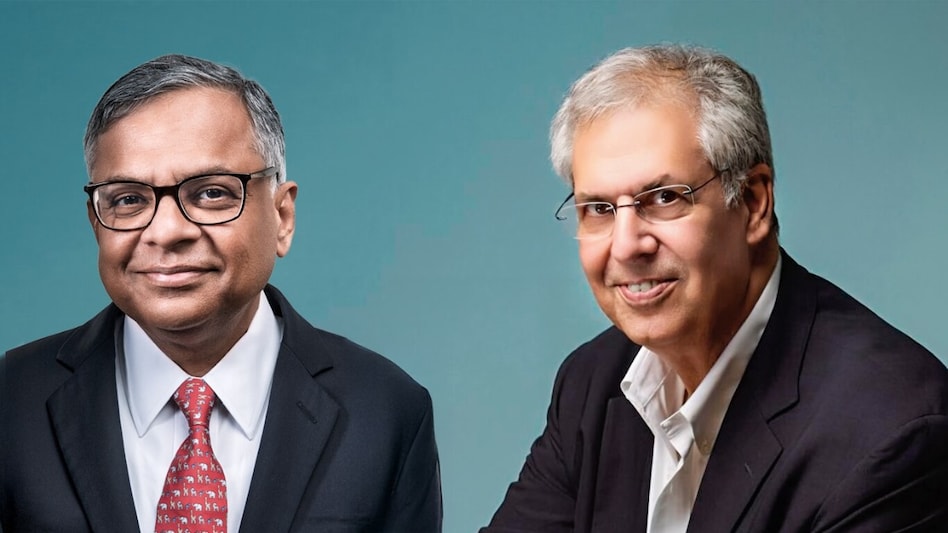 With Chandrasekaran preparing to leave, Noel and the Tata Trusts will have a major say in choosing the next chairman of Tata Sons.
 ASM Technologies stock hits record high as RK Damani entity, Asha Mukul Agrawal back fund raising
 NPCI, NVIDIA unveil open AI training environment for banking agents using synthetic data; check details
 IDBI Bank sale: Timing of Fairfax deal announcement being worked out, say government sources
  Cabinet clears Rs 10,783 crore railway projects: 656-km network expansion across 5 states; check full details
 AI becomes new battleground for payment gateways, finds Zoho survey
 IDBI Bank Stake Sale: Fairfax Bid, ₹53,000 Cr Valuation & Deal Delay Explained
 Adani Group Plans $2.5 Billion Offshore Loan To Refinance Cement Acquisition Deb
 Sugar Exports Under Pressure: Tight Stocks, Ethanol Diversion & Weather Risks Cloud
 Brent Crude Crosses $100: India’s Oil Basket Hits $108.9; What It Means For Markets
 Crude Nears $100: Rakesh Vyas On The Impact On Indian Stocks & Nifty
 Cupid's Aditya Kumar Halwasiya ups stake again; buys 15 lakh shares
 Sensex, Nifty extend losing run; investor wealth drops by over Rs 4 lakh crore in three days
 Craftsman Automation stock offers buy-on-dips opportunity, says analyst; shares price target
  ZEE, Apex Frozen, Power Mech, TVS Srichakra among stocks to turn ex-dividend on September 10
 Before Apple owned it, someone else had the iPhone name — here’s what happened
 Ahead of Apple’s September 9 event, seven verified facts explain India’s rapid rise as an iPhone production base
 Thinking of buying an EV? These cars keep the price under ₹10 lakh


