
ISRO’s ‘Bahubali’ gathers industry bigwigs: L&T, Adani, JSW eye rocket technology
This move is part of ISRO’s broader plan to shift routine rocket manufacturing and launches to the private sector while focusing its resources on advanced and deep-space missions.
- Aug 31, 2026,
- Updated Aug 31, 2026 9:56 AM IST
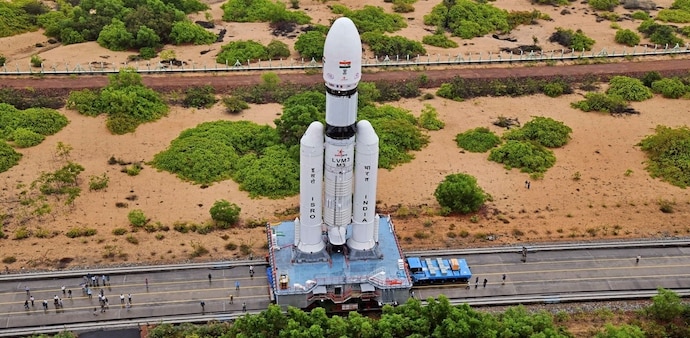
Larsen & Toubro, JSW, Adani Group and Mahindra are reportedly among at least six Indian companies and consortiums considering partnerships with the Indian Space Research Organisation (ISRO) to manufacture and operate its heavy-lift Launch Vehicle Mark-3 (LVM3), also known as ‘Bahubali’.
According to a report in The Economic Times, the companies are evaluating plans to submit expressions of interest (EoIs) for the transfer of technology and know-how from ISRO to manufacture, launch and commercially operate the rocket. The selected entity will gain access to technology for ISRO’s heaviest operational launch vehicle, capable of carrying satellites weighing up to four tonnes, the report said.
MUST READ | From Intel to ISRO: IIT Delhi alumnus quits high-paying job, secures AIR 7 as scientist
Other interested parties include an alliance between JSW and startup Ethereal Exploration Guild (EtherealX), as well as a consortium led by Nagpur-based Solar Industries with Bharat Forge and Inox India.
This move is part of ISRO’s broader plan to shift routine rocket manufacturing and launches to the private sector while focusing its resources on advanced and deep-space missions. The LVM3 transfer follows the technology transfer of the Small Satellite Launch Vehicle (SSLV) to Hindustan Aeronautics and industry-led manufacturing of the Polar Satellite Launch Vehicle (PSLV) by an L&T-HAL consortium.
The EoI requires bidders to demonstrate their ability to absorb LVM3’s end-to-end technical know-how, covering design, propulsion, avionics, navigation, manufacturing, testing, vehicle integration and launch operations.
The EoIs are due by Monday, with formal bidding expected in October. The selected company or consortium will have 42 months, or two realised launch vehicles, to complete the technology-transfer process before establishing infrastructure to independently manufacture the rocket and its systems, the report added.
LVM3 is significant as it is used to launch large communication and other high-value satellites. A reconfigured, human-rated version of the rocket will also be used for India’s first crewed spaceflight under the Gaganyaan programme.
For potential bidders, the opportunity comes amid growing global demand for launch services. India’s space economy is projected to expand from $8.4 billion in 2022 to $44 billion by 2033, according to IN-SPACe.
MUST READ | NASA invites ISRO to join Moon Base programme as part of Artemis framework
The LVM3 transfer would put three of ISRO’s four operational launch vehicles – SSLV, PSLV and LVM3 – into private-sector manufacturing.
The final bidding process will assess technical capability and price. Only bidders meeting the minimum technical threshold will have their commercial bids considered.
Larsen & Toubro, JSW, Adani Group and Mahindra are reportedly among at least six Indian companies and consortiums considering partnerships with the Indian Space Research Organisation (ISRO) to manufacture and operate its heavy-lift Launch Vehicle Mark-3 (LVM3), also known as ‘Bahubali’.
According to a report in The Economic Times, the companies are evaluating plans to submit expressions of interest (EoIs) for the transfer of technology and know-how from ISRO to manufacture, launch and commercially operate the rocket. The selected entity will gain access to technology for ISRO’s heaviest operational launch vehicle, capable of carrying satellites weighing up to four tonnes, the report said.
MUST READ | From Intel to ISRO: IIT Delhi alumnus quits high-paying job, secures AIR 7 as scientist
Other interested parties include an alliance between JSW and startup Ethereal Exploration Guild (EtherealX), as well as a consortium led by Nagpur-based Solar Industries with Bharat Forge and Inox India.
This move is part of ISRO’s broader plan to shift routine rocket manufacturing and launches to the private sector while focusing its resources on advanced and deep-space missions. The LVM3 transfer follows the technology transfer of the Small Satellite Launch Vehicle (SSLV) to Hindustan Aeronautics and industry-led manufacturing of the Polar Satellite Launch Vehicle (PSLV) by an L&T-HAL consortium.
The EoI requires bidders to demonstrate their ability to absorb LVM3’s end-to-end technical know-how, covering design, propulsion, avionics, navigation, manufacturing, testing, vehicle integration and launch operations.
The EoIs are due by Monday, with formal bidding expected in October. The selected company or consortium will have 42 months, or two realised launch vehicles, to complete the technology-transfer process before establishing infrastructure to independently manufacture the rocket and its systems, the report added.
LVM3 is significant as it is used to launch large communication and other high-value satellites. A reconfigured, human-rated version of the rocket will also be used for India’s first crewed spaceflight under the Gaganyaan programme.
For potential bidders, the opportunity comes amid growing global demand for launch services. India’s space economy is projected to expand from $8.4 billion in 2022 to $44 billion by 2033, according to IN-SPACe.
MUST READ | NASA invites ISRO to join Moon Base programme as part of Artemis framework
The LVM3 transfer would put three of ISRO’s four operational launch vehicles – SSLV, PSLV and LVM3 – into private-sector manufacturing.
The final bidding process will assess technical capability and price. Only bidders meeting the minimum technical threshold will have their commercial bids considered.