
Tata Sons vs Tata Trusts: Caveats filed in Bombay HC, Supreme Court ahead of crucial November 30 board meeting
Tata Sons has filed caveats in the Bombay High Court and Supreme Court after Tata Trusts failed to secure interim relief. The November 30 board meeting will proceed, but its decisions remain subject to the final court order.
- Nov 28, 2026,
- Updated Nov 28, 2026 1:05 PM IST
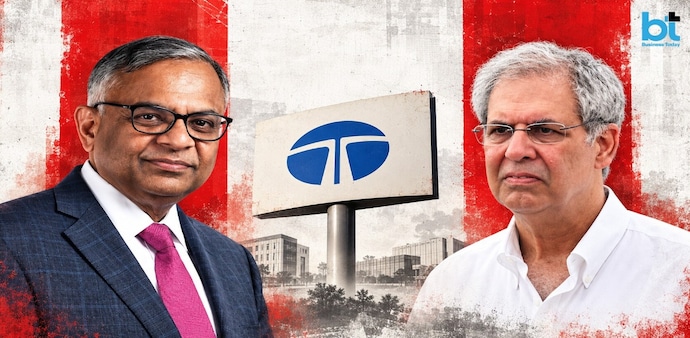
Tata Sons has filed caveats in the division bench of the Bombay High Court and the Supreme Court following a single-judge bench’s refusal to grant interim relief to Tata Trusts in the ongoing legal battle over the reappointment of N Chandrasekaran as chairman of the conglomerate’s holding company.
According to a Business Standard report, Tata Sons filed the caveats late on November 27 as a precautionary measure to ensure that the company is heard before any interim relief is granted on a potential appeal challenging the Bombay High Court’s order.
Under Section 148A of the Code of Civil Procedure, a caveat safeguards a party against an ex parte order being passed without giving it an opportunity to present its arguments.
November 30 board meeting to proceed
On Friday, Justice Abhay Ahuja of the Bombay High Court declined to grant interim relief to Tata Trusts, which collectively holds a 66% stake in Tata Sons. The court scheduled the next hearing for January 21, 2027.
MUST READ: Tata Sons vs Tata Trusts: Bombay HC declines to block November 30 board meet or casting vote
While the decision allows Tata Sons to proceed with its scheduled November 30 board meeting, resolutions passed during the meeting will remain subject to the final outcome of the litigation.
Two constituent entities of Tata Trusts — Sir Dorabji Tata Trust (SDTT) and RD Tata Trust (RDTT) — approached the court on Thursday, challenging Chandrasekaran’s reappointment for a third term.
The trusts also sought restrictions on the upcoming board meeting, whose agenda includes a proposed listing of Tata Sons.
Dispute over voting rights
At the centre of the legal battle is Section 121 of Tata Sons’ Articles of Association (AoA), which governs additional voting requirements involving nominee directors of Tata Trusts and the chairman’s casting vote.
During the September 17 board meeting, Noel Tata, chairman of Tata Trusts and a nominee director on the Tata Sons board, opposed Chandrasekaran’s reappointment. Venu Srinivasan, the other nominee director, supported the proposal.
The split between the two nominee directors prompted acting chairman Harish Manwani to exercise his casting vote. All other board members supported Chandrasekaran’s reappointment.
Tata Trusts has argued that a split between its nominee directors means the requisite affirmative majority has not been secured. Consequently, it maintains that the chairman cannot exercise a casting vote to overcome this requirement.
Tata Sons, however, has maintained that the chairman is entitled to exercise a casting vote when the nominee directors are divided.
The legal dispute could have wider implications for Tata Sons’ corporate governance framework, particularly regarding the powers of its majority shareholder, board-level decision-making and the conglomerate’s future strategic direction, including its potential stock market listing.