
‘Big Diwali gift’: Industry leaders laud GST overhaul, reduction of slabs to 5% and 18%
GST overhaul: Deloitte India economist Dr Rumki Majumdar said this move would be powerful in stimulating consumption.
- Sep 4, 2025,
- Updated Sep 4, 2025 11:54 AM IST
The cut in GST is “actually very good”, said Deepak Shenoy, CEO of Capitalmind AMC, while RPG Enterprises Chairman Harsh Goenka called it a ‘big Diwali gift for every Indian. This comes after the GST Council announced the simplification of the tax regime, and reduced the number of slabs to two from the previous four slabs.
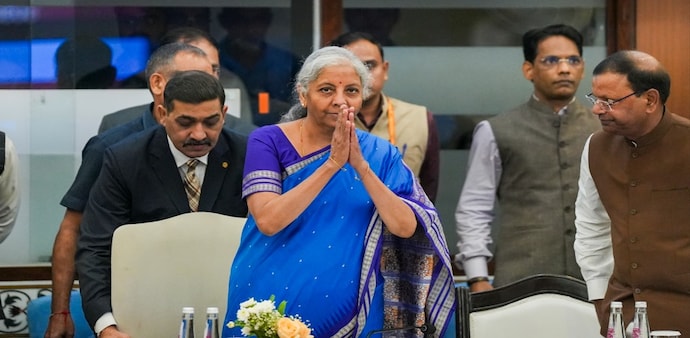
After the Finance Minister Nirmala Sitharaman-led council announced the alteration, reactions from the industry poured in.
“Big Diwali gift for every Indian! Next-gen GST = ease of living + boost to economy,” said Goenka. “The GST cut is actually very good because it helps cut both input and output gst for a lot of items, which means companies can and should cut effective prices. This will be visible in cars and trucks and cement quickly I hope. Services remain at 18% so that changes little,” said Shenoy.
Market veteran Nilesh Shah said, “GST slab consolidation and rate rationalization is “ek teer kai nishaan”...The Diwali gift of ~Rs 48000 crore is fiscally manageable at ~7 bps. Rationalisation of GST will partially help offset the adverse impact of US tariff in the quarters to come with increased consumption.”
Deloitte India economist Dr Rumki Majumdar said this move would be powerful in stimulating consumption. “The GST cuts have been targeted to boost the consumption of the poor and middle-income classes. Most of these goods are price-sensitive categories, such as essential items, small durables, personal care, and entry-level automobiles and two-wheelers. This would be more powerful in stimulating consumption than personal income tax or corporate tax cuts since the GST multiplier on elastic consumer goods is higher. This, along with tax exemptions announced earlier in the year and aggressive monetary policy, can boost GDP by over 90 bps,” she said.
"The GST Council’s move to rationalise tax slabs is a clear signal of India’s shift towards simplicity, transparency, predictability, ease of doing business and thus strengthening the foundation for a long-term structural growth. For affluent households, the higher levy on luxury categories will modestly increase lifestyle costs, but the broader economy stands to benefit from lower taxation on everyday goods,” said Naval Kagalwala, COO and Product Head, Shriram Wealth Ltd.
Economist and Chairman of the 16th Finance Commission Arvind Panagariya called it a “huge reform” and congratulated the government as well as FM Sitharaman and Prime Minister Narendra Modi.
The council simplified the GST from four slabs – 5, 12, 18 and 28 per cent – to two – 5 and 18 per cent. A special 40 per cent slab has also been proposed for luxury and sin goods.
Meanwhile, common items including roti/paratha, hair oil, ice creams, TVs will cost less, while tax on personal health and life insurance have been brought down to nil. Almost all personal-use items and aspirational goods for the middle class, like AC, washing machines, will see rate cuts. Premium paid for individual life insurance and health insurance (including family floater), policies too have been exempted from GST.
The new rates for all products, except pan masala, gutkha, cigarettes, chewing tobacco products like zarda, unmanufactured tobacco and beedi, will be effective September 22, said FM Sitharaman.
The cut in GST is “actually very good”, said Deepak Shenoy, CEO of Capitalmind AMC, while RPG Enterprises Chairman Harsh Goenka called it a ‘big Diwali gift for every Indian. This comes after the GST Council announced the simplification of the tax regime, and reduced the number of slabs to two from the previous four slabs.
After the Finance Minister Nirmala Sitharaman-led council announced the alteration, reactions from the industry poured in.
“Big Diwali gift for every Indian! Next-gen GST = ease of living + boost to economy,” said Goenka. “The GST cut is actually very good because it helps cut both input and output gst for a lot of items, which means companies can and should cut effective prices. This will be visible in cars and trucks and cement quickly I hope. Services remain at 18% so that changes little,” said Shenoy.
Market veteran Nilesh Shah said, “GST slab consolidation and rate rationalization is “ek teer kai nishaan”...The Diwali gift of ~Rs 48000 crore is fiscally manageable at ~7 bps. Rationalisation of GST will partially help offset the adverse impact of US tariff in the quarters to come with increased consumption.”
Deloitte India economist Dr Rumki Majumdar said this move would be powerful in stimulating consumption. “The GST cuts have been targeted to boost the consumption of the poor and middle-income classes. Most of these goods are price-sensitive categories, such as essential items, small durables, personal care, and entry-level automobiles and two-wheelers. This would be more powerful in stimulating consumption than personal income tax or corporate tax cuts since the GST multiplier on elastic consumer goods is higher. This, along with tax exemptions announced earlier in the year and aggressive monetary policy, can boost GDP by over 90 bps,” she said.
"The GST Council’s move to rationalise tax slabs is a clear signal of India’s shift towards simplicity, transparency, predictability, ease of doing business and thus strengthening the foundation for a long-term structural growth. For affluent households, the higher levy on luxury categories will modestly increase lifestyle costs, but the broader economy stands to benefit from lower taxation on everyday goods,” said Naval Kagalwala, COO and Product Head, Shriram Wealth Ltd.
Economist and Chairman of the 16th Finance Commission Arvind Panagariya called it a “huge reform” and congratulated the government as well as FM Sitharaman and Prime Minister Narendra Modi.
The council simplified the GST from four slabs – 5, 12, 18 and 28 per cent – to two – 5 and 18 per cent. A special 40 per cent slab has also been proposed for luxury and sin goods.
Meanwhile, common items including roti/paratha, hair oil, ice creams, TVs will cost less, while tax on personal health and life insurance have been brought down to nil. Almost all personal-use items and aspirational goods for the middle class, like AC, washing machines, will see rate cuts. Premium paid for individual life insurance and health insurance (including family floater), policies too have been exempted from GST.
The new rates for all products, except pan masala, gutkha, cigarettes, chewing tobacco products like zarda, unmanufactured tobacco and beedi, will be effective September 22, said FM Sitharaman.