
Flex fuel push: Govt clears path for cars running on 100% ethanol-blended petrol
The move comes as automakers prepare to introduce E100-compatible models, potentially opening another avenue for reducing India’s dependence on imported crude oil
- Oct 26, 2026,
- Updated Oct 26, 2026 7:40 PM IST
New framework enables vehicles compatible with ethanol blends ranging from E20 to E100, but fuel availability and running costs will be critical to adoption.
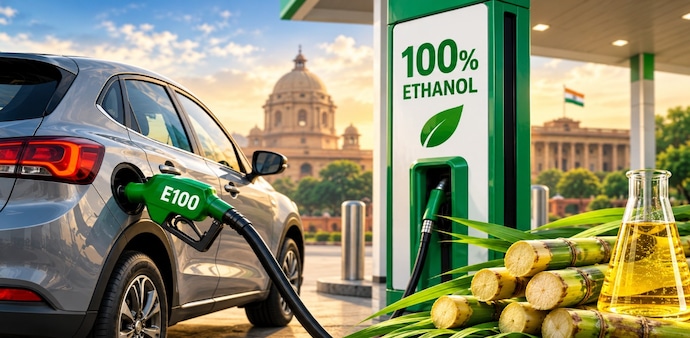
The government has notified regulations facilitating the introduction of flex-fuel vehicles capable of running on petrol blended with up to 100% ethanol, paving the way for automakers to introduce vehicles compatible with higher ethanol blends in India.
The framework covers vehicles designed to operate on fuel ranging from E20, containing 20% ethanol, to E85 and E100. The move comes as automakers prepare to introduce E100-compatible models, potentially opening another avenue for reducing India’s dependence on imported crude oil.
Read More: E20 debate: '100% ethanol car to be launched soon in India,' says Nitin Gadkari
Flex-fuel vehicles use specially designed fuel-system components and materials to accommodate different ethanol concentrations. Advanced engine management systems automatically adjust vehicle operation according to the composition of the fuel.
The technology has been deployed in countries such as Brazil and the United States.
Energy Security And Emissions
Wider adoption of flex-fuel vehicles could support domestic ethanol production, generate employment and strengthen India’s energy security.
Greater use of domestically produced ethanol could reduce dependence on imported crude oil, while the development and manufacture of vehicle components, ethanol production infrastructure and related services could create employment opportunities.
Higher ethanol blends can help reduce tailpipe emissions of carbon monoxide and certain hydrocarbons. They could also contribute to lower lifecycle greenhouse-gas emissions, depending on the feedstock and production pathway.
The initiative is aligned with India’s broader objective of promoting indigenous fuel production and achieving net-zero emissions by 2070.
Don't Miss | BT Explainer: How India’s ethanol blending programme compares with Brazil and the rest of the world
Fuel Availability Remains Crucial
The introduction of E100-compatible vehicles will require supporting fuel infrastructure and commercially viable pricing.
Ethanol has a lower energy content per litre than petrol, which can affect fuel efficiency. The relative prices of ethanol and petrol will therefore influence the cost per kilometre and the economic case for consumers.
The regulations establish a framework for flex-fuel vehicles, but the timeline for the wider rollout of E100 at fuel stations remains a key question. Availability of the fuel, alongside vehicle pricing and operating costs, will be crucial to determining the pace of adoption.
The development of a supporting retail fuel network will be an important factor in translating regulatory readiness into commercial demand.