
India-EU trade deal shows new economic alliances emerging as global supply chains fragment, says expert
The India-EU trade deal reflects a broader shift in global commerce as countries seek new trade partners and alternative supply chains amid rising geopolitical tensions, said Hal Brands. He added the emerging economic fragmentation as a source of both risks and “new maps of opportunity” for businesses and investors.
- Aug 31, 2026,
- Updated Aug 31, 2026 4:31 PM IST
The India-EU trade deal is an example of the new economic alignments taking shape as geopolitical tensions reshape global trade and countries seek to diversify supply chains, according to Dr Hal Brands, Henry A. Kissinger Distinguished Professor of Global Affairs at Johns Hopkins SAIS.
Speaking at Elara Capital’s Ashwamedh – Elara India Dialogue 2026, Brands said the global economy is moving away from the post-Cold War era of convergence towards a more fragmented and competitive order, with countries increasingly prioritising resilience, diversification and strategic autonomy.
Brands said geopolitical volatility is not only creating risks for businesses and investors but also opening up new opportunities as countries rethink economic dependencies.
“Volatility is going to bring opportunity as well,” Brands said, pointing to accelerating innovation in defence, drones and artificial intelligence. He also highlighted the emergence of “new maps of opportunity” as countries develop alternative supply chains and critical-mineral partnerships.
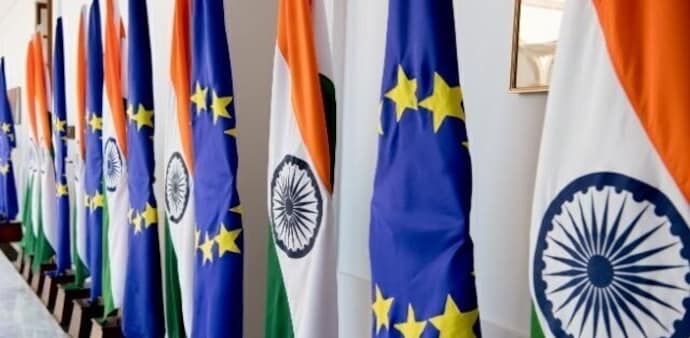
Against this backdrop, Brands cited the India-EU trade deal as one example of the new economic alignments emerging globally. The deal, according to the media note, was concluded as India and the European Union sought to reduce their reliance on the US market.
The development illustrates how trade relationships are being reshaped as countries respond to a more uncertain geopolitical environment and seek alternative economic partnerships.
MUST READ: India braves global headwinds: Q1GDP surges 7.8% as investment and services fire on all cylinders
From globalisation to fragmentation
Brands argued that the current shift is broader than changes in trade policy under any one US administration. He described the emerging environment as a transition from integration towards fragmentation, with geopolitical competition increasingly influencing economic decisions.
“The reason the world feels so unstable right now is that every element of the old order is breaking down at once,” Brands said.
Tariffs and trade barriers are reshaping global commerce, while technological interdependence is increasingly being viewed as a vulnerability. Critical minerals, semiconductors and strategic trade routes have consequently acquired greater geopolitical significance.
Brands described this trend as the “weaponisation of everything”, arguing that economic dependencies can become sources of strategic leverage during periods of geopolitical competition.
“You get the weaponisation of everything, because every dependency becomes a potential source of leverage,” he said.
ALSO READ: Will India’s steel exports be impacted due to CBAM?
India’s role in the new economic map
For India, the changing global landscape presents both risks and opportunities. Brands noted that countries are increasingly adopting a hedging strategy as they recalibrate relationships with major powers.
He pointed to the India-EU deal as evidence of this changing pattern of economic alignment, alongside efforts by countries to develop alternative supply chains and partnerships around critical minerals.
The broader implication for businesses and investors is that supply-chain decisions can no longer be viewed purely through the lens of cost and efficiency. Resilience and diversification are becoming increasingly important as geopolitical considerations influence trade and investment flows.
Brands said this shift will require investors to look beyond conventional economic indicators and understand the geopolitical forces reshaping markets.
“Geopolitical expertise is going to be as valuable to the private sector as it will to the public sector in the years ahead,” he said.
For India and its trading partners, the emerging economic landscape could therefore mean a broader network of trade relationships and supply chains, as countries adapt to a world where geopolitical power increasingly influences economic outcomes.
ALSO READ: India pharma faces global headwinds; Angel One sees 39% upside in Lincoln Pharma
The India-EU trade deal is an example of the new economic alignments taking shape as geopolitical tensions reshape global trade and countries seek to diversify supply chains, according to Dr Hal Brands, Henry A. Kissinger Distinguished Professor of Global Affairs at Johns Hopkins SAIS.
Speaking at Elara Capital’s Ashwamedh – Elara India Dialogue 2026, Brands said the global economy is moving away from the post-Cold War era of convergence towards a more fragmented and competitive order, with countries increasingly prioritising resilience, diversification and strategic autonomy.
Brands said geopolitical volatility is not only creating risks for businesses and investors but also opening up new opportunities as countries rethink economic dependencies.
“Volatility is going to bring opportunity as well,” Brands said, pointing to accelerating innovation in defence, drones and artificial intelligence. He also highlighted the emergence of “new maps of opportunity” as countries develop alternative supply chains and critical-mineral partnerships.
Against this backdrop, Brands cited the India-EU trade deal as one example of the new economic alignments emerging globally. The deal, according to the media note, was concluded as India and the European Union sought to reduce their reliance on the US market.
The development illustrates how trade relationships are being reshaped as countries respond to a more uncertain geopolitical environment and seek alternative economic partnerships.
MUST READ: India braves global headwinds: Q1GDP surges 7.8% as investment and services fire on all cylinders
From globalisation to fragmentation
Brands argued that the current shift is broader than changes in trade policy under any one US administration. He described the emerging environment as a transition from integration towards fragmentation, with geopolitical competition increasingly influencing economic decisions.
“The reason the world feels so unstable right now is that every element of the old order is breaking down at once,” Brands said.
Tariffs and trade barriers are reshaping global commerce, while technological interdependence is increasingly being viewed as a vulnerability. Critical minerals, semiconductors and strategic trade routes have consequently acquired greater geopolitical significance.
Brands described this trend as the “weaponisation of everything”, arguing that economic dependencies can become sources of strategic leverage during periods of geopolitical competition.
“You get the weaponisation of everything, because every dependency becomes a potential source of leverage,” he said.
ALSO READ: Will India’s steel exports be impacted due to CBAM?
India’s role in the new economic map
For India, the changing global landscape presents both risks and opportunities. Brands noted that countries are increasingly adopting a hedging strategy as they recalibrate relationships with major powers.
He pointed to the India-EU deal as evidence of this changing pattern of economic alignment, alongside efforts by countries to develop alternative supply chains and partnerships around critical minerals.
The broader implication for businesses and investors is that supply-chain decisions can no longer be viewed purely through the lens of cost and efficiency. Resilience and diversification are becoming increasingly important as geopolitical considerations influence trade and investment flows.
Brands said this shift will require investors to look beyond conventional economic indicators and understand the geopolitical forces reshaping markets.
“Geopolitical expertise is going to be as valuable to the private sector as it will to the public sector in the years ahead,” he said.
For India and its trading partners, the emerging economic landscape could therefore mean a broader network of trade relationships and supply chains, as countries adapt to a world where geopolitical power increasingly influences economic outcomes.
ALSO READ: India pharma faces global headwinds; Angel One sees 39% upside in Lincoln Pharma