


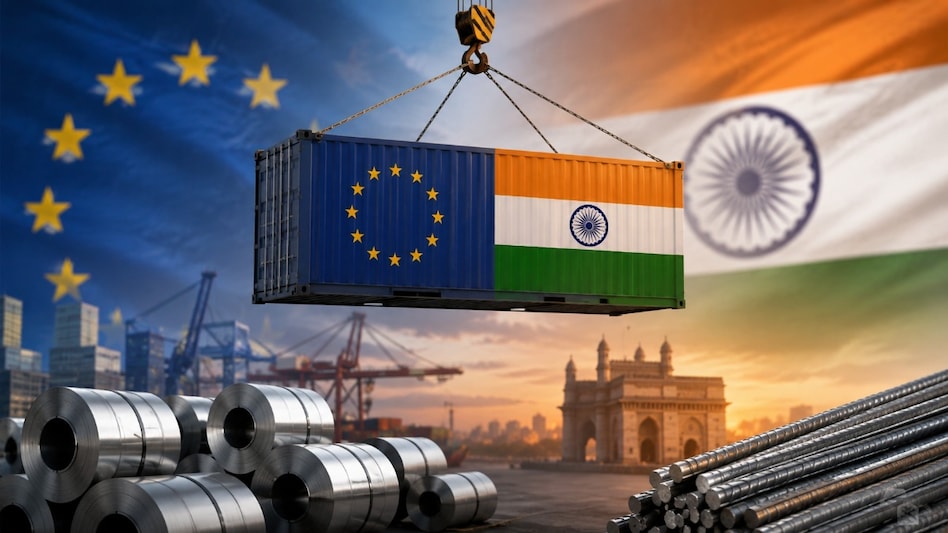
 India has termed the deal unfair and ineffective. It has called CBAM discriminatory, protectionist, and in violation of WTO principles and the 2015 Paris Agreement.
Sandbag has developed an interactive tool that models the likely real-world effects of the Carbon Border Adjustment Mechanism (CBAM) on the EU’s trading partners and specific industries that export to the EU.
Using this granular sector-level analysis, Sandbag’s report The EU CBAM’s real impact on India found that under various scenarios, the actual impact on India’s steel exports to the EU could be far smaller than feared, even negligible.

 Capital formation, exports fuel 7.8% Q1 GDP growth
 GRT Jewellers to acquire 74.12% stake in Tribhovandas Bhimji Zaveri for Rs 1,033.71 crore
 India braves global headwinds: Q1GDP surges 7.8% as investment and services fire on all cylinders
  Kotak Bank recommends two internal candidates for CEO post: Report
 'Doomsayers were doomed, India bloomed': PM Modi as GDP growth jumps to 7.8% in Q1 FY27
 Indian Markets Outlook: Is Bear Phase Ending? Maneesh Dangi Sees Better Next 6-12 Months
 This ₹5 Lakh AI Gym Wants To Replace Your Gym
 Nepal Flood Horror: Sadhguru, Manisha Koirala Stand In Solidarity As Rescue Efforts Continue
 Nepal Flood Horror: Children Found Alive After Days Under Debris, Hope Emerges From Devastation
 India’s 6% Growth Trap: Why Manufacturing Still Struggles To Beat China
 Priority Jewels IPO subscribed 21.23 times on Day 2; check latest GMP, other key details
 Ola Electric shares jump 5%; still down 34% in a year; what's ahead?
 Sensex falls 307 points, Nifty settles below 24,100; what happened today
 Market veteran Ajay Bagga on top sectoral picks; impact of oil prices, monsoon on economy
  Nifty Bank jumps over 600 points in last five minutes; CAS in focus
 ‘I have nothing left to give’: Lionel Messi bids emotional farewell to Argentina after 20 years
 Travelling to Uzbekistan? Indians can now pay through UPI while abroad by scanning UZQR codes
 Manufacturing Majors: Maruti Suzuki driving ‘Make in India’
 Not just Divya Mittal: Her IAS husband also quit civil services in 2022
 PM Modi To Putin: “Move Away From Endless War Towards An End To War”












