
Strait of Hormuz a critical chokepoint; high exposure raises risks for India’s energy bill: ICRA
Crude oil prices have already reacted to the geopolitical build-up. According to ICRA, benchmark crude prices have increased from approximately USD 65 per barrel to USD 72–73 per barrel over the past few days. The rise reflects a growing risk premium amid reports of attacks on oil producers and concerns about possible supply disruptions.
- Feb 28, 2026,
- Updated Feb 28, 2026 7:30 PM IST
Escalating tensions in the Middle East have once again brought the Strait of Hormuz into sharp focus, with rating agency ICRA warning that any disruption in the region could significantly heighten crude oil price volatility and pose risks to India’s import bill and oil marketing company (OMC) margins.
Prashant Vasisht, Senior Vice President and Co-Group Head, Corporate Ratings at ICRA Ltd, said the Strait of Hormuz remains a vital global energy chokepoint. Around 20% of global petroleum liquids and 20% of global liquefied natural gas (LNG) supplies transit through this narrow corridor. Given that Iran and several other major Middle East energy producers straddle the Strait, any escalation in hostilities could impede the shipping of oil and gas through this critical route.
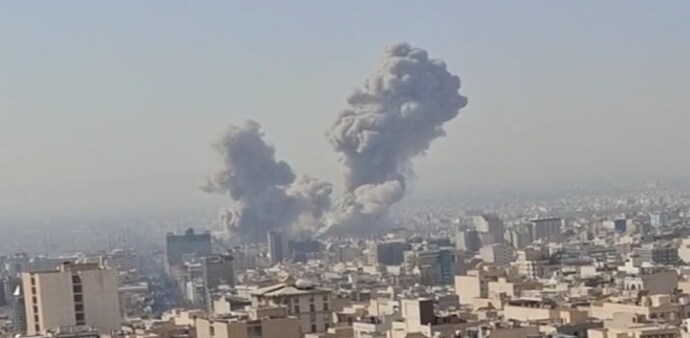
Crude oil prices have already reacted to the geopolitical build-up. According to ICRA, benchmark crude prices have increased from approximately $65 per barrel to $72–73 per barrel over the past few days. The rise reflects a growing risk premium amid reports of attacks on oil producers and concerns about possible supply disruptions.
Vasisht noted that any prolonged or widening conflict involving key oil and gas producers in the Middle East — especially one that affects the Strait of Hormuz — could further tighten global supplies of crude oil and LNG. Such disruptions would likely exacerbate price volatility and push global energy costs higher.
For India, the stakes are particularly high. In FY2025, nearly 50% of the country’s crude oil imports and 54% of LNG imports were routed through the Strait of Hormuz. This heavy reliance makes India especially vulnerable to any logistical or supply bottlenecks in the region.
While Indian refiners have the flexibility to source crude from alternative geographies such as the United States, Africa, and South America, diversification may not fully offset the impact of elevated global prices. A sustained spike in crude and LNG rates would translate into a higher energy import bill, widening trade deficits and exerting pressure on the current account.
Higher crude prices also have direct implications for domestic oil marketing companies. Elevated crude levels could moderate marketing margins and compress profitability for OMCs. If retail fuel price revisions lag international price movements due to policy considerations, margin pressures could intensify further.
Market participants are closely tracking developments in the Middle East, with the Strait of Hormuz emerging as the key variable in determining near-term oil price trajectories. Any escalation affecting shipping lanes or production infrastructure could quickly feed into global benchmarks.
For India, managing exposure through diversified sourcing, strategic reserves, and calibrated pricing policies will be crucial if tensions persist. However, a prolonged disruption in the region would inevitably carry macroeconomic and sectoral consequences, reinforcing the Strait of Hormuz’s status as one of the world’s most critical energy chokepoints.
Escalating tensions in the Middle East have once again brought the Strait of Hormuz into sharp focus, with rating agency ICRA warning that any disruption in the region could significantly heighten crude oil price volatility and pose risks to India’s import bill and oil marketing company (OMC) margins.
Prashant Vasisht, Senior Vice President and Co-Group Head, Corporate Ratings at ICRA Ltd, said the Strait of Hormuz remains a vital global energy chokepoint. Around 20% of global petroleum liquids and 20% of global liquefied natural gas (LNG) supplies transit through this narrow corridor. Given that Iran and several other major Middle East energy producers straddle the Strait, any escalation in hostilities could impede the shipping of oil and gas through this critical route.
Crude oil prices have already reacted to the geopolitical build-up. According to ICRA, benchmark crude prices have increased from approximately $65 per barrel to $72–73 per barrel over the past few days. The rise reflects a growing risk premium amid reports of attacks on oil producers and concerns about possible supply disruptions.
Vasisht noted that any prolonged or widening conflict involving key oil and gas producers in the Middle East — especially one that affects the Strait of Hormuz — could further tighten global supplies of crude oil and LNG. Such disruptions would likely exacerbate price volatility and push global energy costs higher.
For India, the stakes are particularly high. In FY2025, nearly 50% of the country’s crude oil imports and 54% of LNG imports were routed through the Strait of Hormuz. This heavy reliance makes India especially vulnerable to any logistical or supply bottlenecks in the region.
While Indian refiners have the flexibility to source crude from alternative geographies such as the United States, Africa, and South America, diversification may not fully offset the impact of elevated global prices. A sustained spike in crude and LNG rates would translate into a higher energy import bill, widening trade deficits and exerting pressure on the current account.
Higher crude prices also have direct implications for domestic oil marketing companies. Elevated crude levels could moderate marketing margins and compress profitability for OMCs. If retail fuel price revisions lag international price movements due to policy considerations, margin pressures could intensify further.
Market participants are closely tracking developments in the Middle East, with the Strait of Hormuz emerging as the key variable in determining near-term oil price trajectories. Any escalation affecting shipping lanes or production infrastructure could quickly feed into global benchmarks.
For India, managing exposure through diversified sourcing, strategic reserves, and calibrated pricing policies will be crucial if tensions persist. However, a prolonged disruption in the region would inevitably carry macroeconomic and sectoral consequences, reinforcing the Strait of Hormuz’s status as one of the world’s most critical energy chokepoints.