
Business wisdom of the day: 'Good timber does not grow with...'
In nature, a tree that grows in a dense, protected valley doesn't have to fight for survival. Because it is shielded from elements, it grows fast, but its wood is soft, porous, and easily broken.
- Jun 21, 2026,
- Updated Jun 21, 2026 7:30 AM IST
"Good timber does not grow with ease; the stronger wind, the stronger trees." — originally penned by the 19th-century American poet and essayist Douglas Malloch — is a masterclass in using the physical world to explain human resilience.
What the proverb means
At its core, the proverb is an argument against the comfort zone.
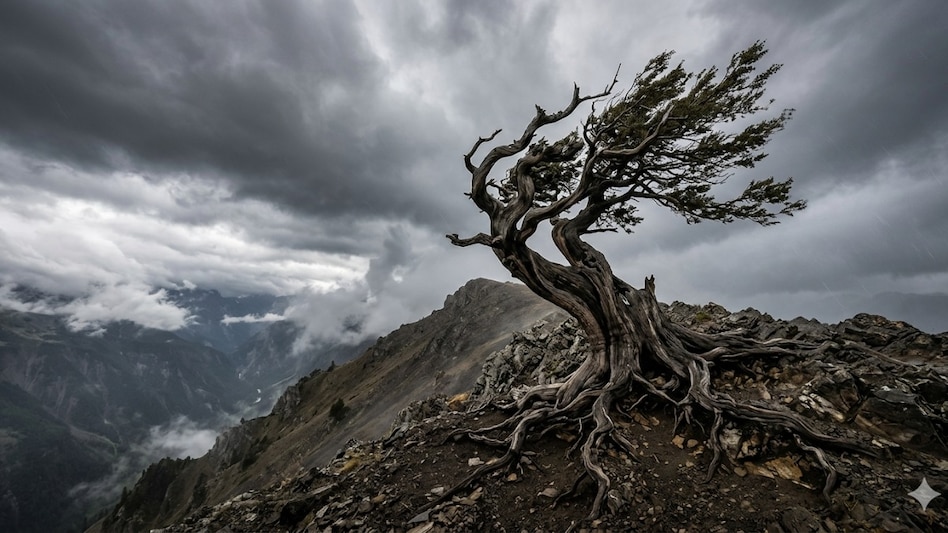
In nature, a tree that grows in a dense, protected valley doesn't have to fight for survival. Because it is shielded from elements, it grows fast, but its wood is soft, porous, and easily broken. Conversely, a tree on a jagged ridge faces constant, brutal winds. To survive, it is forced to do two things:
- Grow its roots deeper and wider into the soil to anchor itself.
- Compact its wood fibers, making the timber incredibly dense, tight-grained, and resilient.
The proverb is a metaphor for character. True strength, capability, and excellence are not born out of comfort; they are forged through opposition, struggle, and hardship.
How the proverb applies for businesses today
In the corporate world, "stronger winds" translate to market volatility, intense competition, and disruptive technology. A business that built its foundation during an easy economic boom often struggles when the market shifts.
Today's business landscape applies this proverb in a few distinct ways:
- Forced Innovation: Easy market conditions breed complacency. When a company faces a crisis (a "strong wind" like a supply chain collapse or a new AI competitor), it is forced to audit its inefficiencies, pivot its strategy, and innovate. The crisis creates a leaner, smarter operation.
- Building Operational "Deep Roots": Companies that survive deep recessions or brutal regulatory changes develop robust risk management, diverse revenue streams, and fiercely loyal customer bases.
- Anti-Fragility Concept: Author Nassim Nicholas Taleb coined the term "anti-fragile" to describe things that actually benefit and grow from shock, variability, and stress. The proverb is the poetic version of anti-fragility. Modern businesses shouldn't just look to survive market storms; they should use them to outpace softer competitors who don't know how to handle the wind.
Why it remains timeless
The proverb remains timeless because it taps into a fundamental truth about human nature and systems: we do not look for friction unless we have to.
If given the choice, humans and organizations will naturally choose the path of least resistance. However, the path of least resistance makes us fragile. Because the universe is inherently unpredictable — filled with unexpected personal losses, economic shifts, and global crises — Malloch’s words will always ring true.
It serves as a permanent psychological reframe. It tells us that when life or business gets aggressively difficult, we are not necessarily being destroyed; we are being given the exact environment required to become premium quality.
"Good timber does not grow with ease; the stronger wind, the stronger trees." — originally penned by the 19th-century American poet and essayist Douglas Malloch — is a masterclass in using the physical world to explain human resilience.
What the proverb means
At its core, the proverb is an argument against the comfort zone.
In nature, a tree that grows in a dense, protected valley doesn't have to fight for survival. Because it is shielded from elements, it grows fast, but its wood is soft, porous, and easily broken. Conversely, a tree on a jagged ridge faces constant, brutal winds. To survive, it is forced to do two things:
- Grow its roots deeper and wider into the soil to anchor itself.
- Compact its wood fibers, making the timber incredibly dense, tight-grained, and resilient.
The proverb is a metaphor for character. True strength, capability, and excellence are not born out of comfort; they are forged through opposition, struggle, and hardship.
How the proverb applies for businesses today
In the corporate world, "stronger winds" translate to market volatility, intense competition, and disruptive technology. A business that built its foundation during an easy economic boom often struggles when the market shifts.
Today's business landscape applies this proverb in a few distinct ways:
- Forced Innovation: Easy market conditions breed complacency. When a company faces a crisis (a "strong wind" like a supply chain collapse or a new AI competitor), it is forced to audit its inefficiencies, pivot its strategy, and innovate. The crisis creates a leaner, smarter operation.
- Building Operational "Deep Roots": Companies that survive deep recessions or brutal regulatory changes develop robust risk management, diverse revenue streams, and fiercely loyal customer bases.
- Anti-Fragility Concept: Author Nassim Nicholas Taleb coined the term "anti-fragile" to describe things that actually benefit and grow from shock, variability, and stress. The proverb is the poetic version of anti-fragility. Modern businesses shouldn't just look to survive market storms; they should use them to outpace softer competitors who don't know how to handle the wind.
Why it remains timeless
The proverb remains timeless because it taps into a fundamental truth about human nature and systems: we do not look for friction unless we have to.
If given the choice, humans and organizations will naturally choose the path of least resistance. However, the path of least resistance makes us fragile. Because the universe is inherently unpredictable — filled with unexpected personal losses, economic shifts, and global crises — Malloch’s words will always ring true.
It serves as a permanent psychological reframe. It tells us that when life or business gets aggressively difficult, we are not necessarily being destroyed; we are being given the exact environment required to become premium quality.