
‘Don’t get wound up in science fiction’: Raghuram Rajan plays down AI job loss fears
India’s IT sector — long the backbone of its services-driven growth — is already feeling early tremors from AI adoption. Automation tools are beginning to reshape routine coding, customer support and back-office functions, with some firms trimming headcount as they deploy AI systems.
- Feb 27, 2026,
- Updated Feb 27, 2026 7:59 PM IST
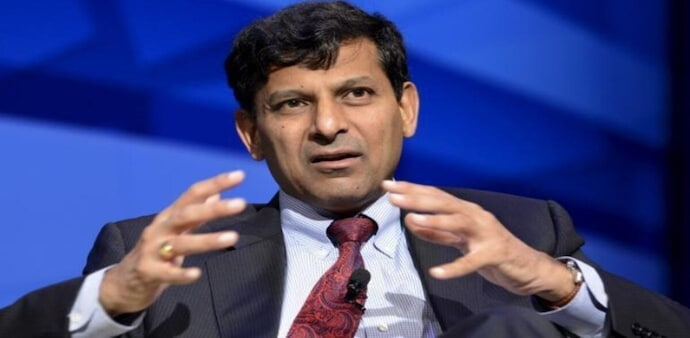
Artificial intelligence is set to shake up India’s services-led growth model, but fears of a sweeping jobs apocalypse are overstated, former Reserve Bank of India Governor Raghuram Rajan said, urging companies and policymakers to focus on adaptation rather than alarm.
Speaking in an interview with Bloomberg Television, Rajan acknowledged that AI poses real challenges for India’s software exporters and back-office services industry. However, he pushed back against predictions of a large-scale employment crisis, arguing that the “Indian services story can still persist in many other areas outside of software.”
Disruption, but not doomsday
India’s IT sector — long the backbone of its services-driven growth — is already feeling early tremors from AI adoption. Automation tools are beginning to reshape routine coding, customer support and back-office functions, with some firms trimming headcount as they deploy AI systems.
A recent note by Citrini Research warning of revenue pressure on Indian IT companies triggered a selloff in technology stocks earlier this week, underscoring investor anxiety around the sector’s AI exposure.
But Rajan cautioned against what he described as “science fiction” scenarios. “Let’s not get overly wound up,” he said, arguing that while frontier technology companies may move quickly, real-world adoption across industries tends to be far slower and uneven.
“The fastest users of technology are the people creating the technology,” Rajan noted. “What they don’t see is adoption outside the frontier is much longer.”
A gradual transition
According to Rajan, many global corporations have yet to implement AI at scale, leaving a significant window for Indian firms to reposition themselves. The transition, he suggested, is likely to be gradual rather than abrupt, reducing the probability of sudden, mass displacement.
India’s exposure to automation is undeniable. Its position as a global hub for IT outsourcing and business process management makes routine, process-driven roles especially vulnerable. Entry-level white-collar jobs — once seen as secure pathways into the middle class — are increasingly at risk from generative AI and advanced automation tools.
Yet Rajan believes the same technologies could open new demand streams, particularly in higher-value services, engineering and digital transformation. Multinational corporations, he pointed out, continue to expand their global capability centres in India, shifting more complex and high-end functions to the country.
“The reason many firms are moving to India is because of its highly skilled service people,” he said, noting that a consultant in India can cost roughly one-fifth of a comparable consultant in the West. Combined with access to the same AI tools, that pricing advantage helps level the competitive playing field.
Reskilling as the central challenge
For India’s software firms and their workforce, the key will be speed. Rajan stressed that companies and employees will need to “retool really fast” through reskilling and upskilling initiatives. Still, he insisted that this is “not something they cannot overcome.”
He also broadened the lens beyond services. AI-driven robotics and automation are beginning to reshape global manufacturing, potentially altering trade and production patterns. In that context, Rajan argued that India’s policy priorities should tilt toward investing in human capital — education, training, and research and development — rather than chasing capital-intensive semiconductor ambitions without achieving cutting-edge competitiveness.
Artificial intelligence is set to shake up India’s services-led growth model, but fears of a sweeping jobs apocalypse are overstated, former Reserve Bank of India Governor Raghuram Rajan said, urging companies and policymakers to focus on adaptation rather than alarm.
Speaking in an interview with Bloomberg Television, Rajan acknowledged that AI poses real challenges for India’s software exporters and back-office services industry. However, he pushed back against predictions of a large-scale employment crisis, arguing that the “Indian services story can still persist in many other areas outside of software.”
Disruption, but not doomsday
India’s IT sector — long the backbone of its services-driven growth — is already feeling early tremors from AI adoption. Automation tools are beginning to reshape routine coding, customer support and back-office functions, with some firms trimming headcount as they deploy AI systems.
A recent note by Citrini Research warning of revenue pressure on Indian IT companies triggered a selloff in technology stocks earlier this week, underscoring investor anxiety around the sector’s AI exposure.
But Rajan cautioned against what he described as “science fiction” scenarios. “Let’s not get overly wound up,” he said, arguing that while frontier technology companies may move quickly, real-world adoption across industries tends to be far slower and uneven.
“The fastest users of technology are the people creating the technology,” Rajan noted. “What they don’t see is adoption outside the frontier is much longer.”
A gradual transition
According to Rajan, many global corporations have yet to implement AI at scale, leaving a significant window for Indian firms to reposition themselves. The transition, he suggested, is likely to be gradual rather than abrupt, reducing the probability of sudden, mass displacement.
India’s exposure to automation is undeniable. Its position as a global hub for IT outsourcing and business process management makes routine, process-driven roles especially vulnerable. Entry-level white-collar jobs — once seen as secure pathways into the middle class — are increasingly at risk from generative AI and advanced automation tools.
Yet Rajan believes the same technologies could open new demand streams, particularly in higher-value services, engineering and digital transformation. Multinational corporations, he pointed out, continue to expand their global capability centres in India, shifting more complex and high-end functions to the country.
“The reason many firms are moving to India is because of its highly skilled service people,” he said, noting that a consultant in India can cost roughly one-fifth of a comparable consultant in the West. Combined with access to the same AI tools, that pricing advantage helps level the competitive playing field.
Reskilling as the central challenge
For India’s software firms and their workforce, the key will be speed. Rajan stressed that companies and employees will need to “retool really fast” through reskilling and upskilling initiatives. Still, he insisted that this is “not something they cannot overcome.”
He also broadened the lens beyond services. AI-driven robotics and automation are beginning to reshape global manufacturing, potentially altering trade and production patterns. In that context, Rajan argued that India’s policy priorities should tilt toward investing in human capital — education, training, and research and development — rather than chasing capital-intensive semiconductor ambitions without achieving cutting-edge competitiveness.