
India can lead in AI without building its own models, says Red Hat India chief
With hype around sovereign AI, Red's India Chief believes that "India will do a much better job in taking the large language models which exist."
- Feb 27, 2026,
- Updated Feb 27, 2026 5:45 PM IST
India may not need to build its own massive foundation models to emerge as a global artificial intelligence powerhouse, but it could become one of the world’s largest users of AI, according to Red Hat’s top executive for the region.
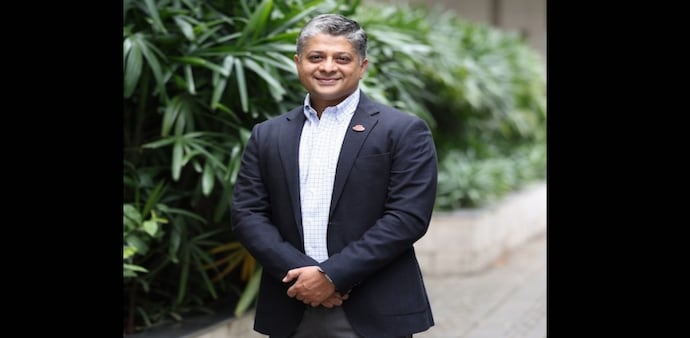
Navtez Bal, vice president and general manager for India and South Asia at enterprise open-source software provider Red Hat, said the country’s strength lies in how effectively it adapts and deploys existing technologies rather than creating them from scratch.
“India will become one of the biggest users of AI in the world. There is no doubt about it,” Bal told Business Today in an interview.
He argued that India’s so-called technological lag could actually accelerate adoption.
“India will do a much better job in taking the large language models which exist and actually tweaking and distilling them for our own usage, so that we have more fit-for-purpose models,” he said.
In the long run, Bal suggested, success in the AI race may not be determined by who builds the most powerful systems.
“It'll be on who uses models more effectively. That's where the differentiation will lie.”
Sovereign AI without vendor lock-in
As governments and industry leaders push for sovereign AI, including domestic models, data and infrastructure, Bal emphasised that ownership and control matter more than technological nationalism alone.
For organisations seeking sovereignty, dependence on a single vendor or proprietary platform could become a strategic risk, he said.
“If you are a sovereign AI-focused company, then you need a solution that belongs to you and is not locked in,” Bal said. Such an approach would ensure that “data remains within India, controls remain within India, the control on source code remains within India.”
Red Hat, whose products are built on open-source technologies such as Linux and the OpenShift platform, is positioning itself as an alternative to proprietary AI ecosystems dominated by global hyperscalers.
The company serves some of the biggest companies across healthcare, automotive, Finance, technology, and others. Some of the clients globally include Salesforce, Toyota, Ford, and others. Red Hat also has a massive footprint in India with clients like UIDAI, Life Insurance, EPFO, State Bank of India, Jio Platforms, Bharti Airtel, Tata Motors, and others.
The new workforce triangle
Bal also outlined a structural shift in how work itself will be organised in the AI era, describing a three-way interaction between humans, software agents and robots.
“Pretty much every process has to be rethought with these in mind,” he said, calling this emerging structure a “new workforce triangle.”
He urged organisations and workers to accelerate adaptation.
“The ones who will actually do this the fastest will be the ones who will have a massively advantageous position going forward. Please accelerate your transformations.”
For Unparalleled coverage of India's Businesses and Economy – Subscribe to Business Today Magazine
India may not need to build its own massive foundation models to emerge as a global artificial intelligence powerhouse, but it could become one of the world’s largest users of AI, according to Red Hat’s top executive for the region.
Navtez Bal, vice president and general manager for India and South Asia at enterprise open-source software provider Red Hat, said the country’s strength lies in how effectively it adapts and deploys existing technologies rather than creating them from scratch.
“India will become one of the biggest users of AI in the world. There is no doubt about it,” Bal told Business Today in an interview.
He argued that India’s so-called technological lag could actually accelerate adoption.
“India will do a much better job in taking the large language models which exist and actually tweaking and distilling them for our own usage, so that we have more fit-for-purpose models,” he said.
In the long run, Bal suggested, success in the AI race may not be determined by who builds the most powerful systems.
“It'll be on who uses models more effectively. That's where the differentiation will lie.”
Sovereign AI without vendor lock-in
As governments and industry leaders push for sovereign AI, including domestic models, data and infrastructure, Bal emphasised that ownership and control matter more than technological nationalism alone.
For organisations seeking sovereignty, dependence on a single vendor or proprietary platform could become a strategic risk, he said.
“If you are a sovereign AI-focused company, then you need a solution that belongs to you and is not locked in,” Bal said. Such an approach would ensure that “data remains within India, controls remain within India, the control on source code remains within India.”
Red Hat, whose products are built on open-source technologies such as Linux and the OpenShift platform, is positioning itself as an alternative to proprietary AI ecosystems dominated by global hyperscalers.
The company serves some of the biggest companies across healthcare, automotive, Finance, technology, and others. Some of the clients globally include Salesforce, Toyota, Ford, and others. Red Hat also has a massive footprint in India with clients like UIDAI, Life Insurance, EPFO, State Bank of India, Jio Platforms, Bharti Airtel, Tata Motors, and others.
The new workforce triangle
Bal also outlined a structural shift in how work itself will be organised in the AI era, describing a three-way interaction between humans, software agents and robots.
“Pretty much every process has to be rethought with these in mind,” he said, calling this emerging structure a “new workforce triangle.”
He urged organisations and workers to accelerate adaptation.
“The ones who will actually do this the fastest will be the ones who will have a massively advantageous position going forward. Please accelerate your transformations.”
For Unparalleled coverage of India's Businesses and Economy – Subscribe to Business Today Magazine