
Meet Indian billionaire Raj Gupta: The steel tycoon building Africa's biggest solar-powered steel plant
AIG is widely recognised as Nigeria's largest steel producer and one of West Africa's biggest manufacturers.
- Jul 8, 2026,
- Updated Jul 8, 2026 3:39 PM IST
Raj Gupta, the Indian billionaire & businessman who built African Industries Group into Nigeria's largest steel producer, has secured 500 hectares of land in Niger State to build what could become sub-Saharan Africa's largest solar-powered steel plant, according to a report by Business Insider Africa.
The project marks another milestone for the businessman whose company has grown into one of West Africa's biggest industrial groups.
For Raj Gupta, the latest project is the result of a journey that began more than five decades ago.
Don't Miss: Meet IMF's new Chief Economist Silvana Tenreyro, who takes charge amid global uncertainty
As chairman of African Industries Group (AIG), Gupta has led the company from a modest steel business to one of Nigeria's largest industrial conglomerates. Today, AIG is widely recognised as Nigeria's largest steel producer and one of West Africa's biggest manufacturers.
The group's presence now stretches far beyond steel. It operates around 31 manufacturing plants across Nigeria with businesses in mining, chemicals, glass and real estate, and employs about 10,000 people. Gupta chairs the company, while his brother, Alok Gupta, serves as managing director.
Now, African Industries is taking its biggest step yet into renewable energy.
A steel plant powered by the sun
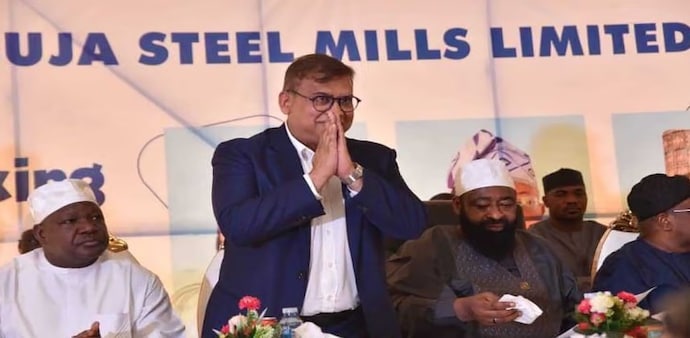
Niger State has allocated 500 hectares of land to Abuja Steel Mills Limited, an AIG subsidiary, for a project that will bring together a large steel manufacturing complex, a dedicated utility-scale solar power plant and the proposed AIG Industrial Park.
The company says the project could become the largest solar-powered steel plant in sub-Saharan Africa. By generating its own electricity through solar power, the facility aims to reduce dependence on Nigeria's unreliable electricity grid and costly diesel generators.
Speaking at the groundbreaking ceremony in Sabon Wuse, Gupta called the land allocation "historic" and said the solar installation could become "the largest in Nigeria and potentially the biggest supporting a steel operation anywhere in West Africa or sub-Saharan Africa."
Gupta said the project was about more than expanding the company's business. He noted that its purpose was "development, upliftment and the empowerment of people" and added that "a company that grows while the people around it do not has failed the next generation." He also said the project would put Nigeria "on both the global steel map and the world's renewable energy map."
A company that grew with Nigeria
Founded more than 50 years ago, African Industries has expanded steadily as Nigeria's manufacturing sector has grown.
What started as a steel business now has operations across multiple industries and has become one of the country's biggest private manufacturing groups. According to government officials, the company employs around 10,000 people and has played an important role in expanding local steel production.
Steel Development Minister Shuaibu Audu said African Industries had grown from a modest steel business into one of West Africa's largest producers. He said the company now employs around 10,000 people and added that investments like this would support Nigeria's goal of building a $1 trillion economy by 2030, with steel expected to play a central role.
Why Nigeria is backing the project
The investment also fits into Niger State's wider plan to become one of Nigeria's leading industrial corridors.
Governor Mohammed Umar Bago said the state plans to gazette another 200,000 hectares of industrial land stretching towards Kaduna State. The proposed industrial corridor will benefit from the Ajaokuta-Kaduna-Kano (AKK) gas pipeline, abundant solar resources and hydropower assets, including the Kainji, Jebba, Shiroro and Zungeru dams.
Power Minister Joseph Tegbe described the land allocation as "an act of industrial statesmanship" and said investments of this scale would help address the electricity shortages that have long affected manufacturers.
Minister of State for Industry, Trade and Investment John Enoh said private-sector investments would be key to reducing Nigeria's dependence on imported steel products while creating jobs and expanding local manufacturing.
Looking beyond steel
For Gupta, the Niger State project is not just about building another steel plant. It also reflects African Industries' move into utility-scale renewable energy, with a dedicated solar facility designed to power one of the country's biggest manufacturing operations.
The company has not disclosed the project's investment value, production capacity or construction timeline. But if completed as planned, the integrated steel plant, solar power facility and industrial park could become a model for how heavy industries across Africa use cleaner and more reliable energy to support manufacturing.
Raj Gupta, the Indian billionaire & businessman who built African Industries Group into Nigeria's largest steel producer, has secured 500 hectares of land in Niger State to build what could become sub-Saharan Africa's largest solar-powered steel plant, according to a report by Business Insider Africa.
The project marks another milestone for the businessman whose company has grown into one of West Africa's biggest industrial groups.
For Raj Gupta, the latest project is the result of a journey that began more than five decades ago.
Don't Miss: Meet IMF's new Chief Economist Silvana Tenreyro, who takes charge amid global uncertainty
As chairman of African Industries Group (AIG), Gupta has led the company from a modest steel business to one of Nigeria's largest industrial conglomerates. Today, AIG is widely recognised as Nigeria's largest steel producer and one of West Africa's biggest manufacturers.
The group's presence now stretches far beyond steel. It operates around 31 manufacturing plants across Nigeria with businesses in mining, chemicals, glass and real estate, and employs about 10,000 people. Gupta chairs the company, while his brother, Alok Gupta, serves as managing director.
Now, African Industries is taking its biggest step yet into renewable energy.
A steel plant powered by the sun
Niger State has allocated 500 hectares of land to Abuja Steel Mills Limited, an AIG subsidiary, for a project that will bring together a large steel manufacturing complex, a dedicated utility-scale solar power plant and the proposed AIG Industrial Park.
The company says the project could become the largest solar-powered steel plant in sub-Saharan Africa. By generating its own electricity through solar power, the facility aims to reduce dependence on Nigeria's unreliable electricity grid and costly diesel generators.
Speaking at the groundbreaking ceremony in Sabon Wuse, Gupta called the land allocation "historic" and said the solar installation could become "the largest in Nigeria and potentially the biggest supporting a steel operation anywhere in West Africa or sub-Saharan Africa."
Gupta said the project was about more than expanding the company's business. He noted that its purpose was "development, upliftment and the empowerment of people" and added that "a company that grows while the people around it do not has failed the next generation." He also said the project would put Nigeria "on both the global steel map and the world's renewable energy map."
A company that grew with Nigeria
Founded more than 50 years ago, African Industries has expanded steadily as Nigeria's manufacturing sector has grown.
What started as a steel business now has operations across multiple industries and has become one of the country's biggest private manufacturing groups. According to government officials, the company employs around 10,000 people and has played an important role in expanding local steel production.
Steel Development Minister Shuaibu Audu said African Industries had grown from a modest steel business into one of West Africa's largest producers. He said the company now employs around 10,000 people and added that investments like this would support Nigeria's goal of building a $1 trillion economy by 2030, with steel expected to play a central role.
Why Nigeria is backing the project
The investment also fits into Niger State's wider plan to become one of Nigeria's leading industrial corridors.
Governor Mohammed Umar Bago said the state plans to gazette another 200,000 hectares of industrial land stretching towards Kaduna State. The proposed industrial corridor will benefit from the Ajaokuta-Kaduna-Kano (AKK) gas pipeline, abundant solar resources and hydropower assets, including the Kainji, Jebba, Shiroro and Zungeru dams.
Power Minister Joseph Tegbe described the land allocation as "an act of industrial statesmanship" and said investments of this scale would help address the electricity shortages that have long affected manufacturers.
Minister of State for Industry, Trade and Investment John Enoh said private-sector investments would be key to reducing Nigeria's dependence on imported steel products while creating jobs and expanding local manufacturing.
Looking beyond steel
For Gupta, the Niger State project is not just about building another steel plant. It also reflects African Industries' move into utility-scale renewable energy, with a dedicated solar facility designed to power one of the country's biggest manufacturing operations.
The company has not disclosed the project's investment value, production capacity or construction timeline. But if completed as planned, the integrated steel plant, solar power facility and industrial park could become a model for how heavy industries across Africa use cleaner and more reliable energy to support manufacturing.