
‘Melody khao, khud...’: Chocolatey history of ₹1 toffee as it gets a diplomatic moment with PM Modi, Meloni
The Melody packet gifted by PM Modi to Meloni stole the show, and for anyone who grew up in India, it was easy to understand why
- May 20, 2026,
- Updated May 20, 2026 5:12 PM IST
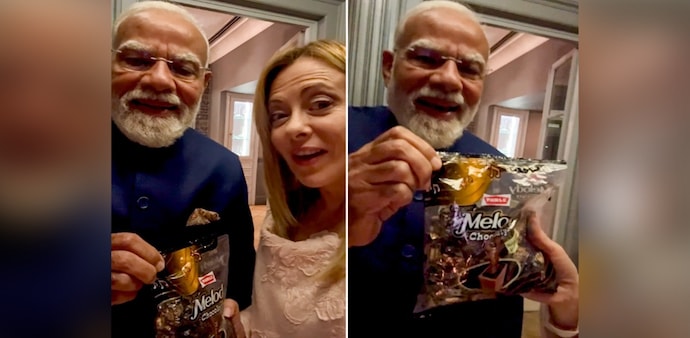
It lasted just 27 seconds, but the clip had the internet talking for much longer. Italian Prime Minister Giorgia Meloni posted a video on Wednesday showing Prime Minister Narendra Modi presenting her with a packet of Melody toffees, a small, caramel-coated candy that has been a fixture of Indian childhoods for decades.
The warmth between the two leaders was unmistakable. "Thank you for the gift," Meloni wrote alongside the video, which quickly went viral.
The moment came during Modi's visit to Rome, the final stop on a five-nation tour. The two leaders had already shared a dinner and a late-night walk through the Colosseum.
But the Melody packet stole the show, and for anyone who grew up in India, it was easy to understand why.
DON'T MISS: When Meloni, Modi met ‘Melody’ - A chocolaty toffee moment goes viral
History of melody toffee: A toffee that asked a question
Walk into almost any old-school kirana shop in India, and the scene is familiar: glass jars lined up on the counter, filled with individually wrapped candies in bright colours. Melody has occupied a spot in those jars for decades, its caramel exterior and visible chocolate filling making it one of the more distinctive options on the shelf.
When Parle first set out to market Melody, the confectionery space was fiercely crowded. Cadbury's Eclairs, a chocolate-filled toffee, had already carved out a dominant position and set a high bar. Parle needed a way to make Melody stand out without directly taking on the competition.
The task fell to Everest, the advertising agency brought on to handle the brand. Creative head Haresh Moorjani and copywriter Sulekha Bajpai took on the brief, the goal being to highlight Melody's generous chocolate filling without making explicit comparisons to rivals.
The breakthrough came, as it often does, in an unlikely moment. Bajpai was refining her lines in Parle's reception area, waiting to present the concept, when the idea crystallised.
The line she landed on was deceptively simple: "Melody ke andar itni chocolate kaise bhari batao?," and the now-iconic reply: "Melody khao, khud jaan jao." A jingle sealed it, "Melody hai chocolatey, Melody hai chocolatey," punchy, rhythmic, and impossible to forget.
The ads that made it stick
The television commercials that followed were built around a consistent format. In familiar settings, a classroom, a playground, a magician's act, an authority figure or an admired adult would pose the same puzzled question about Melody's chocolate content, and a child would deflect with cheerful confidence: " Eat it and find out for yourself. The answer wasn't really an answer. It was an invitation, and it worked.
The campaign ran across rural and urban markets and was produced by Sanjeev Sharma of Palette Communications. Its appeal was in how it weaponised curiosity, rather than telling consumers why Melody was good, it dared them to discover it themselves. All of this, for under a rupee.
FAQs
- +−
Why did the Melody toffee gift from PM Narendra Modi to Giorgia Meloni go viral?
The moment went viral because Modi gifted Meloni a packet of Melody, a nostalgic Indian toffee closely linked with childhood memories for many Indians. The short clip, combined with the warm rapport between the two leaders, made it highly shareable online.
- +−
What is Melody toffee and why is it so popular in India?
Melody is a small caramel-coated toffee with a visible chocolate filling. It became popular in India because of its distinctive taste, wide availability in kirana shops, affordable price, and strong emotional connect with generations of consumers.
- +−
What is the famous Melody advertising slogan?
The iconic slogan is, "Melody ke andar itni chocolate kaise bhari batao?" followed by the reply, "Melody khao, khud jaan jao." It became memorable because it sparked curiosity instead of giving a direct explanation.
- +−
How did Parle make Melody stand out in a crowded confectionery market?
Parle positioned Melody as a curiosity-driven product rather than directly comparing it with rivals like Cadbury Eclairs. With the help of advertising agency Everest, the brand focused on Melody's generous chocolate filling and used a catchy slogan and jingle to build recall.
- +−
What made the Melody TV commercials so effective?
The commercials used simple everyday settings like classrooms and playgrounds, where adults asked about Melody's chocolate filling and children replied with confidence. This format made the ads relatable, memorable, and effective across both rural and urban markets.
It lasted just 27 seconds, but the clip had the internet talking for much longer. Italian Prime Minister Giorgia Meloni posted a video on Wednesday showing Prime Minister Narendra Modi presenting her with a packet of Melody toffees, a small, caramel-coated candy that has been a fixture of Indian childhoods for decades.
The warmth between the two leaders was unmistakable. "Thank you for the gift," Meloni wrote alongside the video, which quickly went viral.
The moment came during Modi's visit to Rome, the final stop on a five-nation tour. The two leaders had already shared a dinner and a late-night walk through the Colosseum.
But the Melody packet stole the show, and for anyone who grew up in India, it was easy to understand why.
DON'T MISS: When Meloni, Modi met ‘Melody’ - A chocolaty toffee moment goes viral
History of melody toffee: A toffee that asked a question
Walk into almost any old-school kirana shop in India, and the scene is familiar: glass jars lined up on the counter, filled with individually wrapped candies in bright colours. Melody has occupied a spot in those jars for decades, its caramel exterior and visible chocolate filling making it one of the more distinctive options on the shelf.
When Parle first set out to market Melody, the confectionery space was fiercely crowded. Cadbury's Eclairs, a chocolate-filled toffee, had already carved out a dominant position and set a high bar. Parle needed a way to make Melody stand out without directly taking on the competition.
The task fell to Everest, the advertising agency brought on to handle the brand. Creative head Haresh Moorjani and copywriter Sulekha Bajpai took on the brief, the goal being to highlight Melody's generous chocolate filling without making explicit comparisons to rivals.
The breakthrough came, as it often does, in an unlikely moment. Bajpai was refining her lines in Parle's reception area, waiting to present the concept, when the idea crystallised.
The line she landed on was deceptively simple: "Melody ke andar itni chocolate kaise bhari batao?," and the now-iconic reply: "Melody khao, khud jaan jao." A jingle sealed it, "Melody hai chocolatey, Melody hai chocolatey," punchy, rhythmic, and impossible to forget.
The ads that made it stick
The television commercials that followed were built around a consistent format. In familiar settings, a classroom, a playground, a magician's act, an authority figure or an admired adult would pose the same puzzled question about Melody's chocolate content, and a child would deflect with cheerful confidence: " Eat it and find out for yourself. The answer wasn't really an answer. It was an invitation, and it worked.
The campaign ran across rural and urban markets and was produced by Sanjeev Sharma of Palette Communications. Its appeal was in how it weaponised curiosity, rather than telling consumers why Melody was good, it dared them to discover it themselves. All of this, for under a rupee.