
'Why Indians love iPhones but hate paying ₹99 for apps': Entrepreneur explains consumer psyche
The underlying rule? “Indians will pay premium for visible consumption. They’ll fight to death to avoid paying for invisible consumption,” he explains.
- Nov 25, 2025,
- Updated Nov 25, 2025 8:17 AM IST
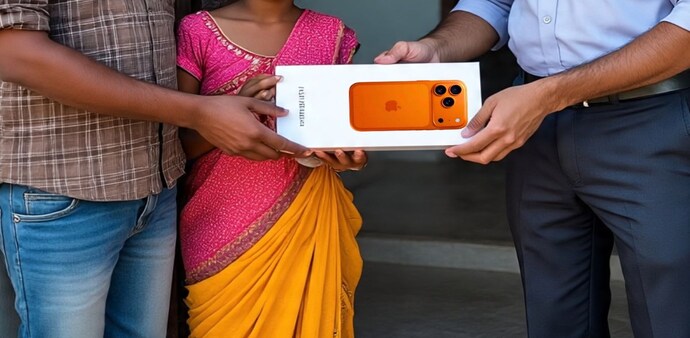
Indians are happy to spend ₹1.2 lakh on an iPhone, but will dig for 45 minutes to find a cracked APK to avoid paying ₹99 for an app. Why? Bengaluru entrepreneur Varun Agarwal says the answer lies in a deeply social consumer psyche—one that values visibility over utility.
In a LinkedIn post, Agarwal breaks down what he calls a fundamental paradox of Indian spending habits: people will splurge on things others can see, but pinch pennies on things no one will notice.
“The same person who bought a ₹3 lakh Royal Enfield will refuse to pay ₹500/month for Spotify Premium,” he writes. “That iPhone isn’t a phone. It’s proof you’ve ‘made it.’ That wedding isn’t a ceremony. It’s proof your family has ‘status.’”
According to Agarwal, Indian consumers don’t buy products—they buy social proof. And that has massive implications for how brands should think about positioning.
The underlying rule? “Indians will pay premium for visible consumption. They’ll fight to death to avoid paying for invisible consumption,” he explains.
That explains why:
- Zara stores are packed, but digital news sites struggle with subscriptions.
- Starbucks has queues out the door, while meditation apps see sub-1% paid conversion.
- Lavish wedding spending is justified, but a fair mattress upgrade is deferred.
At the core of this psychology is not just frugality, but a fear of looking foolish. “We are terrified of being taken advantage of,” Agarwal writes. “The shame of overpaying is greater than the joy of owning.”
This has led to a culture where finding discounts is a social achievement. Paying full price, on the other hand, is often something to hide. “Nobody admits they paid for Tinder Gold,” he quips. “But everyone claims they ‘got a discount’ on everything they bought.”
Agarwal leaves marketers with one sharp question: “Would your customer be embarrassed or proud to tell their friends they bought your product?” If the answer is embarrassment, he warns, you're selling invisible value in a country obsessed with visible status.
Indians are happy to spend ₹1.2 lakh on an iPhone, but will dig for 45 minutes to find a cracked APK to avoid paying ₹99 for an app. Why? Bengaluru entrepreneur Varun Agarwal says the answer lies in a deeply social consumer psyche—one that values visibility over utility.
In a LinkedIn post, Agarwal breaks down what he calls a fundamental paradox of Indian spending habits: people will splurge on things others can see, but pinch pennies on things no one will notice.
“The same person who bought a ₹3 lakh Royal Enfield will refuse to pay ₹500/month for Spotify Premium,” he writes. “That iPhone isn’t a phone. It’s proof you’ve ‘made it.’ That wedding isn’t a ceremony. It’s proof your family has ‘status.’”
According to Agarwal, Indian consumers don’t buy products—they buy social proof. And that has massive implications for how brands should think about positioning.
The underlying rule? “Indians will pay premium for visible consumption. They’ll fight to death to avoid paying for invisible consumption,” he explains.
That explains why:
- Zara stores are packed, but digital news sites struggle with subscriptions.
- Starbucks has queues out the door, while meditation apps see sub-1% paid conversion.
- Lavish wedding spending is justified, but a fair mattress upgrade is deferred.
At the core of this psychology is not just frugality, but a fear of looking foolish. “We are terrified of being taken advantage of,” Agarwal writes. “The shame of overpaying is greater than the joy of owning.”
This has led to a culture where finding discounts is a social achievement. Paying full price, on the other hand, is often something to hide. “Nobody admits they paid for Tinder Gold,” he quips. “But everyone claims they ‘got a discount’ on everything they bought.”
Agarwal leaves marketers with one sharp question: “Would your customer be embarrassed or proud to tell their friends they bought your product?” If the answer is embarrassment, he warns, you're selling invisible value in a country obsessed with visible status.