
Will using E20 petrol affect your motor insurance claim? Here's what policyholders should know
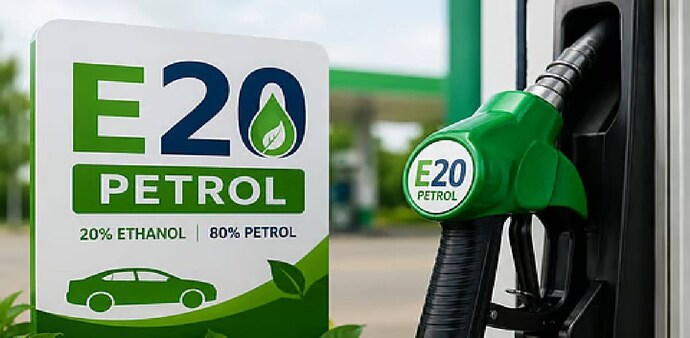
As E20 petrol becomes the new standard fuel across India, many motorists are worried whether using it could put their motor insurance claims at risk. Insurers and automakers, however, say policyholders have little reason to worry. Experts say motor insurance claims are determined by the cause of damage and policy terms, not simply by whether a vehicle runs on E20 fuel.
- Jul 10, 2026,
- Updated Jul 10, 2026 5:35 PM IST
With E20 petrol now available across India under the government's ethanol blending programme, many vehicle owners have been wondering whether using the fuel could affect their motor insurance claims. The concern gathered momentum after several social media posts claimed insurers could reject claims if a vehicle was found to be running on E20 petrol.
However, the government, insurers and leading automobile manufacturers have all dismissed these claims, saying the use of E20 fuel by itself is not a valid ground for rejecting a motor insurance claim.
The Press Information Bureau (PIB) has clarified that using E20 petrol neither invalidates a motor insurance policy nor leads to automatic rejection of claims. Motor insurers assess claims based on the cause of damage, policy terms, exclusions and survey findings—not on whether the vehicle runs on E20 fuel.
Can your insurance claim be rejected?
According to Sachin Joshi, President – Claims, Operations & Customer Service at Liberty General Insurance, an insurer cannot repudiate a claim merely because the vehicle was fuelled with E20 petrol.
"No, your motor insurance claim should not be rejected just because you used E20 petrol in your car. An insurer would generally need to establish that the damage was directly caused by the use of E20 fuel and that such damage is specifically excluded under the policy. If your car is not E20-compatible, that alone does not automatically mean the claim can be denied. The insurer would still investigate the actual cause of the damage before taking a decision," he said.
MUST READ: Consumers shift to premium petrol amid E20 concerns; demand doubles at Delhi fuel stations: Sources
Insurance experts point out that every claim is examined on its own merits. Unless there is clear evidence that the damage resulted directly from using an incompatible fuel and falls under a policy exclusion, the use of E20 alone cannot become the basis for claim rejection.
What about older vehicles?
Questions have also been raised about whether E20 petrol can damage older vehicles. Joshi said owners need not panic.
"Some minor wear and tear may occur in very old vehicles, but this can usually be addressed during routine servicing. As per the Government of India and automobile experts, E20 is a safe transition for most vehicle owners. Owners of older vehicles should simply ensure that seals and gaskets are inspected during regular service visits," Joshi told Business Today.
He added that ethanol-blended fuel offers environmental benefits by improving combustion efficiency and lowering carbon emissions.
MUST READ: Why can't you choose between pure petrol, E10, E20? Here's what every vehicle owner should know
Can E20 affect your warranty?
Experts caution that insurance and manufacturer warranty are separate issues. While using E20 does not automatically affect insurance, warranty claims may depend on whether the vehicle is designed to run on the fuel.
"If the owner's manual specifically says the vehicle is not E20-compatible and damage occurs because incompatible fuel was used over time, the manufacturer may deny warranty coverage. Vehicle owners should always follow the recommendations mentioned in the owner's manual," Joshi said.
ALSO READ: Ethanol means lower imports and better incomes for farmers: Nitin Gadkari on E20 row
Maruti, Toyota see no spike in insurance claims
Leading passenger vehicle makers Maruti Suzuki and Toyota Kirloskar Motor have also said they have not observed any increase in insurance claims linked to E20 petrol.
The companies said extensive testing and vehicle service data have not shown abnormal engine wear, corrosion or fuel system damage attributable to E20. Toyota added that many reported vehicle issues are more likely to be caused by fuel contamination than ethanol blending.
Automakers also stressed that standard motor insurance policies generally cover accidental losses such as collisions, theft, fire, floods and third-party liabilities. However, routine wear and tear, mechanical failures, electrical breakdowns and consequential damage are usually excluded unless covered through specific add-on covers.
Experts advise vehicle owners to preserve fuel purchase receipts, workshop job cards, diagnostic reports and photographs if a fuel-related issue arises. They should also inform both the insurer and the authorised service centre promptly to facilitate claim assessment.
MUST READ: 'Name any one vehicle which...': Nitin Gadkari's dare to critics amid E20 fears
Separately, the government has rejected claims that E20 petrol damages compatible vehicle engines. Petroleum Minister Hardeep Singh Puri has said there is no evidence that E20 harms compatible vehicles, while studies conducted by the Automotive Research Association of India (ARAI) have found no significant impact on engine performance or durability in E20-compatible vehicles.
For owners of older cars, the safest approach is to check the manufacturer's recommendations before switching to E20. Following the prescribed fuel specifications and maintenance schedule remains the best way to ensure smooth vehicle performance while avoiding disputes over warranty or insurance claims.
With E20 petrol now available across India under the government's ethanol blending programme, many vehicle owners have been wondering whether using the fuel could affect their motor insurance claims. The concern gathered momentum after several social media posts claimed insurers could reject claims if a vehicle was found to be running on E20 petrol.
However, the government, insurers and leading automobile manufacturers have all dismissed these claims, saying the use of E20 fuel by itself is not a valid ground for rejecting a motor insurance claim.
The Press Information Bureau (PIB) has clarified that using E20 petrol neither invalidates a motor insurance policy nor leads to automatic rejection of claims. Motor insurers assess claims based on the cause of damage, policy terms, exclusions and survey findings—not on whether the vehicle runs on E20 fuel.
Can your insurance claim be rejected?
According to Sachin Joshi, President – Claims, Operations & Customer Service at Liberty General Insurance, an insurer cannot repudiate a claim merely because the vehicle was fuelled with E20 petrol.
"No, your motor insurance claim should not be rejected just because you used E20 petrol in your car. An insurer would generally need to establish that the damage was directly caused by the use of E20 fuel and that such damage is specifically excluded under the policy. If your car is not E20-compatible, that alone does not automatically mean the claim can be denied. The insurer would still investigate the actual cause of the damage before taking a decision," he said.
MUST READ: Consumers shift to premium petrol amid E20 concerns; demand doubles at Delhi fuel stations: Sources
Insurance experts point out that every claim is examined on its own merits. Unless there is clear evidence that the damage resulted directly from using an incompatible fuel and falls under a policy exclusion, the use of E20 alone cannot become the basis for claim rejection.
What about older vehicles?
Questions have also been raised about whether E20 petrol can damage older vehicles. Joshi said owners need not panic.
"Some minor wear and tear may occur in very old vehicles, but this can usually be addressed during routine servicing. As per the Government of India and automobile experts, E20 is a safe transition for most vehicle owners. Owners of older vehicles should simply ensure that seals and gaskets are inspected during regular service visits," Joshi told Business Today.
He added that ethanol-blended fuel offers environmental benefits by improving combustion efficiency and lowering carbon emissions.
MUST READ: Why can't you choose between pure petrol, E10, E20? Here's what every vehicle owner should know
Can E20 affect your warranty?
Experts caution that insurance and manufacturer warranty are separate issues. While using E20 does not automatically affect insurance, warranty claims may depend on whether the vehicle is designed to run on the fuel.
"If the owner's manual specifically says the vehicle is not E20-compatible and damage occurs because incompatible fuel was used over time, the manufacturer may deny warranty coverage. Vehicle owners should always follow the recommendations mentioned in the owner's manual," Joshi said.
ALSO READ: Ethanol means lower imports and better incomes for farmers: Nitin Gadkari on E20 row
Maruti, Toyota see no spike in insurance claims
Leading passenger vehicle makers Maruti Suzuki and Toyota Kirloskar Motor have also said they have not observed any increase in insurance claims linked to E20 petrol.
The companies said extensive testing and vehicle service data have not shown abnormal engine wear, corrosion or fuel system damage attributable to E20. Toyota added that many reported vehicle issues are more likely to be caused by fuel contamination than ethanol blending.
Automakers also stressed that standard motor insurance policies generally cover accidental losses such as collisions, theft, fire, floods and third-party liabilities. However, routine wear and tear, mechanical failures, electrical breakdowns and consequential damage are usually excluded unless covered through specific add-on covers.
Experts advise vehicle owners to preserve fuel purchase receipts, workshop job cards, diagnostic reports and photographs if a fuel-related issue arises. They should also inform both the insurer and the authorised service centre promptly to facilitate claim assessment.
MUST READ: 'Name any one vehicle which...': Nitin Gadkari's dare to critics amid E20 fears
Separately, the government has rejected claims that E20 petrol damages compatible vehicle engines. Petroleum Minister Hardeep Singh Puri has said there is no evidence that E20 harms compatible vehicles, while studies conducted by the Automotive Research Association of India (ARAI) have found no significant impact on engine performance or durability in E20-compatible vehicles.
For owners of older cars, the safest approach is to check the manufacturer's recommendations before switching to E20. Following the prescribed fuel specifications and maintenance schedule remains the best way to ensure smooth vehicle performance while avoiding disputes over warranty or insurance claims.