
Gold investment boom: Why Indians are choosing bullion over jewellery now
Gold investment boom: Why Indians are choosing bullion over jewellery now
India’s gold demand is increasingly being driven by investors rather than jewellery buyers, marking a clear shift in consumption patterns. Rising prices, ETF inflows, and global uncertainties are accelerating gold’s transition from ornament to core portfolio asset.
Basudha Das
- May 2, 2026,
- Updated May 2, 2026 1:48 PM IST
India’s gold market is undergoing a structural shift, with investors increasingly favouring gold as a financial asset over traditional jewellery purchases. Latest data from the World Gold Council (WGC) shows that while overall demand remains strong, the composition of that demand is changing rapidly in favour of investment-led buying.
Advertisement
Gold demand in India rose 10% year-on-year to 151 tonnes in the first quarter of 2026. In value terms, however, demand nearly doubled, surging 99% to a record ₹2.28 lakh crore ($25 billion), reflecting sharply higher prices during the period. The surge was driven primarily by investment demand, which outpaced jewellery consumption for the first time in recent quarters.
Investment demand jumped 54% year-on-year to 82 tonnes, with value rising 179%, according to the WGC report “Gold Demand Trends: India Focus Q1 2026”. Bar and coin demand stood at 62 tonnes, nearly matching jewellery demand of 66 tonnes—an unusual convergence in a market traditionally dominated by jewellery buying.
Investment overtakes jewellery
The shift comes amid a steep rally in gold prices. Domestic prices averaged ₹1,51,108 per 10 grams during the quarter, up 20% sequentially and 81% year-on-year, before witnessing a partial correction later. Elevated prices, coupled with a weaker rupee, boosted the overall value of purchases but significantly curtailed volumes in the price-sensitive jewellery segment.
Advertisement
Jewellery demand fell to its second-lowest level for a first quarter since 2000. Even so, value demand rose 47% to ₹99,900 crore, supported by wedding-related purchases and discretionary spending by affluent buyers opting for heavier pieces. In contrast, mass-market consumers shifted towards lighter or lower-carat jewellery. Notably, 40–60% of jewellery transactions involved exchanging old gold, indicating constrained fresh demand.
MUST READ: Should you buy gold as oil and inflation rise? Here’s what investors need to know
Behavioural change
At a broader level, data from CareEdge Ratings underscores a deeper behavioural change. The share of jewellery in total gold consumption has dropped below 60%, compared with a long-term average of around 70%. Investment demand is expected to account for 35–40% of total consumption by FY27, signalling what analysts describe as a “structural shift” in India’s gold market.
Advertisement
Consumption to portfolio allocation
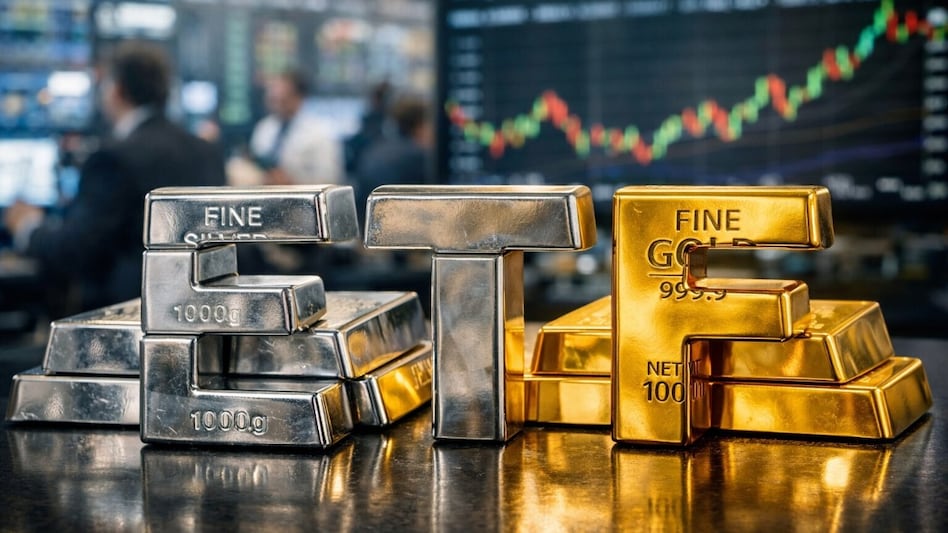
A key driver of this transition is the rapid rise of financial gold products. Gold exchange-traded funds (ETFs) recorded their strongest quarter on record, with net inflows of 20 tonnes in Q1 2026. Nearly 80% of these inflows came in January alone, reflecting strong investor participation during periods of heightened global uncertainty.
Assets under management (AUM) for gold ETFs surged 191% year-on-year to around ₹1.7 lakh crore, with India contributing 32% of global ETF demand—second only to China. The trend extends beyond quarterly data. In FY26, gold ETFs attracted ₹68,868 crore, more than double the combined inflows seen over the previous five years.
Gold ETF inflows
According to Zerodha Fund House, gold and silver ETFs together accounted for 55% of total ETF inflows, surpassing equity ETFs, which drew ₹77,780 crore. This indicates a growing preference among investors to use ETFs as a tool for diversification and risk management.
Market participants attribute the rising appeal of gold investments to a combination of factors, including geopolitical uncertainty, persistent inflationary pressures, and volatile equity markets. Analysts note that gold is increasingly being viewed not just as a consumption asset, but as a core portfolio hedge.
Advertisement
MUST READ: Fixed deposits vs equity: Where should investors park money during oil shock?
Looking ahead, the WGC expects investment demand to remain resilient, supported by global macroeconomic risks and price momentum. However, jewellery demand may continue to face headwinds from high prices, especially in rural and price-sensitive segments where income growth could be impacted by factors such as a weak monsoon.
Despite these challenges, India remains one of the world’s largest gold consumers, accounting for 22% of global jewellery demand. Yet, the balance is clearly shifting. As financialisation of gold accelerates and investment avenues expand, Indians are steadily moving away from ornamental buying towards strategic allocation—reshaping the dynamics of one of the country’s oldest asset classes.
MUST READ: Will gold rally again? Expert sees range-bound trend amid geopolitical, inflation pressures
India’s gold market is undergoing a structural shift, with investors increasingly favouring gold as a financial asset over traditional jewellery purchases. Latest data from the World Gold Council (WGC) shows that while overall demand remains strong, the composition of that demand is changing rapidly in favour of investment-led buying.
Advertisement
Gold demand in India rose 10% year-on-year to 151 tonnes in the first quarter of 2026. In value terms, however, demand nearly doubled, surging 99% to a record ₹2.28 lakh crore ($25 billion), reflecting sharply higher prices during the period. The surge was driven primarily by investment demand, which outpaced jewellery consumption for the first time in recent quarters.
Investment demand jumped 54% year-on-year to 82 tonnes, with value rising 179%, according to the WGC report “Gold Demand Trends: India Focus Q1 2026”. Bar and coin demand stood at 62 tonnes, nearly matching jewellery demand of 66 tonnes—an unusual convergence in a market traditionally dominated by jewellery buying.
Investment overtakes jewellery
The shift comes amid a steep rally in gold prices. Domestic prices averaged ₹1,51,108 per 10 grams during the quarter, up 20% sequentially and 81% year-on-year, before witnessing a partial correction later. Elevated prices, coupled with a weaker rupee, boosted the overall value of purchases but significantly curtailed volumes in the price-sensitive jewellery segment.
Advertisement
Jewellery demand fell to its second-lowest level for a first quarter since 2000. Even so, value demand rose 47% to ₹99,900 crore, supported by wedding-related purchases and discretionary spending by affluent buyers opting for heavier pieces. In contrast, mass-market consumers shifted towards lighter or lower-carat jewellery. Notably, 40–60% of jewellery transactions involved exchanging old gold, indicating constrained fresh demand.
MUST READ: Should you buy gold as oil and inflation rise? Here’s what investors need to know
Behavioural change
At a broader level, data from CareEdge Ratings underscores a deeper behavioural change. The share of jewellery in total gold consumption has dropped below 60%, compared with a long-term average of around 70%. Investment demand is expected to account for 35–40% of total consumption by FY27, signalling what analysts describe as a “structural shift” in India’s gold market.
Advertisement
Consumption to portfolio allocation
A key driver of this transition is the rapid rise of financial gold products. Gold exchange-traded funds (ETFs) recorded their strongest quarter on record, with net inflows of 20 tonnes in Q1 2026. Nearly 80% of these inflows came in January alone, reflecting strong investor participation during periods of heightened global uncertainty.
Assets under management (AUM) for gold ETFs surged 191% year-on-year to around ₹1.7 lakh crore, with India contributing 32% of global ETF demand—second only to China. The trend extends beyond quarterly data. In FY26, gold ETFs attracted ₹68,868 crore, more than double the combined inflows seen over the previous five years.
Gold ETF inflows
According to Zerodha Fund House, gold and silver ETFs together accounted for 55% of total ETF inflows, surpassing equity ETFs, which drew ₹77,780 crore. This indicates a growing preference among investors to use ETFs as a tool for diversification and risk management.
Market participants attribute the rising appeal of gold investments to a combination of factors, including geopolitical uncertainty, persistent inflationary pressures, and volatile equity markets. Analysts note that gold is increasingly being viewed not just as a consumption asset, but as a core portfolio hedge.
Advertisement
MUST READ: Fixed deposits vs equity: Where should investors park money during oil shock?
Looking ahead, the WGC expects investment demand to remain resilient, supported by global macroeconomic risks and price momentum. However, jewellery demand may continue to face headwinds from high prices, especially in rural and price-sensitive segments where income growth could be impacted by factors such as a weak monsoon.
Despite these challenges, India remains one of the world’s largest gold consumers, accounting for 22% of global jewellery demand. Yet, the balance is clearly shifting. As financialisation of gold accelerates and investment avenues expand, Indians are steadily moving away from ornamental buying towards strategic allocation—reshaping the dynamics of one of the country’s oldest asset classes.
MUST READ: Will gold rally again? Expert sees range-bound trend amid geopolitical, inflation pressures
Read more!