
Rooftop solar is emerging as a wealth-creation asset, not just a power saver; here's what expert say
Rooftop solar is emerging as a long-term wealth-creation asset, offering benefits that go well beyond lower electricity bills. Experts say it can deliver attractive returns, shield households from rising power tariffs, and enhance property values.
- Aug 6, 2026,
- Updated Aug 6, 2026 6:35 AM IST
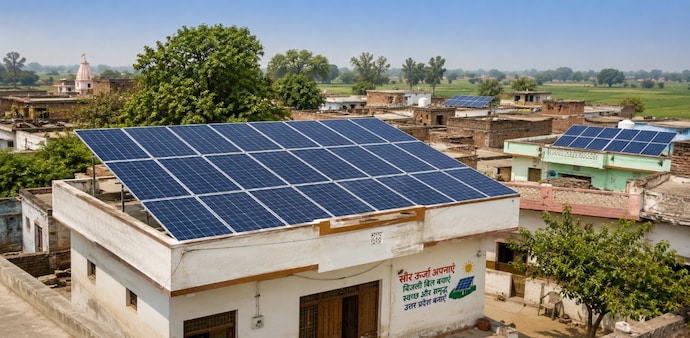
Rooftop solar is increasingly being viewed as more than just a way to lower electricity bills. Industry experts say the technology is evolving into a long-term financial asset that can generate attractive returns, increase property value and protect households and businesses from rising electricity costs.
The shift comes as India's rooftop solar market gains momentum, supported by government incentives, easier financing and growing awareness of the long-term economic benefits of generating electricity at home or at commercial premises.
The most immediate advantage remains lower power bills. Once installed, rooftop solar panels generate electricity throughout the day, allowing consumers to rely less on grid power. Since solar systems typically have a lifespan of over 20 years and require relatively low maintenance, the savings on electricity bills can continue for decades, often exceeding the initial installation cost over the system's lifetime.
Another major benefit is insulation from rising electricity tariffs. Utility prices tend to increase over time due to higher fuel costs, infrastructure spending and growing demand. By producing a significant portion of their own electricity, households and businesses can reduce their dependence on the grid and gain greater certainty over long-term energy expenses.
From expense to investment
Sudharman Ezhil, Director and CEO of Natrinai Ventures (NGE Green Energy), said rooftop solar is no longer being marketed solely as an energy-saving solution.
"For years, rooftop solar was sold as a way to cut power bills. That conversation is shifting. Consumers and businesses are beginning to treat it as a long-term financial asset—one that starts yielding from the day it is commissioned," he said.
According to Ezhil, India's rooftop solar additions reached 7.1 GW in 2025, more than doubling from 3.2 GW a year earlier, taking cumulative installed capacity beyond 20 GW. He noted that residential installations, driven by the PM Surya Ghar scheme, accounted for nearly three-fourths of the additions.
MUST READ: High power bills burning pockets? Claim up to ₹78,000 under PM Surya Ghar scheme
For commercial and industrial users, the economics are even more compelling. Ezhil said businesses can typically recover their investment in four to five years, after which the system continues to generate electricity at minimal cost for nearly two decades. Effective returns can range from the mid-teens to the mid-twenties, significantly higher than traditional investment options such as fixed deposits or commercial rental yields.
He added that rooftop solar should be viewed as infrastructure that strengthens balance sheets while reducing exposure to tariff volatility.
A long-term wealth creator
Pawan Garg, Chairman and Joint Managing Director of Fujiyama Power Systems, said rooftop solar has evolved into a wealth-creating asset rather than merely an energy-saving solution.
"In the past, the most notable benefit of rooftop solar was energy savings. While this aspect is still integral, rooftop solar has become a wealth-creating asset that provides a positive return on investment and defends against the increasing cost of energy," he said.
Garg noted that cumulative savings over the life of a solar system can exceed its installation cost, particularly with the support of government subsidies and financing options. He added that solar installations can also enhance property values as buyers increasingly prefer energy-efficient and sustainable homes and commercial buildings.
Besides financial gains, rooftop solar contributes to energy independence by reducing reliance on the electricity grid. Experts say that as adoption grows, rooftop solar is likely to be viewed less as an expense and more as a long-term investment that delivers recurring savings while supporting India's clean energy transition.
Rooftop solar is increasingly being viewed as more than just a way to lower electricity bills. Industry experts say the technology is evolving into a long-term financial asset that can generate attractive returns, increase property value and protect households and businesses from rising electricity costs.
The shift comes as India's rooftop solar market gains momentum, supported by government incentives, easier financing and growing awareness of the long-term economic benefits of generating electricity at home or at commercial premises.
The most immediate advantage remains lower power bills. Once installed, rooftop solar panels generate electricity throughout the day, allowing consumers to rely less on grid power. Since solar systems typically have a lifespan of over 20 years and require relatively low maintenance, the savings on electricity bills can continue for decades, often exceeding the initial installation cost over the system's lifetime.
Another major benefit is insulation from rising electricity tariffs. Utility prices tend to increase over time due to higher fuel costs, infrastructure spending and growing demand. By producing a significant portion of their own electricity, households and businesses can reduce their dependence on the grid and gain greater certainty over long-term energy expenses.
From expense to investment
Sudharman Ezhil, Director and CEO of Natrinai Ventures (NGE Green Energy), said rooftop solar is no longer being marketed solely as an energy-saving solution.
"For years, rooftop solar was sold as a way to cut power bills. That conversation is shifting. Consumers and businesses are beginning to treat it as a long-term financial asset—one that starts yielding from the day it is commissioned," he said.
According to Ezhil, India's rooftop solar additions reached 7.1 GW in 2025, more than doubling from 3.2 GW a year earlier, taking cumulative installed capacity beyond 20 GW. He noted that residential installations, driven by the PM Surya Ghar scheme, accounted for nearly three-fourths of the additions.
MUST READ: High power bills burning pockets? Claim up to ₹78,000 under PM Surya Ghar scheme
For commercial and industrial users, the economics are even more compelling. Ezhil said businesses can typically recover their investment in four to five years, after which the system continues to generate electricity at minimal cost for nearly two decades. Effective returns can range from the mid-teens to the mid-twenties, significantly higher than traditional investment options such as fixed deposits or commercial rental yields.
He added that rooftop solar should be viewed as infrastructure that strengthens balance sheets while reducing exposure to tariff volatility.
A long-term wealth creator
Pawan Garg, Chairman and Joint Managing Director of Fujiyama Power Systems, said rooftop solar has evolved into a wealth-creating asset rather than merely an energy-saving solution.
"In the past, the most notable benefit of rooftop solar was energy savings. While this aspect is still integral, rooftop solar has become a wealth-creating asset that provides a positive return on investment and defends against the increasing cost of energy," he said.
Garg noted that cumulative savings over the life of a solar system can exceed its installation cost, particularly with the support of government subsidies and financing options. He added that solar installations can also enhance property values as buyers increasingly prefer energy-efficient and sustainable homes and commercial buildings.
Besides financial gains, rooftop solar contributes to energy independence by reducing reliance on the electricity grid. Experts say that as adoption grows, rooftop solar is likely to be viewed less as an expense and more as a long-term investment that delivers recurring savings while supporting India's clean energy transition.