
Can BKC hold on to its crown as Mumbai’s costliest, most in-demand office hub?
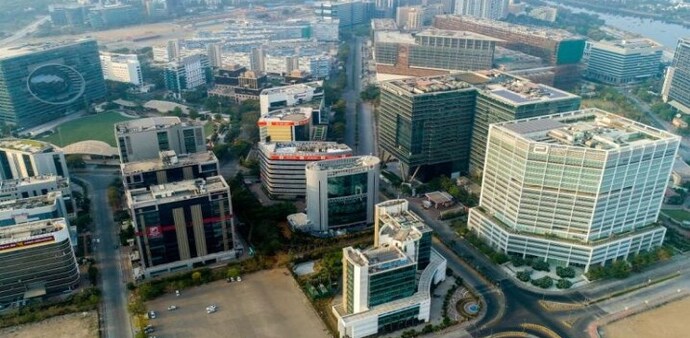
Bandra Kurla Complex (BKC) continues to dominate Mumbai’s office market with the highest rentals, strong occupancy levels and one of the lowest vacancy rates in the city. But as new commercial corridors emerge and businesses reassess office strategies, can Mumbai’s premier business district maintain its leadership?
- May 16, 2026,
- Updated May 16, 2026 4:15 PM IST
Mumbai’s commercial real estate market is entering a new phase of evolution. Rising office costs, hybrid work trends and infrastructure-led development across emerging micro-markets have encouraged companies to explore alternative business districts. Areas such as Navi Mumbai, Chembur, Thane and other developing corridors are increasingly attracting attention from occupiers seeking cost efficiency and scalability.
Yet despite this changing landscape, Bandra Kurla Complex (BKC) continues to retain its position as Mumbai’s most premium and sought-after business address.
BKC currently commands the highest office rentals across the Mumbai Metropolitan Region (MMR), with average rents estimated at approximately ₹390 per sq ft per month. Premium Grade-A office spaces in prime assets within the district are reportedly achieving rentals in the range of ₹600–660 per sq ft per month, underlining the market's willingness to pay a premium for presence within the district. Occupancy levels remain strong at nearly 94%, highlighting sustained demand from businesses.
The district’s performance is notable because it comes at a time when many occupiers are actively evaluating alternatives to traditional central business districts.
MUST READ: DLF sells 60% apartments in ultra-luxury project The Dahlias
Tight vacancy levels
Perhaps the strongest indicator of BKC’s market strength is its exceptionally low vacancy rate.
Vacancy in SBD BKC stands at just around 5.8%, substantially lower than the broader MMR average. This points toward a structurally constrained market where demand continues to outpace available supply.
According to Vikas Jain, CEO of Labdhi Lifestyle Limited, BKC’s outperformance is driven by long-term structural factors rather than temporary market conditions.
He said the district has evolved into Mumbai’s most institutionalised central business district due to the concentration of banking, financial services and insurance (BFSI) firms, multinational corporations and regulatory institutions. This clustering effect creates a self-reinforcing ecosystem where location itself becomes a competitive advantage.
Businesses operating in BKC benefit from proximity to clients, talent pools and strategic decision-making centres, making relocation decisions more complex than simply comparing rental costs.
Supply constraints
Limited supply has also emerged as a major factor supporting BKC’s premium positioning.
Between 2020 and 2025, the district saw minimal additions of Grade-A office inventory while demand from financial institutions, consulting firms, global capability centres and institutional occupiers remained healthy. This supply-demand imbalance helped push rental levels upward.
However, experts suggest rising rents cannot be attributed solely to limited inventory.
Infrastructure upgrades and broader urban transformation projects are increasingly strengthening BKC’s long-term attractiveness. Metro connectivity improvements, road upgrades and large-scale redevelopment projects around surrounding districts are expanding the effective boundaries of the business hub.
BKC’s growth story
As core BKC approaches physical saturation, growth is increasingly shifting toward adjacent areas such as H-Block, which is emerging as a natural extension of the district.
Upcoming infrastructure projects, including expanded metro networks, the Dharavi Depot–Chunabhatti–BKC connector and broader urban redevelopment initiatives, are expected to enhance accessibility and strengthen business activity in nearby precincts.
MUST READ: Nippon vs Bandhan Small Cap: How are these funds consistently beating the benchmark?
Industry observers believe this expansion strategy could allow BKC to absorb future demand without diluting its premium status.
For investors, BKC continues to offer strong rental visibility, quality tenants and long-term appreciation potential. For occupiers, it remains one of Mumbai’s most strategic locations due to connectivity, institutional ecosystem and access to talent.
As Mumbai’s commercial map evolves, BKC’s dominance faces new challenges. However, low vacancy, premium demand and infrastructure-driven expansion suggest the district may not be losing its crown anytime soon.
MUST READ: Where is mutual fund money going? Report reveals April’s biggest portfolio shifts
Mumbai’s commercial real estate market is entering a new phase of evolution. Rising office costs, hybrid work trends and infrastructure-led development across emerging micro-markets have encouraged companies to explore alternative business districts. Areas such as Navi Mumbai, Chembur, Thane and other developing corridors are increasingly attracting attention from occupiers seeking cost efficiency and scalability.
Yet despite this changing landscape, Bandra Kurla Complex (BKC) continues to retain its position as Mumbai’s most premium and sought-after business address.
BKC currently commands the highest office rentals across the Mumbai Metropolitan Region (MMR), with average rents estimated at approximately ₹390 per sq ft per month. Premium Grade-A office spaces in prime assets within the district are reportedly achieving rentals in the range of ₹600–660 per sq ft per month, underlining the market's willingness to pay a premium for presence within the district. Occupancy levels remain strong at nearly 94%, highlighting sustained demand from businesses.
The district’s performance is notable because it comes at a time when many occupiers are actively evaluating alternatives to traditional central business districts.
MUST READ: DLF sells 60% apartments in ultra-luxury project The Dahlias
Tight vacancy levels
Perhaps the strongest indicator of BKC’s market strength is its exceptionally low vacancy rate.
Vacancy in SBD BKC stands at just around 5.8%, substantially lower than the broader MMR average. This points toward a structurally constrained market where demand continues to outpace available supply.
According to Vikas Jain, CEO of Labdhi Lifestyle Limited, BKC’s outperformance is driven by long-term structural factors rather than temporary market conditions.
He said the district has evolved into Mumbai’s most institutionalised central business district due to the concentration of banking, financial services and insurance (BFSI) firms, multinational corporations and regulatory institutions. This clustering effect creates a self-reinforcing ecosystem where location itself becomes a competitive advantage.
Businesses operating in BKC benefit from proximity to clients, talent pools and strategic decision-making centres, making relocation decisions more complex than simply comparing rental costs.
Supply constraints
Limited supply has also emerged as a major factor supporting BKC’s premium positioning.
Between 2020 and 2025, the district saw minimal additions of Grade-A office inventory while demand from financial institutions, consulting firms, global capability centres and institutional occupiers remained healthy. This supply-demand imbalance helped push rental levels upward.
However, experts suggest rising rents cannot be attributed solely to limited inventory.
Infrastructure upgrades and broader urban transformation projects are increasingly strengthening BKC’s long-term attractiveness. Metro connectivity improvements, road upgrades and large-scale redevelopment projects around surrounding districts are expanding the effective boundaries of the business hub.
BKC’s growth story
As core BKC approaches physical saturation, growth is increasingly shifting toward adjacent areas such as H-Block, which is emerging as a natural extension of the district.
Upcoming infrastructure projects, including expanded metro networks, the Dharavi Depot–Chunabhatti–BKC connector and broader urban redevelopment initiatives, are expected to enhance accessibility and strengthen business activity in nearby precincts.
MUST READ: Nippon vs Bandhan Small Cap: How are these funds consistently beating the benchmark?
Industry observers believe this expansion strategy could allow BKC to absorb future demand without diluting its premium status.
For investors, BKC continues to offer strong rental visibility, quality tenants and long-term appreciation potential. For occupiers, it remains one of Mumbai’s most strategic locations due to connectivity, institutional ecosystem and access to talent.
As Mumbai’s commercial map evolves, BKC’s dominance faces new challenges. However, low vacancy, premium demand and infrastructure-driven expansion suggest the district may not be losing its crown anytime soon.
MUST READ: Where is mutual fund money going? Report reveals April’s biggest portfolio shifts