












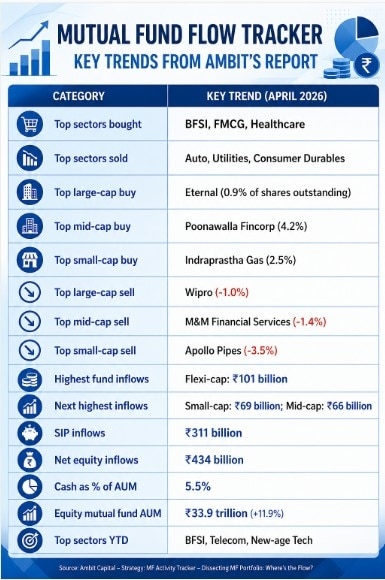



 According to Ambit's report, BFSI, FMCG and Healthcare recorded the highest mutual fund buying activity in April, after adjusting for sector performance.
 Domestic mutual funds actively repositioned portfolios in April 2026, increasing allocations to sectors such as banking, FMCG and healthcare while continuing to witness strong investor flows into flexi-cap schemes, according to Ambit Capital’s latest report, “Strategy: MF Activity Tracker – Dissecting MF Portfolio: Where’s the Flow?” The report provides a detailed assessment of portfolio changes, fund flows and long-term ownership trends across the mutual fund industry.
According to Ambit, BFSI, FMCG and Healthcare recorded the highest mutual fund buying activity in April, after adjusting for sector performance. Meanwhile, sectors such as Auto, Utilities and Consumer Durables saw net selling pressure during the month.

 BSE to replace Wipro in Nifty 50 index from September 30: All you need to know
  Meta, MeitY get NHRC notice over anti-Modi political content featuring children on Instagram
 Small savings rates for Q3 FY27: Will the government hike interest rates for the October-December quarter?
 ‘Standoff doesn’t help, third parties will take advantage’: Jaishankar on India-China ties
 BT BIG STORY: Why crypto is still thriving among Indian investors
 “Major Food Crisis” Ahead? Jaishankar Flags Global Food, Fertiliser And Energy Pressures
 Crude Oil Shock Hits Markets: Why India’s Rupee & Emerging Markets Face Pressure
 Trump Hails Indian Conglomerate Essar’s $18 Billion Iowa Steel Project, Thousands Of Jobs Expected
 Tamil Nadu Rolls Back RTI Exemption After Opposition, Ally Congress Raise Transparency Concerns
 Ujjain Shahi Masjid Demolition Sparks Clashes, Stone-Pelting During Road-Widening Drive
 Transport Corporation of India (NSE:TCI) Board approves Rs 150-crore share buyback at Rs 960 apiece; check record date
 Cement prices rise by Rs 7 per bag in September; more hikes expected in October: Report
 Augmont shares rise 23% in two days, hit record high; here's why
  Surat-based JB Ecotex files DRHP with SEBI to launch IPO; check key details
  IndusInd Bank shares off day's low; Jefferies sees 37% upside
 India-Mongolia direct flights begin, cut New Delhi-Ulaanbaatar travel time to 5 hoursTransport Corporation of India (NSE:TCI) Board approves Rs 150-crore share buyback at Rs 960 apiece; check record date
 Who is Chirantan 'CJ' Desai, Meta's pick to lead its enterprise AI push?Cement prices rise by Rs 7 per bag in September; more hikes expected in October: Report“Major Food Crisis” Ahead? Jaishankar Flags Global Food, Fertiliser And Energy Pressures


