
GST on household insecticides: New report calls for 5% rate to prevent vector-borne diseases
Other representations also to lower GST on air purifiers and filter from 18% to nil or 5%
- Apr 24, 2026,
- Updated Apr 24, 2026 3:05 PM IST
Amidst rising cases of air pollution and vector-borne diseases, there are growing calls for a reduction in the goods and services tax rates on several products, such as air purifiers and household insecticides. These items tend to be taxed at 18% with calls to reduce the GST to 5% in order to improve their affordability.
To this end, a recent report by EY–Home Insect Control Association (HICA) has called for reducing GST on household insecticides from 18% to 5% with clear classification under the GST framework.
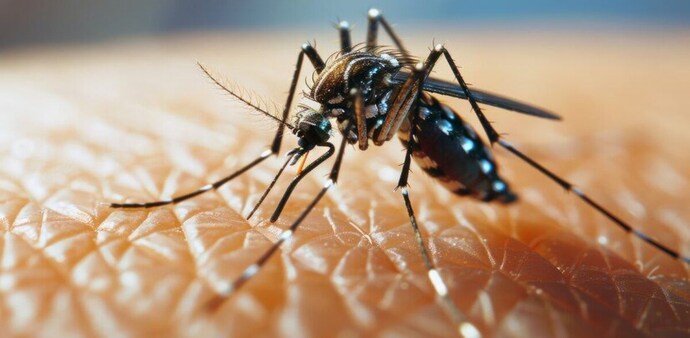
The report has pointed out that household insecticides serve as a first line of defense against diseases such as malaria, dengue and chikungunya, particularly at the household level where large‑scale interventions like indoor residual spraying and bed nets face practical and behavioral limitations.
“Despite this critical preventive role, the category continues to be taxed at 18%, while several essential health and hygiene products were reduced to a 5% or nil GST rate post September 2025,” it said.
Bipin Sapra, Tax Partner, EY India said that a reduction of GST to 5% can materially improve access to safe and regulated household insecticides, particularly in rural and high‑risk regions. “Improved affordability could drive wider adoption, strengthen last‑mile protection against vector‑borne diseases and support India’s broader preventive healthcare objectives,” he said.
DID YOU KNOW: Car lease in salary can cut your tax to zero on ₹20 lakh CTC: Here’s how
Previously, there have also been calls to reduce the GST on air purifiers to 5% from the current rate of 18% to make them more affordable for low income group families. Amidst in the high air pollution and smog in Delhi last winter, the Delhi High Court had also heard a Public Interest Litigation on the issue that had sought the court’s intervention to classify air purifiers as medical devices and reduce GST rates on them. However, the Centre had opposed the plea at the time.
In its report in December 2025, the Parliamentary Standing Committee on Science and Technology, Environment, Forests and Climate Change had suggested that the government should take a sympathetic view and should either abolish or lower the GST on air purifiers and HEPA filters.
Amidst rising cases of air pollution and vector-borne diseases, there are growing calls for a reduction in the goods and services tax rates on several products, such as air purifiers and household insecticides. These items tend to be taxed at 18% with calls to reduce the GST to 5% in order to improve their affordability.
To this end, a recent report by EY–Home Insect Control Association (HICA) has called for reducing GST on household insecticides from 18% to 5% with clear classification under the GST framework.
The report has pointed out that household insecticides serve as a first line of defense against diseases such as malaria, dengue and chikungunya, particularly at the household level where large‑scale interventions like indoor residual spraying and bed nets face practical and behavioral limitations.
“Despite this critical preventive role, the category continues to be taxed at 18%, while several essential health and hygiene products were reduced to a 5% or nil GST rate post September 2025,” it said.
Bipin Sapra, Tax Partner, EY India said that a reduction of GST to 5% can materially improve access to safe and regulated household insecticides, particularly in rural and high‑risk regions. “Improved affordability could drive wider adoption, strengthen last‑mile protection against vector‑borne diseases and support India’s broader preventive healthcare objectives,” he said.
DID YOU KNOW: Car lease in salary can cut your tax to zero on ₹20 lakh CTC: Here’s how
Previously, there have also been calls to reduce the GST on air purifiers to 5% from the current rate of 18% to make them more affordable for low income group families. Amidst in the high air pollution and smog in Delhi last winter, the Delhi High Court had also heard a Public Interest Litigation on the issue that had sought the court’s intervention to classify air purifiers as medical devices and reduce GST rates on them. However, the Centre had opposed the plea at the time.
In its report in December 2025, the Parliamentary Standing Committee on Science and Technology, Environment, Forests and Climate Change had suggested that the government should take a sympathetic view and should either abolish or lower the GST on air purifiers and HEPA filters.