
Artemis II launch: What happens if NASA misses April 1 window?
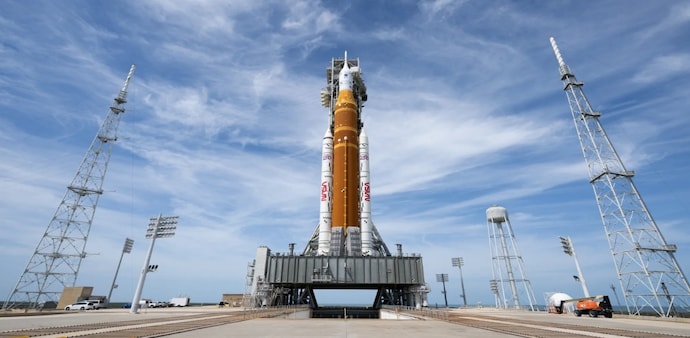
Artemis Launch Director Charlie Blackwell-Thompson has given the official 'go' for tanking, clearing teams to begin loading propellants into the Space Launch System rocket
- Apr 1, 2026,
- Updated Apr 1, 2026 9:36 PM IST
US space agency NASA is preparing to launch its Artemis II mission early Thursday (India time). The first crewed flight of the Artemis programme is scheduled for April 1 at 6:24 pm EDT (3:54 a.m. IST on April 2).
If this attempt is missed for any reason, a series of backup windows remains open through April 6, followed by a final opportunity at the end of the month.
Must Read: NASA's Artemis II mission: Why the astronauts won't be landing on the Lunar surface and more
Artemis Launch Director Charlie Blackwell-Thompson has given the official "go" for tanking, clearing teams to begin loading propellants into the Space Launch System rocket. The process starts with the chilldown of liquid oxygen and liquid hydrogen transfer lines, a required step before fueling the core stage.
Must Read: Worth a risk? Artemis II astronauts will lose contact with Earth for nearly an hour - NASA
The mission's primary launch window on April 1 runs for two hours. Additional opportunities are available each day through April 6, followed by a final backup window on April 30.
The final fallback on April 30 is scheduled for 6:06 p.m. EDT (3:36 a.m. IST on May 1). Each window lasts approximately 120 minutes.
Must Read: How much does Artemis II cost—and who pays for it?
Mission planners have also factored in lighting conditions across these dates, ranging from about 1.28 hours before sunset on April 1 to nearly 2.87 hours after sunset on April 6.
Artemis II will lift off from NASA's Kennedy Space Center in Florida, carrying four astronauts - Reid Wiseman, Victor Glover, Christina Koch, and Canadian Space Agency astronaut Jeremy Hansen - on an approximately 10-day journey around the Moon. The flight will test the Orion spacecraft’s life support systems with humans on board for the first time.
The mission marks NASA's first crewed deep-space flight since the Apollo era and is intended to validate systems required for future lunar landings under the Artemis programme.
NASA will provide live coverage of key mission milestones, including prelaunch, launch, and splashdown.
Coverage of tanking operations begins at 7:45 a.m. EDT (5:15 p.m. IST) on April 1, with live views and audio commentary available on the agency's YouTube channel.
US space agency NASA is preparing to launch its Artemis II mission early Thursday (India time). The first crewed flight of the Artemis programme is scheduled for April 1 at 6:24 pm EDT (3:54 a.m. IST on April 2).
If this attempt is missed for any reason, a series of backup windows remains open through April 6, followed by a final opportunity at the end of the month.
Must Read: NASA's Artemis II mission: Why the astronauts won't be landing on the Lunar surface and more
Artemis Launch Director Charlie Blackwell-Thompson has given the official "go" for tanking, clearing teams to begin loading propellants into the Space Launch System rocket. The process starts with the chilldown of liquid oxygen and liquid hydrogen transfer lines, a required step before fueling the core stage.
Must Read: Worth a risk? Artemis II astronauts will lose contact with Earth for nearly an hour - NASA
The mission's primary launch window on April 1 runs for two hours. Additional opportunities are available each day through April 6, followed by a final backup window on April 30.
The final fallback on April 30 is scheduled for 6:06 p.m. EDT (3:36 a.m. IST on May 1). Each window lasts approximately 120 minutes.
Must Read: How much does Artemis II cost—and who pays for it?
Mission planners have also factored in lighting conditions across these dates, ranging from about 1.28 hours before sunset on April 1 to nearly 2.87 hours after sunset on April 6.
Artemis II will lift off from NASA's Kennedy Space Center in Florida, carrying four astronauts - Reid Wiseman, Victor Glover, Christina Koch, and Canadian Space Agency astronaut Jeremy Hansen - on an approximately 10-day journey around the Moon. The flight will test the Orion spacecraft’s life support systems with humans on board for the first time.
The mission marks NASA's first crewed deep-space flight since the Apollo era and is intended to validate systems required for future lunar landings under the Artemis programme.
NASA will provide live coverage of key mission milestones, including prelaunch, launch, and splashdown.
Coverage of tanking operations begins at 7:45 a.m. EDT (5:15 p.m. IST) on April 1, with live views and audio commentary available on the agency's YouTube channel.