
First crewed Moon mission in 5 decades: What Artemis II is doing differently from Apollo
NASA's Artemis II mission revives moon exploration with diverse astronauts and advanced technology
- Apr 1, 2026,
- Updated Apr 1, 2026 9:00 AM IST
NASA's Artemis II mission marks humanity's first journey to the moon in over fifty years. Four astronauts will orbit the moon in April, following a path similar to Apollo 8's historic 1968 mission. Unlike Apollo, Artemis II reflects modern society by including a woman, a person of colour, and a Canadian astronaut. The mission will test life-support systems aboard the Orion capsule and prepare for future lunar landings.
The Artemis II programme builds on Apollo's legacy but faces new challenges. NASA's Space Launch System rocket has flown just once in an uncrewed test over three years ago. Delays from technical issues have pushed the Artemis II launch to early April. NASA's new administrator recently revised the programme to add an extra mission before the planned moon landing in 2028.
NASA plans to invest $20 billion over seven years to build a lunar base with habitats, rovers, drones and power stations. The goal is to establish a sustained human presence on the moon and prepare for future Mars missions.
Must read: Artemis II launch: Why NASA's ambitious Moon mission matters for everyday life on Earth?
What is Artemis II?
Artemis II is NASA's upcoming mission to orbit the moon with four astronauts, testing systems for future lunar landings.
How is Artemis II different from Apollo?
Artemis includes a more diverse crew, uses updated technology, and aims for sustainable lunar exploration rather than just reaching the moon.
Artemis III will focus on docking practice in Earth orbit rather than a moon landing, using lunar landers developed by SpaceX and Blue Origin. These companies are racing to be the first to deliver astronauts to the lunar surface. NASA aims to reach the moon's south pole, where ice deposits could support future missions.
The Apollo programme was driven by Cold War rivalry with the Soviet Union. Today, China is the main competitor, having landed on the moon's far side and planning crewed missions by 2030. NASA remains determined to lead this new space race.
Must read: Artemis II launch on April 1: When and where to watch NASA's moon mission live
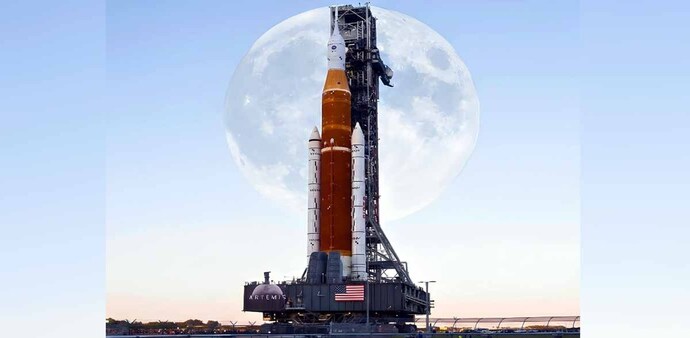
Apollo's Saturn V rocket stood taller than Artemis's Space Launch System but Artemis's rocket produces more thrust. Launch operations remain at Kennedy Space Center, with a woman now leading the launch team for the first time. Artemis II astronauts will orbit the moon before returning to Earth, parachuting into the Pacific as Apollo crews did.
Artemis astronauts will wear custom-fitted orange suits for launch and reentry, designed for comfort and safety during emergencies. Moonwalking suits are being developed by private companies for future missions. The Orion capsule is larger than Apollo's and accommodates four astronauts with more space for equipment.
Apollo missions focused on beating the Soviets and lasted from 1969 to 1972, with six successful moon landings. Artemis aims for longer stays and sustainable lunar presence. Astronauts will transfer from Orion to lunar landers like SpaceX's Starship or Blue Origin's Blue Moon to reach the surface.
When will Artemis II launch?
NASA is targeting the first six days of April for the Artemis II liftoff.
What rockets are used in Artemis?
The Space Launch System (SLS) rocket will launch Artemis missions, producing more thrust than Apollo's Saturn V.
Who are NASA's competitors in lunar exploration?
China is the main competitor, with plans for crewed moon landings by 2030.
What are the long-term goals of Artemis?
To build a lunar base for sustained human presence and prepare for missions to Mars.
What companies are involved in Artemis lunar landers?
SpaceX and Blue Origin are developing landers to ferry astronauts from lunar orbit to the moon's surface.
How long will astronauts stay on the moon?
Future Artemis missions could see astronauts spending nearly a week on the lunar surface.
NASA's Artemis II mission marks humanity's first journey to the moon in over fifty years. Four astronauts will orbit the moon in April, following a path similar to Apollo 8's historic 1968 mission. Unlike Apollo, Artemis II reflects modern society by including a woman, a person of colour, and a Canadian astronaut. The mission will test life-support systems aboard the Orion capsule and prepare for future lunar landings.
The Artemis II programme builds on Apollo's legacy but faces new challenges. NASA's Space Launch System rocket has flown just once in an uncrewed test over three years ago. Delays from technical issues have pushed the Artemis II launch to early April. NASA's new administrator recently revised the programme to add an extra mission before the planned moon landing in 2028.
NASA plans to invest $20 billion over seven years to build a lunar base with habitats, rovers, drones and power stations. The goal is to establish a sustained human presence on the moon and prepare for future Mars missions.
Must read: Artemis II launch: Why NASA's ambitious Moon mission matters for everyday life on Earth?
What is Artemis II?
Artemis II is NASA's upcoming mission to orbit the moon with four astronauts, testing systems for future lunar landings.
How is Artemis II different from Apollo?
Artemis includes a more diverse crew, uses updated technology, and aims for sustainable lunar exploration rather than just reaching the moon.
Artemis III will focus on docking practice in Earth orbit rather than a moon landing, using lunar landers developed by SpaceX and Blue Origin. These companies are racing to be the first to deliver astronauts to the lunar surface. NASA aims to reach the moon's south pole, where ice deposits could support future missions.
The Apollo programme was driven by Cold War rivalry with the Soviet Union. Today, China is the main competitor, having landed on the moon's far side and planning crewed missions by 2030. NASA remains determined to lead this new space race.
Must read: Artemis II launch on April 1: When and where to watch NASA's moon mission live
Apollo's Saturn V rocket stood taller than Artemis's Space Launch System but Artemis's rocket produces more thrust. Launch operations remain at Kennedy Space Center, with a woman now leading the launch team for the first time. Artemis II astronauts will orbit the moon before returning to Earth, parachuting into the Pacific as Apollo crews did.
Artemis astronauts will wear custom-fitted orange suits for launch and reentry, designed for comfort and safety during emergencies. Moonwalking suits are being developed by private companies for future missions. The Orion capsule is larger than Apollo's and accommodates four astronauts with more space for equipment.
Apollo missions focused on beating the Soviets and lasted from 1969 to 1972, with six successful moon landings. Artemis aims for longer stays and sustainable lunar presence. Astronauts will transfer from Orion to lunar landers like SpaceX's Starship or Blue Origin's Blue Moon to reach the surface.
When will Artemis II launch?
NASA is targeting the first six days of April for the Artemis II liftoff.
What rockets are used in Artemis?
The Space Launch System (SLS) rocket will launch Artemis missions, producing more thrust than Apollo's Saturn V.
Who are NASA's competitors in lunar exploration?
China is the main competitor, with plans for crewed moon landings by 2030.
What are the long-term goals of Artemis?
To build a lunar base for sustained human presence and prepare for missions to Mars.
What companies are involved in Artemis lunar landers?
SpaceX and Blue Origin are developing landers to ferry astronauts from lunar orbit to the moon's surface.
How long will astronauts stay on the moon?
Future Artemis missions could see astronauts spending nearly a week on the lunar surface.