
Apple HomeView vs Google Nest Hub: Why does Apple’s smart display cost nearly 5 times more?
Both devices offer smart home controls, entertainment and voice assistance, but differences in hardware, personalisation and connectivity could influence which one makes more sense for your home and budget.
- Oct 17, 2026,
- Updated Oct 17, 2026 6:15 AM IST
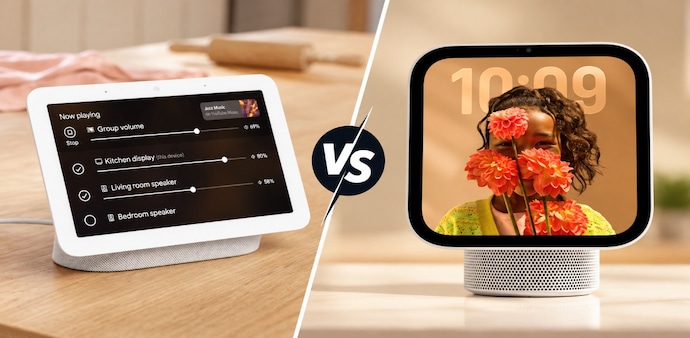
Apple’s newly launched HomeView is taking on Google’s Nest Hub (2nd Gen) in the smart display segment, but there is a significant difference in their pricing. Apple has introduced its HomeView in India at ₹39,900, while Google’s Nest Hub (2nd Gen) was launched in 2022 at ₹7,999. Based on their stated prices, Apple’s device costs nearly five times as much. Both feature a 7-inch touchscreen and offer voice assistance, entertainment, and connected home controls.
However, Apple brings newer hardware, a built-in camera and advanced personalisation features, while Google offers a more affordable alternative with sleep tracking and gesture controls. So, what exactly separates the two, and which features matter when choosing a smart display?
MUST READ | Apple HomePod mini 2 vs Google Nest Mini 2: Apple offers Siri AI, Google brings ultrasound sensing
Display, AI and features
Apple HomeView features a 7-inch Liquid Retina touchscreen with a 1,088 × 1,088-pixel resolution, 220ppi, True Tone and brightness ranging from 0.3 to 500 nits. Powered by the A18 chip, it supports Siri AI and Apple Intelligence, alongside a 12MP Center Stage camera for FaceTime calls. It also offers Wi-Fi 6E, Bluetooth 6.0, Thread connectivity and environmental sensors. HomeView can recognise up to six users, personalise their home screens, support AirPlay multi-room audio and display nine compatible security camera feeds simultaneously. Its tabletop version includes two full-range drivers, a woofer and passive radiators.
DON'T MISS | Apple HomeView vs Amazon Echo Show: How the two smart displays compare on price and features
Google’s Nest Hub (2nd Gen), has a 7-inch LCD touchscreen with a 1,024 × 600-pixel resolution, a 43.5mm speaker driver and a 1.9GHz quad-core processor. Google’s current specifications list Gemini for Home, along with Voice Match, three microphones, Bluetooth 5.0, dual-band Wi-Fi, Chromecast, Thread and Matter compatibility. It also features Soli radar-based gesture controls, Ambient EQ, a temperature sensor and Sleep Sensing, which tracks sleep-related movement and sounds without a wearable.
Apple HomeView vs Google Nest Hub: Price in India
Apple HomeView costs ₹39,900 for both tabletop and wall-mounted models. Pre-orders are open, with sales beginning November 13, 2026. The tabletop version weighs 952g and comes in four colours. Google’s Nest Hub (2nd Gen), meanwhile, weighs 558g, launched at ₹7,999. Current prices and availability vary by retailer.
HomeView offers newer hardware and deeper Apple integration, while Nest Hub remains a lower-cost option for everyday smart home controls.
For Unparalleled coverage of India's Businesses and Economy – Subscribe to Business Today Magazine
Apple’s newly launched HomeView is taking on Google’s Nest Hub (2nd Gen) in the smart display segment, but there is a significant difference in their pricing. Apple has introduced its HomeView in India at ₹39,900, while Google’s Nest Hub (2nd Gen) was launched in 2022 at ₹7,999. Based on their stated prices, Apple’s device costs nearly five times as much. Both feature a 7-inch touchscreen and offer voice assistance, entertainment, and connected home controls.
However, Apple brings newer hardware, a built-in camera and advanced personalisation features, while Google offers a more affordable alternative with sleep tracking and gesture controls. So, what exactly separates the two, and which features matter when choosing a smart display?
MUST READ | Apple HomePod mini 2 vs Google Nest Mini 2: Apple offers Siri AI, Google brings ultrasound sensing
Display, AI and features
Apple HomeView features a 7-inch Liquid Retina touchscreen with a 1,088 × 1,088-pixel resolution, 220ppi, True Tone and brightness ranging from 0.3 to 500 nits. Powered by the A18 chip, it supports Siri AI and Apple Intelligence, alongside a 12MP Center Stage camera for FaceTime calls. It also offers Wi-Fi 6E, Bluetooth 6.0, Thread connectivity and environmental sensors. HomeView can recognise up to six users, personalise their home screens, support AirPlay multi-room audio and display nine compatible security camera feeds simultaneously. Its tabletop version includes two full-range drivers, a woofer and passive radiators.
DON'T MISS | Apple HomeView vs Amazon Echo Show: How the two smart displays compare on price and features
Google’s Nest Hub (2nd Gen), has a 7-inch LCD touchscreen with a 1,024 × 600-pixel resolution, a 43.5mm speaker driver and a 1.9GHz quad-core processor. Google’s current specifications list Gemini for Home, along with Voice Match, three microphones, Bluetooth 5.0, dual-band Wi-Fi, Chromecast, Thread and Matter compatibility. It also features Soli radar-based gesture controls, Ambient EQ, a temperature sensor and Sleep Sensing, which tracks sleep-related movement and sounds without a wearable.
Apple HomeView vs Google Nest Hub: Price in India
Apple HomeView costs ₹39,900 for both tabletop and wall-mounted models. Pre-orders are open, with sales beginning November 13, 2026. The tabletop version weighs 952g and comes in four colours. Google’s Nest Hub (2nd Gen), meanwhile, weighs 558g, launched at ₹7,999. Current prices and availability vary by retailer.
HomeView offers newer hardware and deeper Apple integration, while Nest Hub remains a lower-cost option for everyday smart home controls.
For Unparalleled coverage of India's Businesses and Economy – Subscribe to Business Today Magazine