
Google Fitbit Air vs Fitbit Edge: Screen-free simplicity or a display with advanced health tracking?
Google offers two approaches to fitness tracking, but the choice comes down to whether you prefer a distraction-free wearable or wrist-based health data and workout controls.
- Oct 14, 2026,
- Updated Oct 14, 2026 8:00 AM IST
Choosing between Google’s Fitbit Air and Fitbit Edge depends on how you want to track your health and workouts. The Air is designed for people who prefer a lightweight fitness band without a screen, while the Edge offers a display, built-in GPS and additional health-monitoring features. Both track heart rate, blood oxygen levels and skin-temperature variations, and promise up to seven days of battery life. However, the Edge costs more and lets you view workout information directly on your wrist.
MUST READ | Google’s new Fitbit Edge signals a shift towards AI health coaching and longer-lasting wearables
Google Fitbit Air vs Google Fitbit Edge: Design and features
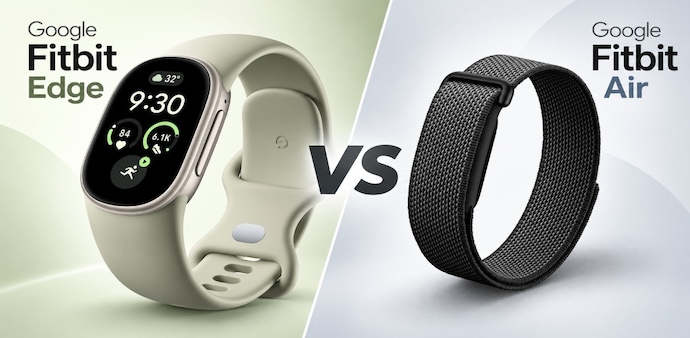
The Fitbit Air is a screen-free fitness band weighing 12g with its strap. Its housing uses recycled polycarbonate and PBT plastics, and it supports Bluetooth 5.0 connectivity. Since it has no display or built-in GPS, you will need to check the Google Health app on your phone to view your health data. The Air tracks heart rate, blood oxygen (SpO2), skin-temperature variations and movement. It is water-resistant up to 50 metres and offers core activity and sleep tracking. Its lightweight design makes it suitable for people who want continuous health monitoring without a screen on their wrist.
DON'T MISS | Google Fitbit Air to WHOOP 5.0: Top screenless fitness bands to buy during Amazon’s 2026 GIF sale
The Fitbit Edge, meanwhile, features a 1.34-inch colour AMOLED display and a physical side button. It weighs 17.7g without the band and has a recycled aluminium case. It supports Bluetooth 5.4, built-in GPS and Galileo for outdoor activity tracking. Alongside heart-rate, SpO2 and skin-temperature tracking, the Edge includes electrical sensors that support its ECG app. It also offers an altimeter, more than 40 exercise modes, automatic activity recognition, on-device workout metrics, notifications and media controls. Google says its GPS offers up to 40% improved accuracy over previous generations.
Both trackers support Google Health Coach, although premium coaching requires a Google Health Premium subscription.
Battery life and price
Both devices promise up to seven days of battery life, and a five-minute charge can provide up to a day of use. Each tracker takes around 90 minutes to fully charge. The Edge also has a user-replaceable battery. The Fitbit Air costs ₹13,999 in India and is available through Google’s India Store. The Fitbit Edge, meanwhile, starts at $179.99 (roughly ₹17,000) in the US. Google has not yet announced the Fitbit Edge India price or availability, so you will have to wait for further details.
If you want a screen-free fitness tracker for everyday health monitoring, the Fitbit Air is currently the option available in India. The Fitbit Edge offers more functionality, including built-in GPS, a display and additional health features, but its India launch details remain unconfirmed.
For Unparalleled coverage of India's Businesses and Economy – Subscribe to Business Today Magazine
Choosing between Google’s Fitbit Air and Fitbit Edge depends on how you want to track your health and workouts. The Air is designed for people who prefer a lightweight fitness band without a screen, while the Edge offers a display, built-in GPS and additional health-monitoring features. Both track heart rate, blood oxygen levels and skin-temperature variations, and promise up to seven days of battery life. However, the Edge costs more and lets you view workout information directly on your wrist.
MUST READ | Google’s new Fitbit Edge signals a shift towards AI health coaching and longer-lasting wearables
Google Fitbit Air vs Google Fitbit Edge: Design and features
The Fitbit Air is a screen-free fitness band weighing 12g with its strap. Its housing uses recycled polycarbonate and PBT plastics, and it supports Bluetooth 5.0 connectivity. Since it has no display or built-in GPS, you will need to check the Google Health app on your phone to view your health data. The Air tracks heart rate, blood oxygen (SpO2), skin-temperature variations and movement. It is water-resistant up to 50 metres and offers core activity and sleep tracking. Its lightweight design makes it suitable for people who want continuous health monitoring without a screen on their wrist.
DON'T MISS | Google Fitbit Air to WHOOP 5.0: Top screenless fitness bands to buy during Amazon’s 2026 GIF sale
The Fitbit Edge, meanwhile, features a 1.34-inch colour AMOLED display and a physical side button. It weighs 17.7g without the band and has a recycled aluminium case. It supports Bluetooth 5.4, built-in GPS and Galileo for outdoor activity tracking. Alongside heart-rate, SpO2 and skin-temperature tracking, the Edge includes electrical sensors that support its ECG app. It also offers an altimeter, more than 40 exercise modes, automatic activity recognition, on-device workout metrics, notifications and media controls. Google says its GPS offers up to 40% improved accuracy over previous generations.
Both trackers support Google Health Coach, although premium coaching requires a Google Health Premium subscription.
Battery life and price
Both devices promise up to seven days of battery life, and a five-minute charge can provide up to a day of use. Each tracker takes around 90 minutes to fully charge. The Edge also has a user-replaceable battery. The Fitbit Air costs ₹13,999 in India and is available through Google’s India Store. The Fitbit Edge, meanwhile, starts at $179.99 (roughly ₹17,000) in the US. Google has not yet announced the Fitbit Edge India price or availability, so you will have to wait for further details.
If you want a screen-free fitness tracker for everyday health monitoring, the Fitbit Air is currently the option available in India. The Fitbit Edge offers more functionality, including built-in GPS, a display and additional health features, but its India launch details remain unconfirmed.
For Unparalleled coverage of India's Businesses and Economy – Subscribe to Business Today Magazine