
India has 129 homegrown tech brands earning ₹60,000 crore, but why are so few scaling up?
India has 129 homegrown tech brands earning ₹60,000 crore, but why are so few scaling up?
India has 129 homegrown technology brands generating over ₹60,000 crore in annual revenue, but only 14 earn more than ₹500 crore. A new Viksit Tech 47 report highlights the hurdles to scaling up, including low R&D spending, limited domestic value addition and gaps in product engineering.
Business Today Desk
- Oct 10, 2026,
- Updated Oct 10, 2026 11:49 AM IST
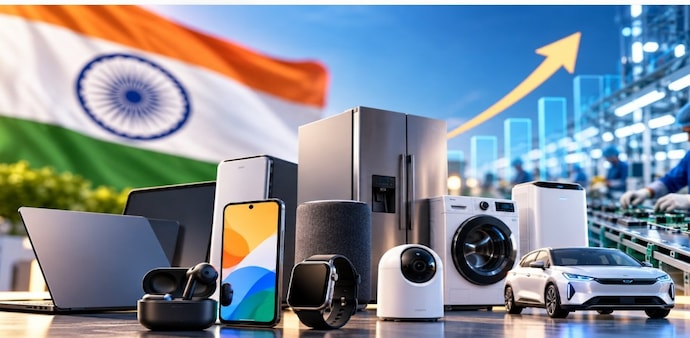
India has 129 homegrown brands across gadgets, devices, appliances and connected cars, generating more than ₹60,000 crore in annual revenue. Yet, only 14 of these brands earn more than ₹500 crore, while just two clearly cross ₹2,000 crore, highlighting the challenge Indian companies face in building technology businesses at scale, according to the Viksit Tech 47 Report 2026 by India Mobile Congress and Techarc.
Advertisement
The report estimates average annual revenue at around ₹465 crore per brand, suggesting that much of India's homegrown consumer technology industry remains concentrated in relatively small businesses, despite the country's expanding electronics manufacturing ecosystem.
“Most of these brands are still at the early stages of their evolution, trading or assembling products rather than engineering them,” Faisal Kawoosa, chief analyst and co-founder of Techarc, wrote in the report.
From trading to engineering: The scaling challenge
The report identifies a key reason for the limited scale of Indian technology brands through its TAME model, which tracks their evolution from Trade to Assemble, Manufacture and Engineer.
According to Techarc's research, brands that primarily trade finished products tend to reach a revenue ceiling of around ₹500 crore. Assembly-led businesses rarely exceed ₹5,000 crore, while manufacturing-led brands can scale to approximately ₹50,000 crore.
Advertisement
MUST READ: India’s AI boom: Why Everpure sees a bigger opportunity beyond storage
The report states that “revenues in lakhs of crores” are achieved by brands that engineer their own products and own their design, software and intellectual property.
It also cautions that the transition is neither automatic nor easy. “Many stay at one stage for years, and many fail along the way when competition intensifies, product cycles shorten or capital runs out,” the report says.
The experience of India's handset industry in the early 2010s illustrates this challenge, with several domestic brands achieving significant scale through trading but struggling to move up the value chain as better-capitalised global competitors entered the market.
Low R&D spending and limited domestic value addition
Advertisement
India's broader manufacturing growth has not translated into comparable gains for homegrown brands. Electronics production rose to ₹13.11 lakh crore in FY2025-26 from ₹1.90 lakh crore in FY2014-15, while electronics exports reached ₹4.24 lakh crore.
However, domestic value addition in electronics remains around 17%, according to the report. India continues to import key components, including displays, semiconductors, camera modules and battery cells.
The report also identifies low spending on product engineering, industrial design and intellectual property, alongside limited access to patient, long-term capital for hardware and deep-tech businesses.
Indian brands collectively hold only a low single-digit share of the domestic smartphone market, despite the country's manufacturing expansion.
What Indian brands need to scale
The report argues that India must move beyond manufacturing for global companies and build brands that own their products, technology and intellectual property.
“India needs many more brands across all four pillars, and most of them must come from India's own product design and intellectual property,” it says.
Advertisement
It calls for deeper collaboration between startups and educational institutions, stronger component localisation, better access to growth capital and support for international distribution.
At an expected annual growth rate of 13%, the 129 brands' combined revenue could reach ₹1.11 lakh crore by FY2031 and ₹2.04 lakh crore by FY2036.
The report sets a more ambitious target for 2047: 50 Indian technology brands, each generating more than ₹1 lakh crore annually. Achieving that goal will require more companies to progress from trading and assembly to product engineering and global competition.
DO READ: How a labour strike in Taiwan chip fab could push phone and laptop prices higher in India
For Unparalleled coverage of India's Businesses and Economy – Subscribe to Business Today Magazine
India has 129 homegrown brands across gadgets, devices, appliances and connected cars, generating more than ₹60,000 crore in annual revenue. Yet, only 14 of these brands earn more than ₹500 crore, while just two clearly cross ₹2,000 crore, highlighting the challenge Indian companies face in building technology businesses at scale, according to the Viksit Tech 47 Report 2026 by India Mobile Congress and Techarc.
Advertisement
The report estimates average annual revenue at around ₹465 crore per brand, suggesting that much of India's homegrown consumer technology industry remains concentrated in relatively small businesses, despite the country's expanding electronics manufacturing ecosystem.
“Most of these brands are still at the early stages of their evolution, trading or assembling products rather than engineering them,” Faisal Kawoosa, chief analyst and co-founder of Techarc, wrote in the report.
From trading to engineering: The scaling challenge
The report identifies a key reason for the limited scale of Indian technology brands through its TAME model, which tracks their evolution from Trade to Assemble, Manufacture and Engineer.
According to Techarc's research, brands that primarily trade finished products tend to reach a revenue ceiling of around ₹500 crore. Assembly-led businesses rarely exceed ₹5,000 crore, while manufacturing-led brands can scale to approximately ₹50,000 crore.
Advertisement
MUST READ: India’s AI boom: Why Everpure sees a bigger opportunity beyond storage
The report states that “revenues in lakhs of crores” are achieved by brands that engineer their own products and own their design, software and intellectual property.
It also cautions that the transition is neither automatic nor easy. “Many stay at one stage for years, and many fail along the way when competition intensifies, product cycles shorten or capital runs out,” the report says.
The experience of India's handset industry in the early 2010s illustrates this challenge, with several domestic brands achieving significant scale through trading but struggling to move up the value chain as better-capitalised global competitors entered the market.
Low R&D spending and limited domestic value addition
Advertisement
India's broader manufacturing growth has not translated into comparable gains for homegrown brands. Electronics production rose to ₹13.11 lakh crore in FY2025-26 from ₹1.90 lakh crore in FY2014-15, while electronics exports reached ₹4.24 lakh crore.
However, domestic value addition in electronics remains around 17%, according to the report. India continues to import key components, including displays, semiconductors, camera modules and battery cells.
The report also identifies low spending on product engineering, industrial design and intellectual property, alongside limited access to patient, long-term capital for hardware and deep-tech businesses.
Indian brands collectively hold only a low single-digit share of the domestic smartphone market, despite the country's manufacturing expansion.
What Indian brands need to scale
The report argues that India must move beyond manufacturing for global companies and build brands that own their products, technology and intellectual property.
“India needs many more brands across all four pillars, and most of them must come from India's own product design and intellectual property,” it says.
Advertisement
It calls for deeper collaboration between startups and educational institutions, stronger component localisation, better access to growth capital and support for international distribution.
At an expected annual growth rate of 13%, the 129 brands' combined revenue could reach ₹1.11 lakh crore by FY2031 and ₹2.04 lakh crore by FY2036.
The report sets a more ambitious target for 2047: 50 Indian technology brands, each generating more than ₹1 lakh crore annually. Achieving that goal will require more companies to progress from trading and assembly to product engineering and global competition.
DO READ: How a labour strike in Taiwan chip fab could push phone and laptop prices higher in India
For Unparalleled coverage of India's Businesses and Economy – Subscribe to Business Today Magazine
Read more!