
India’s AI future depends on fixing data, not just building models: MoSPI Secretary Saurabh Garg
“AI readiness is not fundamentally a model problem. It is a data and metadata issue,” Garg said.
- Jan 22, 2026,
- Updated Jan 22, 2026 11:48 AM IST
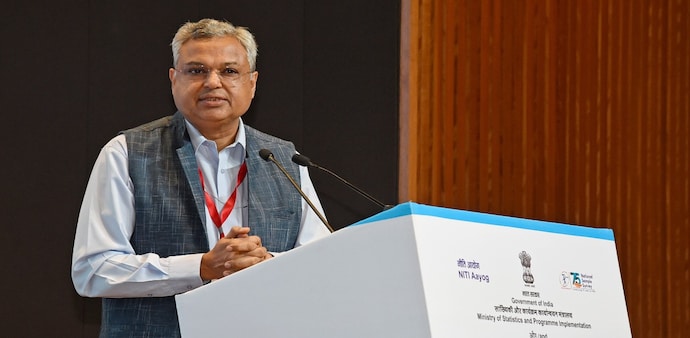
Artificial intelligence is moving from experimentation to real-world execution across the world. But India’s readiness for AI will depend less on powerful models and more on the quality of its data, Dr Saurabh Garg, Secretary, Ministry of Statistics and Programme Implementation (MoSPI), said on January 22.
Speaking at Nasscom’s Responsible Intelligence Confluence (RICON) 2026, Garg said governments and businesses are increasingly using AI systems to allocate resources, identify beneficiaries, forecast demand and evaluate outcomes. But these systems can only work well if the data behind them is reliable, consistent and machine-readable.
“AI readiness is not fundamentally a model problem. It is a data and metadata issue,” Garg said.
He said large language models (LLMs) and advanced analytics cannot deliver accurate results if they are trained on weak or poorly structured data. “Large language models, analytic engines and forecasting systems cannot work reliably when data arrives in inconsistent formats, carries low quality signals, lacks semantic clarity, or sits locked in PDFs and widgets where machines may find it difficult to understand or take action based on it,” he said.
Poor data quality can also lead to serious policy failures. “An otherwise well-designed model may exclude eligible households for benefits simply because the identifiers in datasets could not be matched,” Garg said. “That is not a failure of theory, it is a failure of data and perspective.”
Garg said simply publishing datasets is no longer enough in an AI-driven world. “Open data alone is not enough. Without APIs, standards, quality signals and problems, open datasets will remain largely invisible or misleading for AI systems,” he said.
He said metadata, information that explains where data comes from, how it was created and what it means, is becoming core digital infrastructure. “When provenance, lineage and semantic definitions are available to data, algorithms can produce explainable outputs and the decisions made based on such data can be recommended,” he said.
The ministry, he said, has been working to make government data more AI-ready by publishing a national metadata structure, issuing API design manuals, launching discovery platforms and microdata portals, and rolling out data harmonisation guidelines across departments.
However, Garg said not all data can be made fully open. “Sensitive administrative records and microdata carry premises and security implications,” he said. “The answer is trustworthy infrastructure, controlled research environments, privacy-preserving techniques and federated approaches that allow analytics without exposing underlying personal information.”
For Unparalleled coverage of India's Businesses and Economy – Subscribe to Business Today Magazine
Artificial intelligence is moving from experimentation to real-world execution across the world. But India’s readiness for AI will depend less on powerful models and more on the quality of its data, Dr Saurabh Garg, Secretary, Ministry of Statistics and Programme Implementation (MoSPI), said on January 22.
Speaking at Nasscom’s Responsible Intelligence Confluence (RICON) 2026, Garg said governments and businesses are increasingly using AI systems to allocate resources, identify beneficiaries, forecast demand and evaluate outcomes. But these systems can only work well if the data behind them is reliable, consistent and machine-readable.
“AI readiness is not fundamentally a model problem. It is a data and metadata issue,” Garg said.
He said large language models (LLMs) and advanced analytics cannot deliver accurate results if they are trained on weak or poorly structured data. “Large language models, analytic engines and forecasting systems cannot work reliably when data arrives in inconsistent formats, carries low quality signals, lacks semantic clarity, or sits locked in PDFs and widgets where machines may find it difficult to understand or take action based on it,” he said.
Poor data quality can also lead to serious policy failures. “An otherwise well-designed model may exclude eligible households for benefits simply because the identifiers in datasets could not be matched,” Garg said. “That is not a failure of theory, it is a failure of data and perspective.”
Garg said simply publishing datasets is no longer enough in an AI-driven world. “Open data alone is not enough. Without APIs, standards, quality signals and problems, open datasets will remain largely invisible or misleading for AI systems,” he said.
He said metadata, information that explains where data comes from, how it was created and what it means, is becoming core digital infrastructure. “When provenance, lineage and semantic definitions are available to data, algorithms can produce explainable outputs and the decisions made based on such data can be recommended,” he said.
The ministry, he said, has been working to make government data more AI-ready by publishing a national metadata structure, issuing API design manuals, launching discovery platforms and microdata portals, and rolling out data harmonisation guidelines across departments.
However, Garg said not all data can be made fully open. “Sensitive administrative records and microdata carry premises and security implications,” he said. “The answer is trustworthy infrastructure, controlled research environments, privacy-preserving techniques and federated approaches that allow analytics without exposing underlying personal information.”
For Unparalleled coverage of India's Businesses and Economy – Subscribe to Business Today Magazine