
OpenAI case narrows as Musk withdraws fraud allegations before key trial; here's what we know
At the heart of the dispute is Musk’s claim that OpenAI strayed from its founding mission. Co-founded in 2015 as a nonprofit, the organisation was intended to develop artificial intelligence for the benefit of humanity.
- Apr 25, 2026,
- Updated Apr 25, 2026 10:55 AM IST
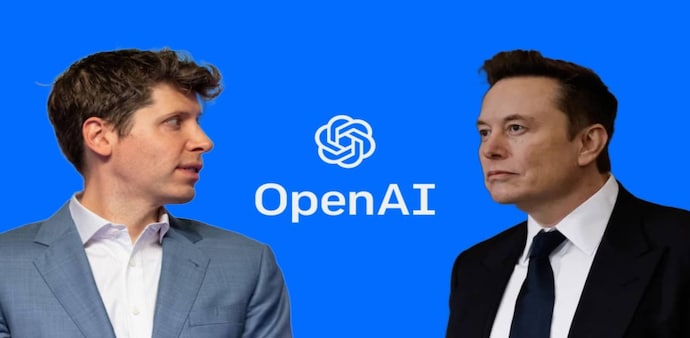
Elon Musk has withdrawn his fraud allegations against OpenAI and its co-founders Sam Altman and Greg Brockman, significantly narrowing a high-profile lawsuit just days before trial. A US federal court will now hear only two claims—unjust enrichment and breach of charitable trust—out of the 26 initially filed in November 2024.
US District Judge Yvonne Gonzalez Rogers approved Musk’s request to streamline the case, with jury selection scheduled to begin Monday in Oakland, California. While the legal scope has been reduced, the central conflict over OpenAI’s transformation remains intact.
MUST READ: BT Explainer: Google’s Gemma 4 could put powerful AI on your phone and laptop
Core allegations
At the heart of the dispute is Musk’s claim that OpenAI strayed from its founding mission. Co-founded in 2015 as a nonprofit, the organisation was intended to develop artificial intelligence for the benefit of humanity.
Musk argues that this vision was compromised when OpenAI transitioned to a “capped-profit” structure and secured billions of dollars in funding, particularly from Microsoft. According to him, the shift prioritised commercial gains over its original public-interest mandate.
Despite dropping fraud claims, Musk is still pursuing damages of up to $134 billion. He has proposed that any financial award be directed to OpenAI’s charitable arm. He is also seeking structural changes, including restoring the organisation’s nonprofit status and removing Altman and Brockman from leadership roles.
MUST READ: Nvidia ropes in Sarvam, Mistral, Perplexity in global ‘Nemotron Coalition’ to build open AI models
OpenAI pushes back
OpenAI, along with Altman, Brockman, and Microsoft, has strongly denied all allegations. The company has described Musk’s legal strategy as a “legal ambush,” arguing that the claims are baseless and driven by competitive interests.
The defence has pointed to Musk’s own artificial intelligence venture, xAI, as a potential factor behind the lawsuit. Musk launched xAI in 2023, positioning it as a direct competitor to OpenAI amid the intensifying AI race.
MUST READ: Tesla’s 6-seater Model Y leaks early on website, officially launched in India at ₹62 lakh
Dispute explained
The dispute reflects broader tensions tied to OpenAI’s evolution. Initially founded to counter the concentration of AI power within large tech firms, OpenAI emphasised open research and societal benefit.
However, the rising cost of developing advanced AI models forced a strategic pivot. The creation of a capped-profit structure enabled the company to attract large-scale investment while attempting to retain elements of its founding ethos.
The launch of ChatGPT in November 2022 marked a turning point. The chatbot’s rapid adoption transformed OpenAI into a central player in the global AI ecosystem. This momentum was further amplified by Microsoft’s multi-billion-dollar investment, widely reported at around $13 billion.
Trial structure
The trial will unfold in two phases. In the first, a jury will examine the remaining claims and issue a non-binding advisory verdict. In the second phase, the judge will determine remedies, if any.
Beyond the immediate legal battle, the case is expected to set an important precedent. It raises fundamental questions about how AI companies balance nonprofit origins with commercial scale, especially in an industry requiring massive capital and infrastructure.
For Unparalleled coverage of India's Businesses and Economy – Subscribe to Business Today Magazine
Elon Musk has withdrawn his fraud allegations against OpenAI and its co-founders Sam Altman and Greg Brockman, significantly narrowing a high-profile lawsuit just days before trial. A US federal court will now hear only two claims—unjust enrichment and breach of charitable trust—out of the 26 initially filed in November 2024.
US District Judge Yvonne Gonzalez Rogers approved Musk’s request to streamline the case, with jury selection scheduled to begin Monday in Oakland, California. While the legal scope has been reduced, the central conflict over OpenAI’s transformation remains intact.
MUST READ: BT Explainer: Google’s Gemma 4 could put powerful AI on your phone and laptop
Core allegations
At the heart of the dispute is Musk’s claim that OpenAI strayed from its founding mission. Co-founded in 2015 as a nonprofit, the organisation was intended to develop artificial intelligence for the benefit of humanity.
Musk argues that this vision was compromised when OpenAI transitioned to a “capped-profit” structure and secured billions of dollars in funding, particularly from Microsoft. According to him, the shift prioritised commercial gains over its original public-interest mandate.
Despite dropping fraud claims, Musk is still pursuing damages of up to $134 billion. He has proposed that any financial award be directed to OpenAI’s charitable arm. He is also seeking structural changes, including restoring the organisation’s nonprofit status and removing Altman and Brockman from leadership roles.
MUST READ: Nvidia ropes in Sarvam, Mistral, Perplexity in global ‘Nemotron Coalition’ to build open AI models
OpenAI pushes back
OpenAI, along with Altman, Brockman, and Microsoft, has strongly denied all allegations. The company has described Musk’s legal strategy as a “legal ambush,” arguing that the claims are baseless and driven by competitive interests.
The defence has pointed to Musk’s own artificial intelligence venture, xAI, as a potential factor behind the lawsuit. Musk launched xAI in 2023, positioning it as a direct competitor to OpenAI amid the intensifying AI race.
MUST READ: Tesla’s 6-seater Model Y leaks early on website, officially launched in India at ₹62 lakh
Dispute explained
The dispute reflects broader tensions tied to OpenAI’s evolution. Initially founded to counter the concentration of AI power within large tech firms, OpenAI emphasised open research and societal benefit.
However, the rising cost of developing advanced AI models forced a strategic pivot. The creation of a capped-profit structure enabled the company to attract large-scale investment while attempting to retain elements of its founding ethos.
The launch of ChatGPT in November 2022 marked a turning point. The chatbot’s rapid adoption transformed OpenAI into a central player in the global AI ecosystem. This momentum was further amplified by Microsoft’s multi-billion-dollar investment, widely reported at around $13 billion.
Trial structure
The trial will unfold in two phases. In the first, a jury will examine the remaining claims and issue a non-binding advisory verdict. In the second phase, the judge will determine remedies, if any.
Beyond the immediate legal battle, the case is expected to set an important precedent. It raises fundamental questions about how AI companies balance nonprofit origins with commercial scale, especially in an industry requiring massive capital and infrastructure.
For Unparalleled coverage of India's Businesses and Economy – Subscribe to Business Today Magazine